



How to Plan Crew Housing for This Work
Planning housing for crews, camps and remote job sites comes down to four questions: the headcount sleeping on site, the expected length of the assignment, the electrical capacity available at the pad, and delivery access for a truck and trailer. The sections below work through each question in order.
How a portable bunkhouse trailer gets placed and set up
We deliver before the crew arrives, not the same afternoon they land. That gives us daylight to level the trailer and test the climate system before anybody needs to sleep in it. If your crew rolls in on a Sunday night, the sleeper should be cool and lit by Sunday afternoon, 4 hours ahead at least. One workforce-housing provider in this market has cited a 96-hour outer bound to deploy, install and connect 306 beds in a true emergency scenario. We plan to beat that on most jobs. For disaster work, we move as soon as the roads can take a truck, sometimes within a day of landfall.
Pick level, well-drained ground that does not hold water after a storm. Keep the sleepers a short walk, 100 feet or so, from the restrooms, but away from generators and haul roads. A laydown yard with gravel or timber mats works well. Soft ground after heavy rain can let a trailer settle out of level, so tell us about drainage on the first call, not the third.
The trailer runs on site power or a generator. 3 AC units draw real power on a hot afternoon, so we confirm your hookup before delivery day instead of guessing at the panel. If the site has no power yet, say so on the first call. We will talk through generator sizing with you, in kilowatts, before the truck is loaded.
When the job moves, the sleeper moves with it. Pipeline crews and fire crews often need this, and we schedule each move between shifts so the off crew never waits on a bed. Most camps pair the sleepers with separate restroom and shower trailers, so we time our drop to fit the rest of your camp layout, down to the walking path between them. At the end of the job, we pick up and leave the pad clear, usually inside a single day.
Industry descriptions of pipeline mobilization camps list the standard components a full setup usually includes: accommodation units, a site office, a dining or kitchen unit, sanitary containers, a laundry room, first-aid space, storage, and often a security cabin at larger sites. A sleeper trailer is one piece of that coordinated arrangement, not the whole solution, which is why we ask early about what else is already on order for your site.
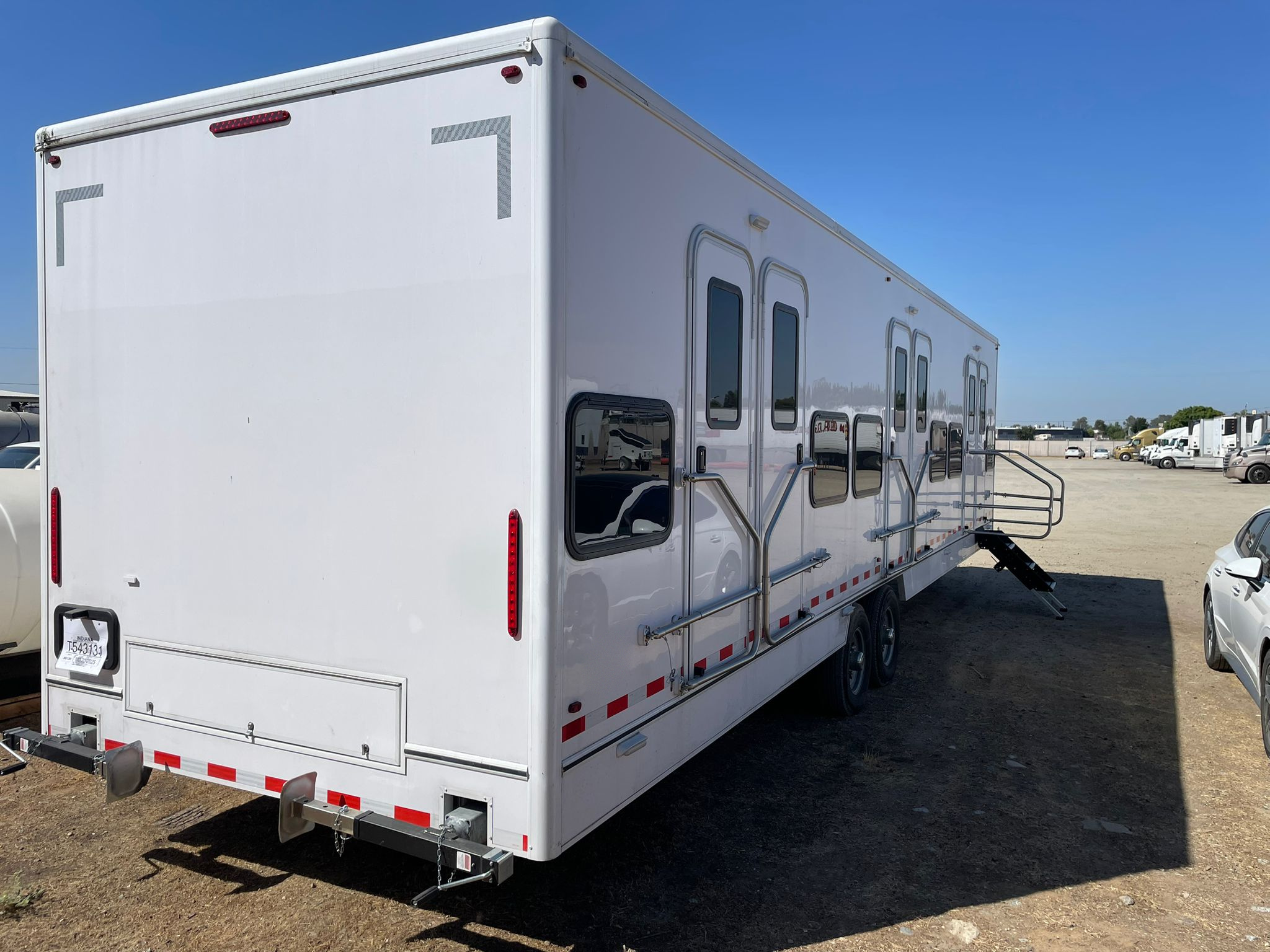
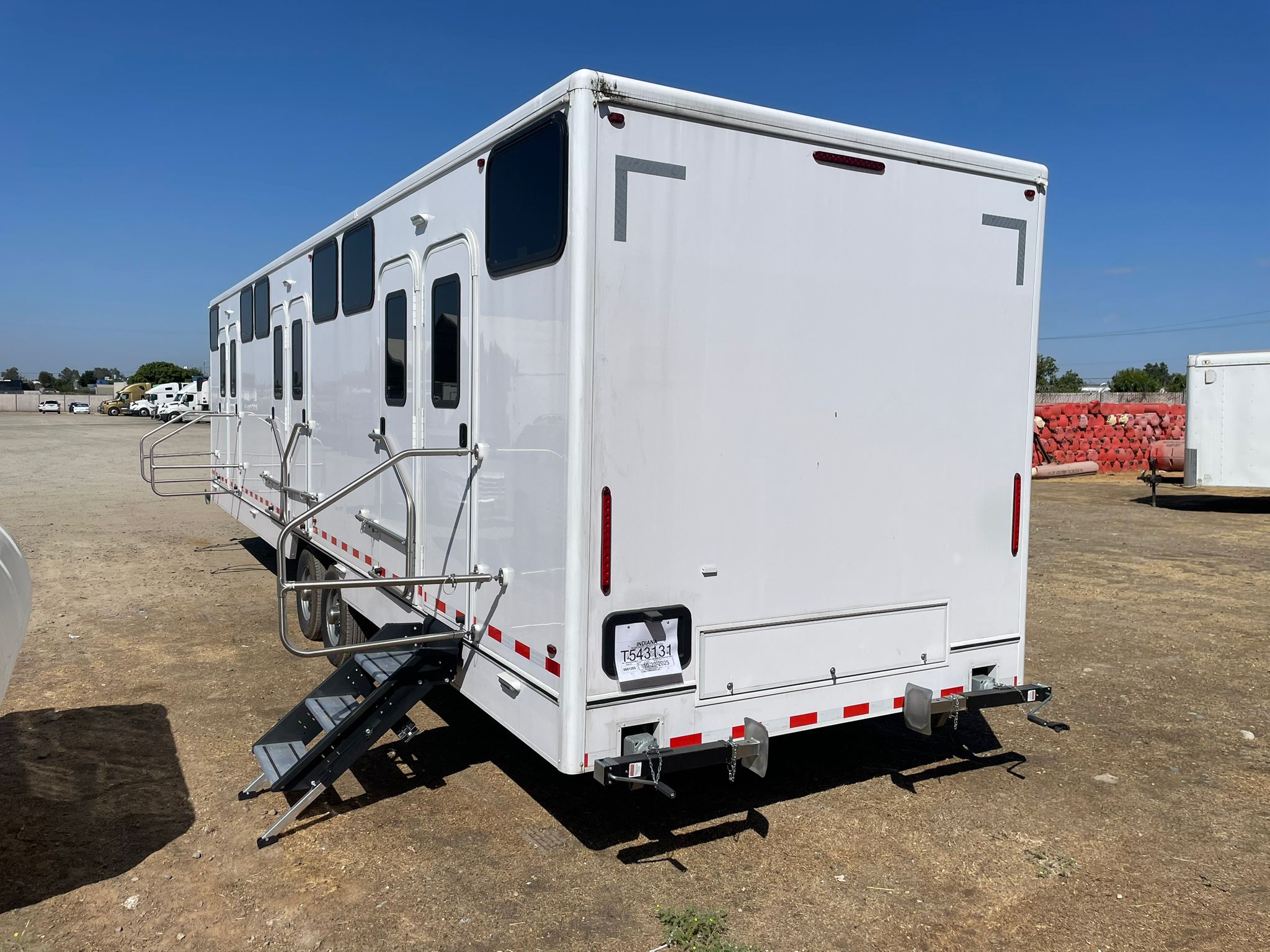
- A level, well-drained spot longer than the 34 ft trailer, plus room to back in
- A road and gate a truck can clear with a 34 ft trailer in tow
- Site power or a generator plan, confirmed before delivery day
- A named site contact whose phone answers on delivery day
- Walking distance to restroom and shower trailers
- Clear dates for crew arrival and pickup, plus each crew change

How many crew sleeper trailers your headcount needs
| Scenario | Crew size | Trailers |
|---|---|---|
| Survey team or small specialty crew | up to 12 people | 1 trailer |
| Standard field crew with room for late hires | 20 people | 2 trailers, 4 open bunks |
| Two full crews on one pad | 24 people | 2 trailers |
| Plant shutdown or bridge job crew | 36 people | 3 trailers |
| Full roster sleeping on site at once | 60 people | 5 trailers |
| 60-person roster on a 7-on, 7-off rotation | 30 on site | 3 trailers, 6 open bunks |
| 60-person roster on a 21-and-7 pipeline rotation | 45 on site | 4 trailers, 3 open bunks |
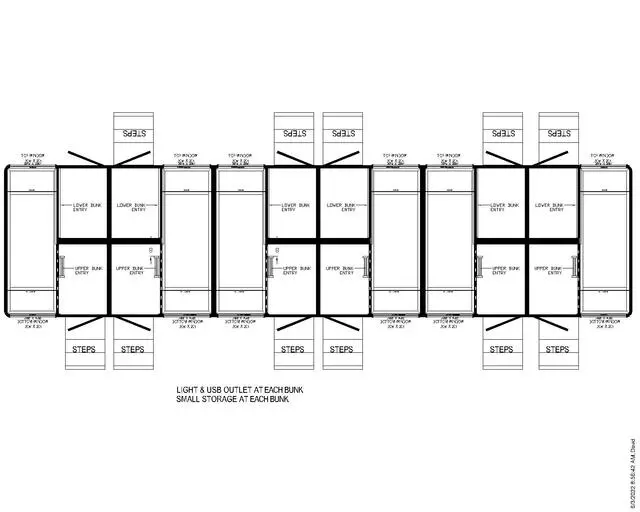
The base math is simple division. Do the division first. One trailer sleeps 12, so a 24-person crew needs 2 trailers and a 36-person crew needs 3. A 20-person crew also needs 2, which leaves 4 open bunks for a late hire or a visiting inspector. Round up, never down. A worker without a bunk ends up back in a hotel on his own dime, and the office ends up coordinating two separate housing plans instead of one.
Rotation changes the calculation more than anything else. On a 7-on, 7-off schedule, only half the roster sleeps on site at once. A 60-person roster therefore needs bunks for 30, and 3 trailers cover it with 6 to spare. On a 21-and-7 pipeline rotation, roughly 3 quarters of the crew is on site at any given time, so that same 60-person roster needs 4 trailers instead. Watch crew-change day closely. Incoming and outgoing crews can overlap for a night or two.
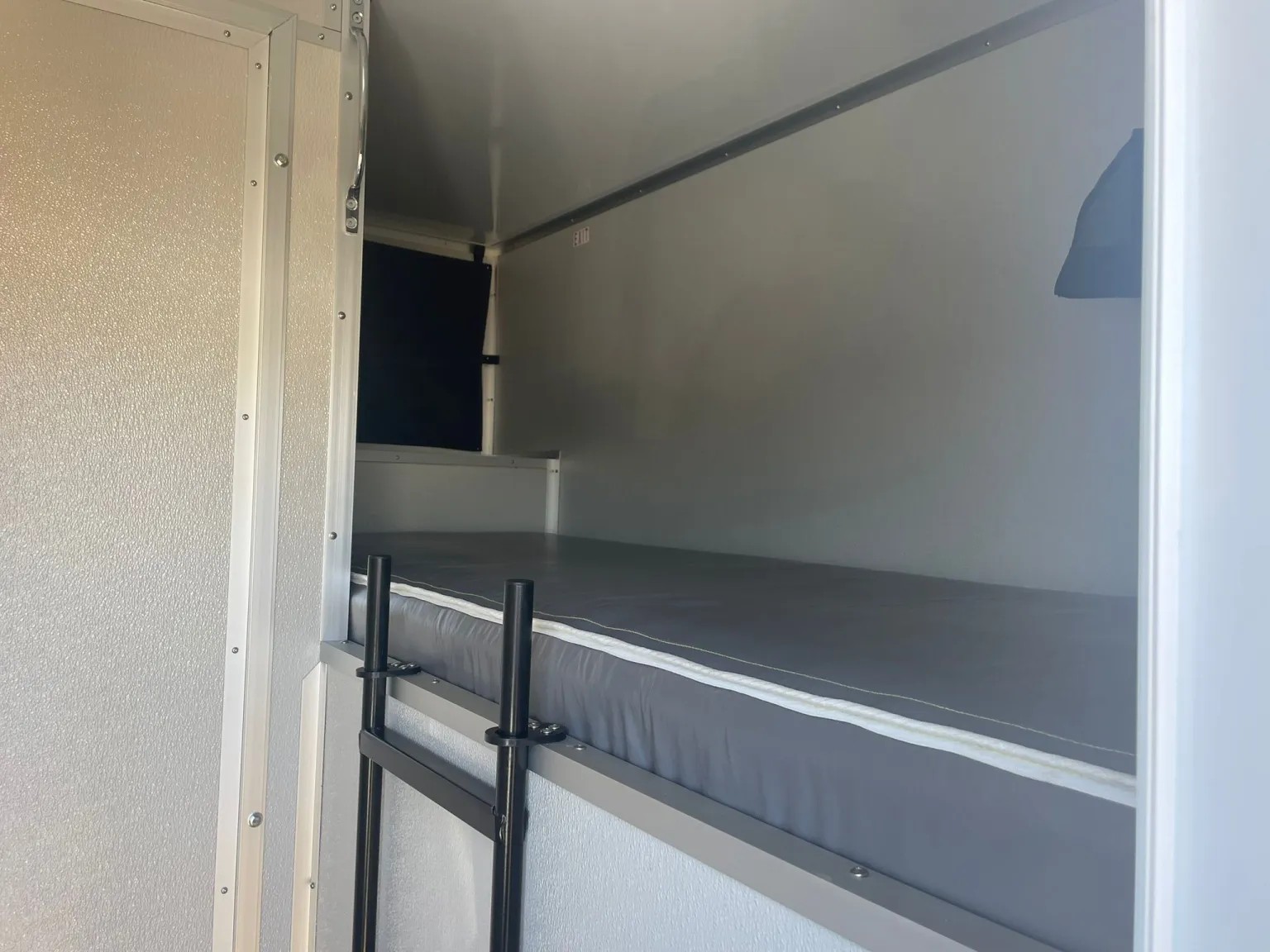
Hot-bunking is the other lever, borrowed from naval and offshore practice. Two 12-hour shifts can share one set of bunks, so a single trailer can sleep 24 people across a full day. Crews that do this run strict protocols on changing linens, often weekly at minimum. Most crews we house keep one person per bunk instead, since shared bunks bring a laundry and sanitation problem with them. Tell us your shift plan. We will help you land the right count before you book, not after.
Rules that apply when you house crews in sleeper trailers
Crew housing sits inside a handful of real regulations, and the employer running the camp carries most of that responsibility. We deliver the trailer. We set it up. Your safety lead decides how each rule applies to your job, and we hand over the documentation they need to make that call.
The federal standard for temporary labor camps is OSHA 29 CFR 1910.142. It asks that a camp site be well drained and not subject to periodic flooding. It also sets specific requirements for what the shelters must provide, room by room. It also asks the camp superintendent to report any outbreak of illness to the local health officer immediately, not at the end of the week.
On wildland fires, National Wildfire Coordinating Group work and rest guidance sets a 2-to-1 ratio. That means one hour of sleep or rest for every two hours of work or travel. Shifts cap at 24 hours. Standard assignments cap at 14 days before travel, extendable to 21 with an incident commander's documented approval. During National Preparedness Level 5, the highest activation level the interagency coordination system uses, personnel get 2 full days of rest after a 14-day assignment before any second reassignment, and military units supporting fire operations carry their own 30-day commitment ceiling. Camp managers plan sleeping arrangements around that regulation, which is exactly why a quiet bunk matters on a fire.
Crews who drive to a hotel each day face the same fatigue math on the road. Commercial drivers work under Federal Motor Carrier Safety Administration hours-of-service limits, generally an 11-hour driving cap inside a 14-hour on-duty window after 10 consecutive hours off, and a long hotel commute eats straight into those same hours. Local zoning can matter too. Midland, Texas treats a structure kept on a lot more than 180 days as a permanent installation under city code, which is why large camps there sit on county land instead. The National Response Team, a federal interagency body operating under the National Contingency Plan, has published its own dedicated guidance titled Guidance for Managing Worker Fatigue During Disaster Operations, confirming that fatigue management for disaster responders is treated as a documented federal hazard category, not an informal concern left to individual judgment. If your assignment will run long, mention it on the first call, not the last.
- OSHA 29 CFR 1910.142, Temporary Labor Camps: Sets site and shelter rules for temporary worker camps, carried by the employer.
- NWCG Work/Rest Guidelines: One hour of sleep or rest for every two hours of work or travel on wildland fire assignments.
- NWCG assignment length limits: Standard fire assignments cap at 14 days, extendable to 21 with incident commander documentation.
- FMCSA Hours of Service: Limits driving and on-duty hours for commercial drivers, which a long daily commute eats into.
- National Response Team worker fatigue guidance: Federal guidance on managing worker fatigue during disaster operations.
- Midland 180-day structure rule: Treats a structure kept on a property more than 180 days as permanent under city code.
What happens to crews without a bunkhouse sleeper trailer on site
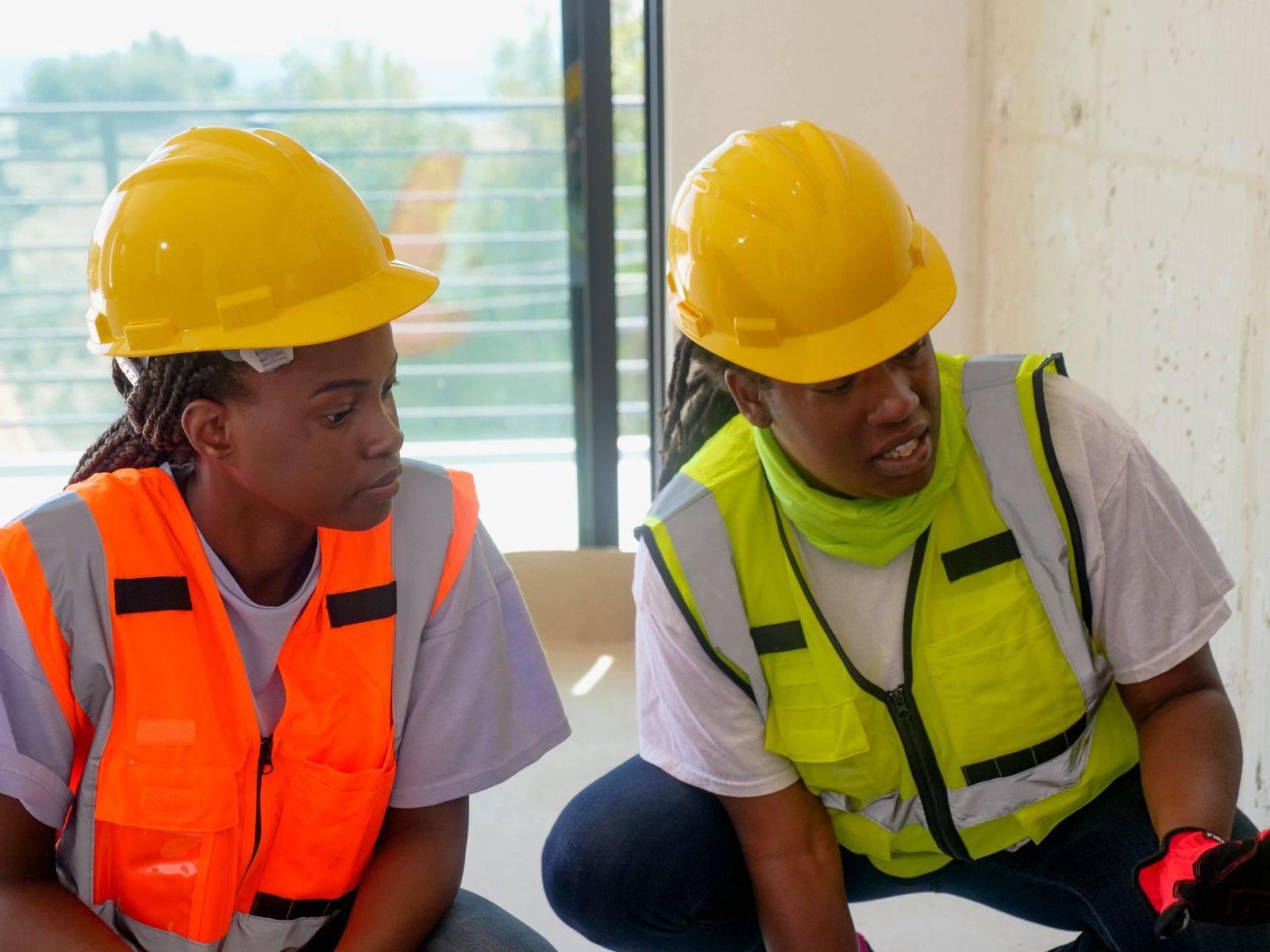
Today the default plan is a block of hotel rooms. Someone in the office spends days on the phone chasing them down, and the rooms end up spread across 3 or 4 different properties in town. Then the crew burns an hour or more each way in pickup trucks, wrapped around a 12-hour shift. The federal government's own standard lodging reimbursement, the General Services Administration per diem rate, was set at 110 dollars a night for lodging plus 68 dollars a day for meals and incidentals, and the lodging figure is scheduled to rise to 113 starting October 2026, which gives a sense of how far behind an official benchmark can sit once a boom or a disaster hits a county's hotel supply. A government reimbursement schedule rarely tracks a boom-town hotel market in real time. A disaster-driven vacancy squeeze moves even faster than either one. Each can independently overwhelm the same limited local supply of rooms, which is precisely why procurement teams increasingly treat crew housing as its own line item instead of an afterthought folded into travel administration. In a boom or after a storm, the rooms are simply gone at any rate the office is willing to pay.
The next step down the list is a man camp, a term that entered common use during the Bakken oil boom in North Dakota and has stuck in the industry ever since. Big camps work well for a multi-year oil field. They also take a large build budget and months to stand up. One Permian camp, built by Goliath Industries at a cost sales manager Ed Parker put near 10 million dollars, sits on 52 acres and houses 1,250 workers, which fits a decade of drilling. It does not fit a 6-week plant shutdown, or a fire season that ends in October.
The bottom rung is the truck cab. During one Texas ice storm, 4 workers ran a truck engine all night just to stay warm until the sun came up. Crews on that plan burn out fast, and the good ones leave for a job that treats them better. West Texas counties around Midland, Odessa, Pecos and Orla can layer drilling-crew housing demand, pipeline-spread housing and, during Gulf hurricane season, disaster-response crew housing all in the same rough window, exactly the kind of overlap that catches an office without a standing housing plan off guard. A delivered sleeper with its own heat and its own door is the plain fix for all of it.
- 2 hrs back each workday for a worker with a 1 hour drive each way
- 10 hrs back per worker across a 5-day week
- 120 hrs of weekly drive time back across one full 12-bunk trailer
- 1 trailer in place of 12 separate motel rooms
Three sites and how a setup usually runs
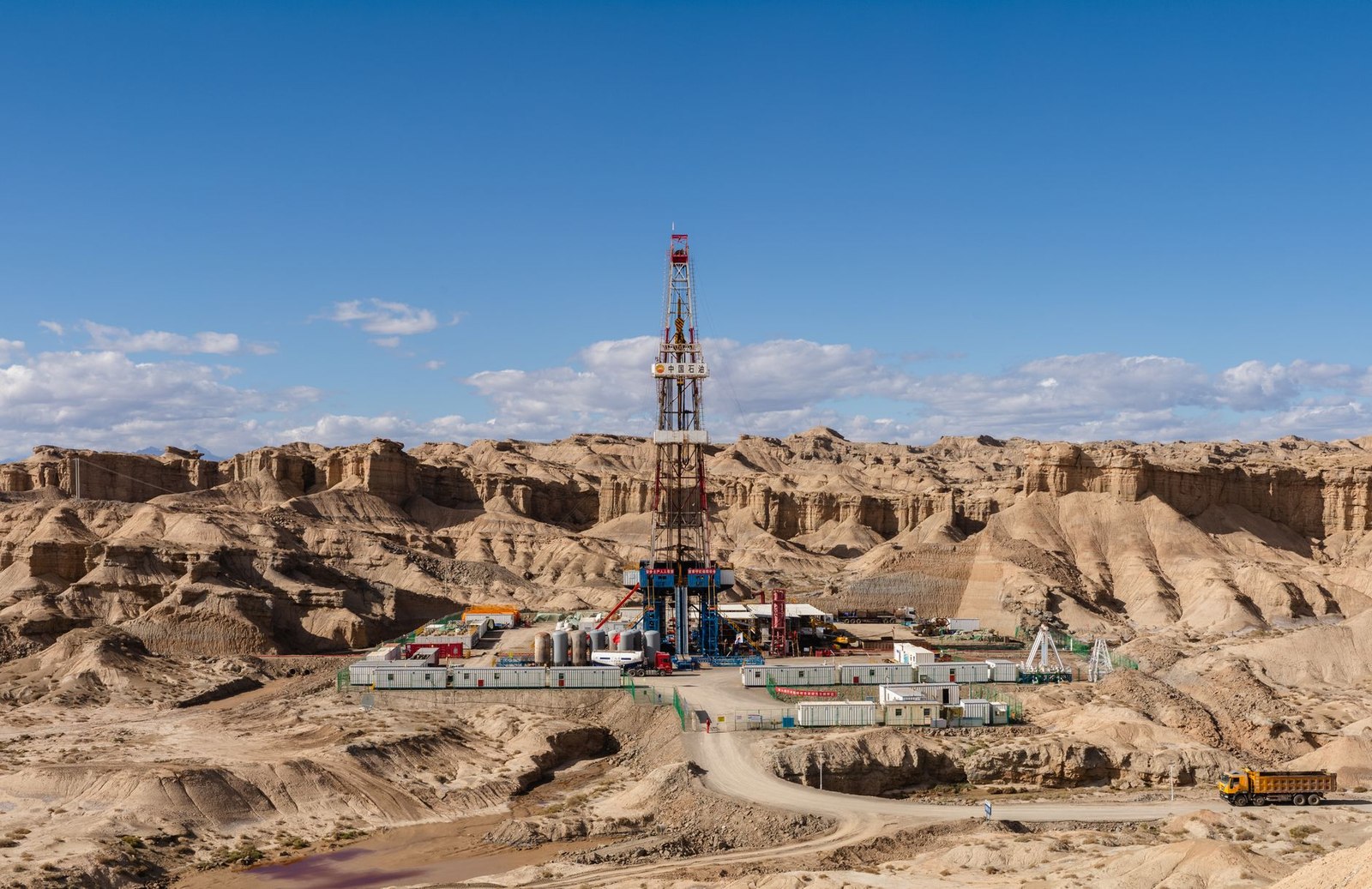
Typical setup: pipeline spread, 60-person roster, 21-and-7 rotation, West Texas summer
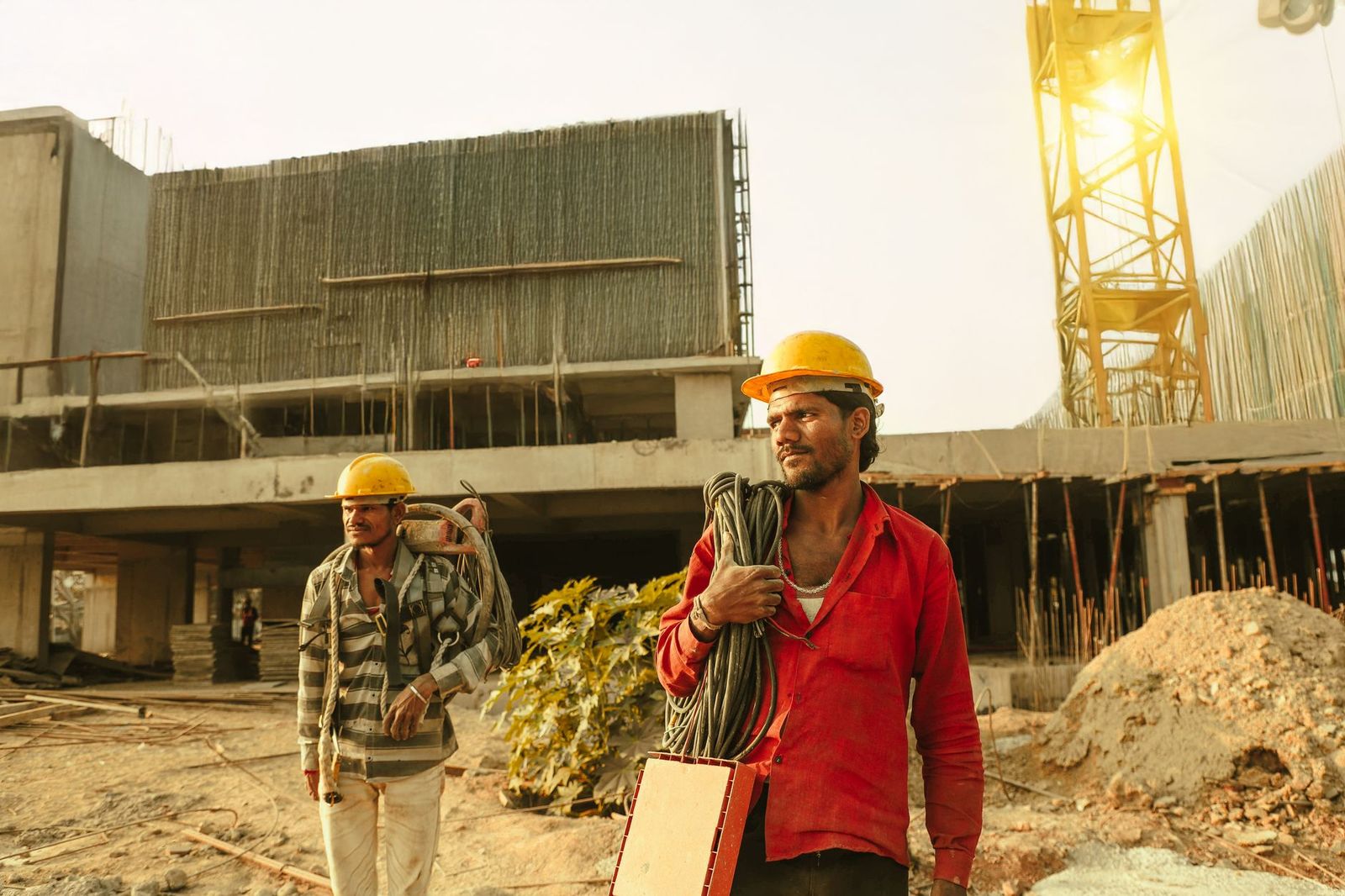
On a pipeline spread like this, the superintendent often has hotel rooms booked in 2 towns, an hour apart either way. The job is sized at 4 trailers for the 45 people on site at once, not 5 for the full roster. Over 6 weeks, the sleepers can move down the right-of-way twice, with each move timed between shifts. The crew gets its drive time back, and the superintendent stops taking late calls about rooms.
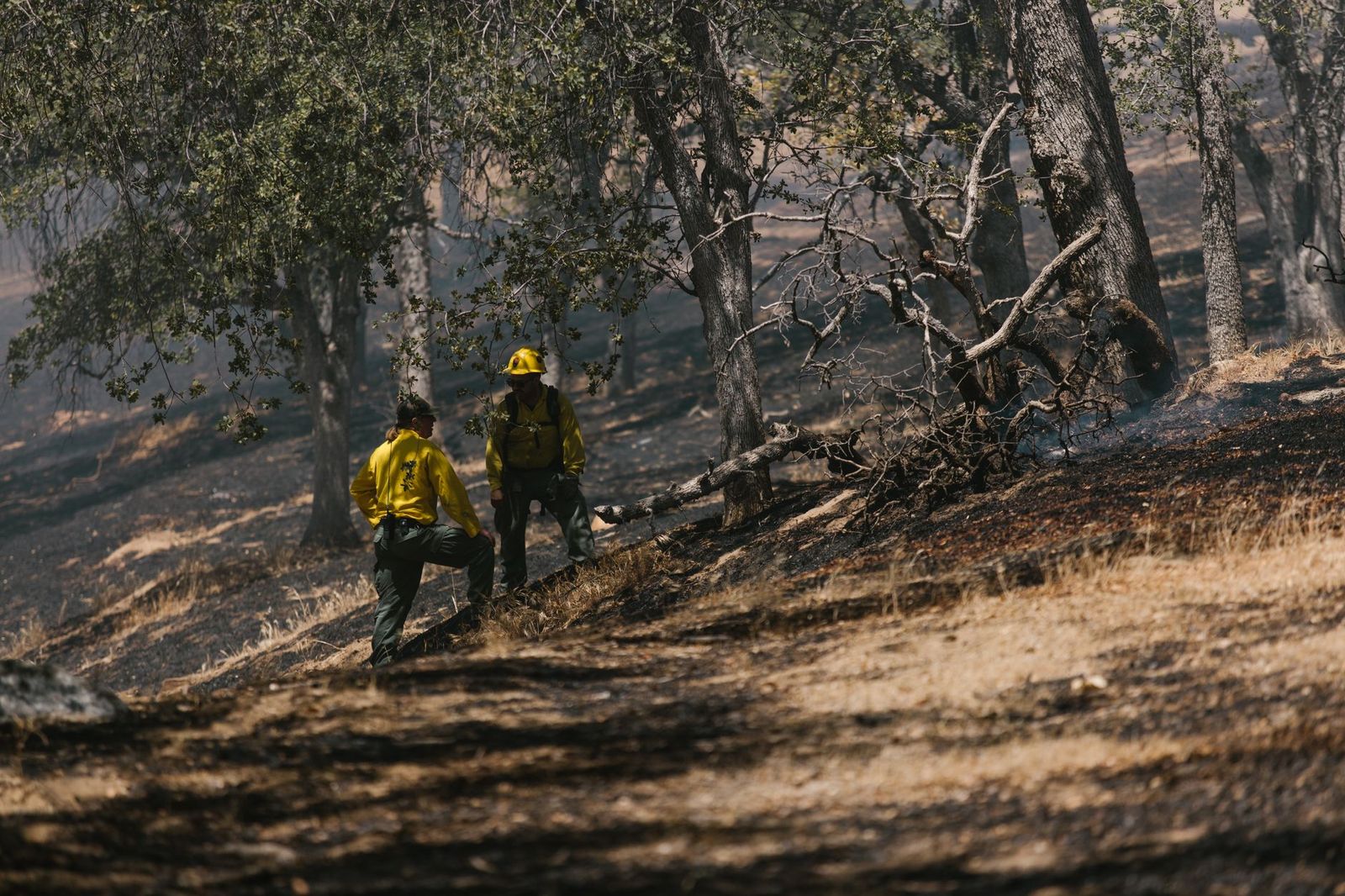
Typical setup: wildfire spike camp, 20-person hand crew, late August
On a spike camp like this, the camp logistics lead needs beds closer to the line than the main base, where generators run all night. Two trailers go to a flat staging area on a forest road that a delivery truck can reach in under an hour. The day-sleeping crew sets the thermostat cool and sleeps through the afternoon. The 4 spare bunks can go to a relief engine crew that shows up on day 3.
Typical setup: refinery shutdown, 36 contract workers, 4 weeks in early spring
On a shutdown like this, the turnaround coordinator usually books housing the week the shutdown date is set, often 5 months ahead. Three sleepers go onto a gravel lot beside the mobile offices, inside the plant fence. Night-shift workers sleep through the day with the lights out and the air running at a steady 68 degrees. At the end of week 4, all 3 trailers can be picked up in a single day.