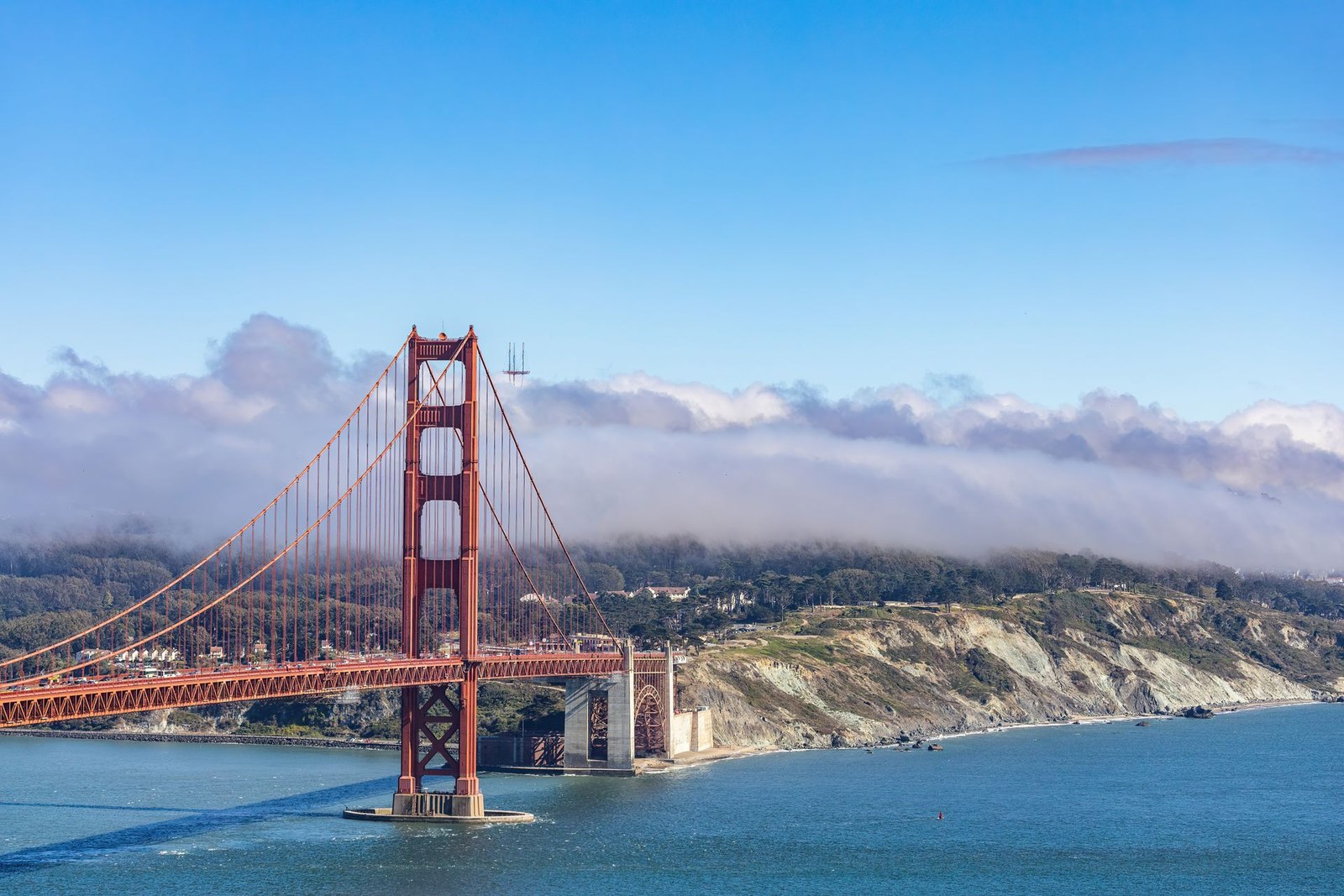
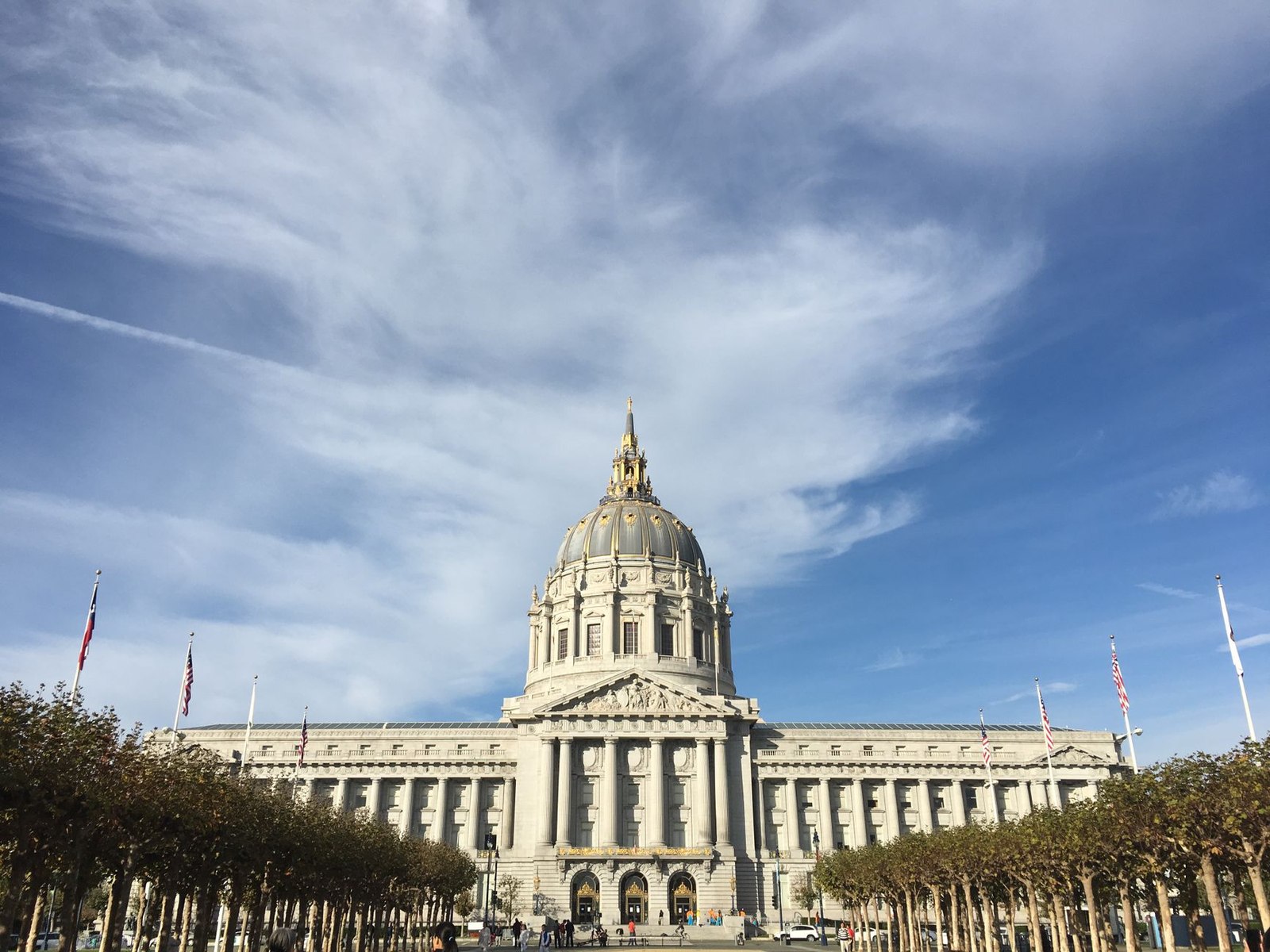













Bunkhouse sleeper trailer rentals for job sites, shutdowns, utility work and more in San Francisco
Job site bunkhouse trailer rentals for energy, solar and plant-shutdown work
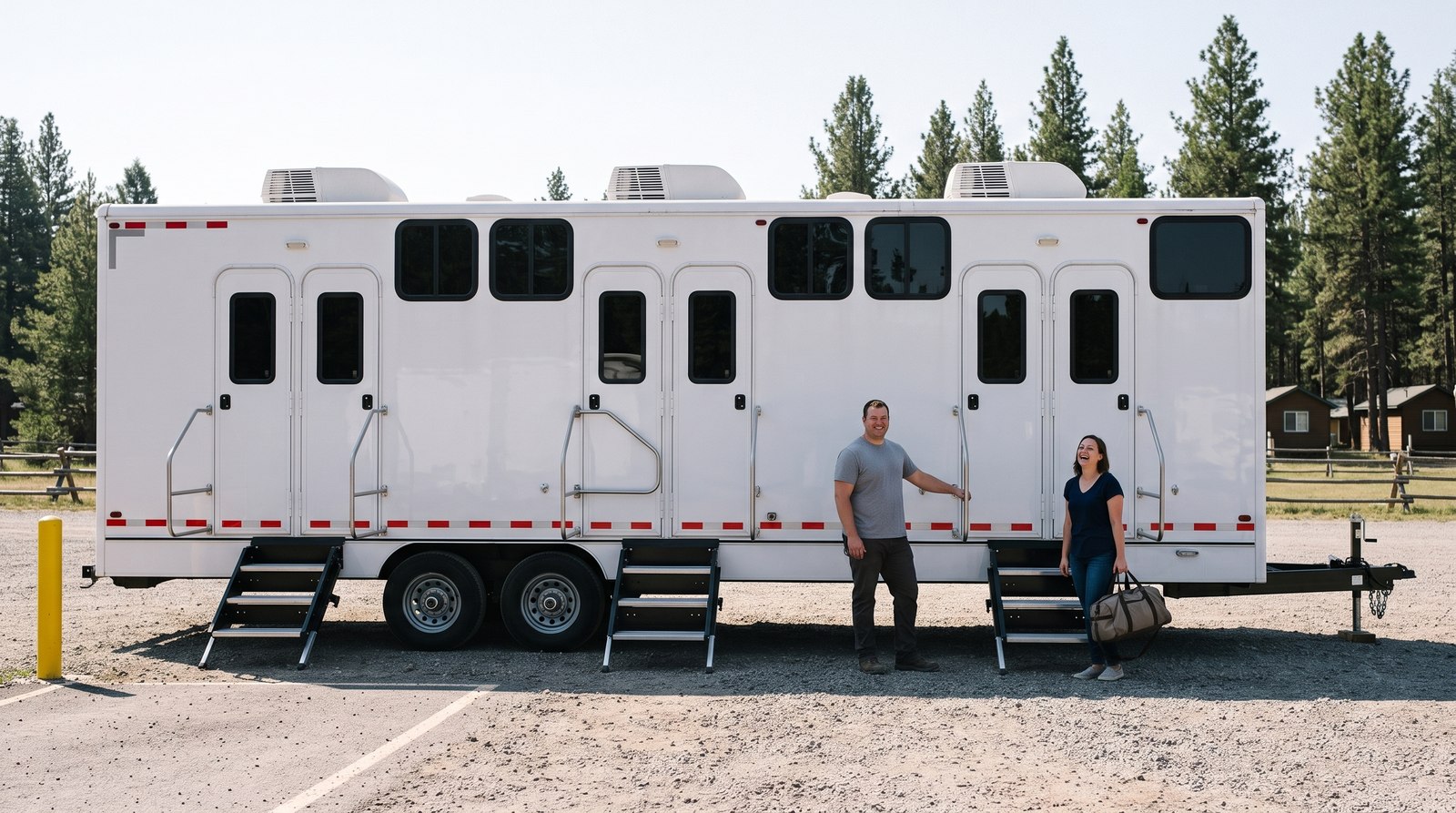
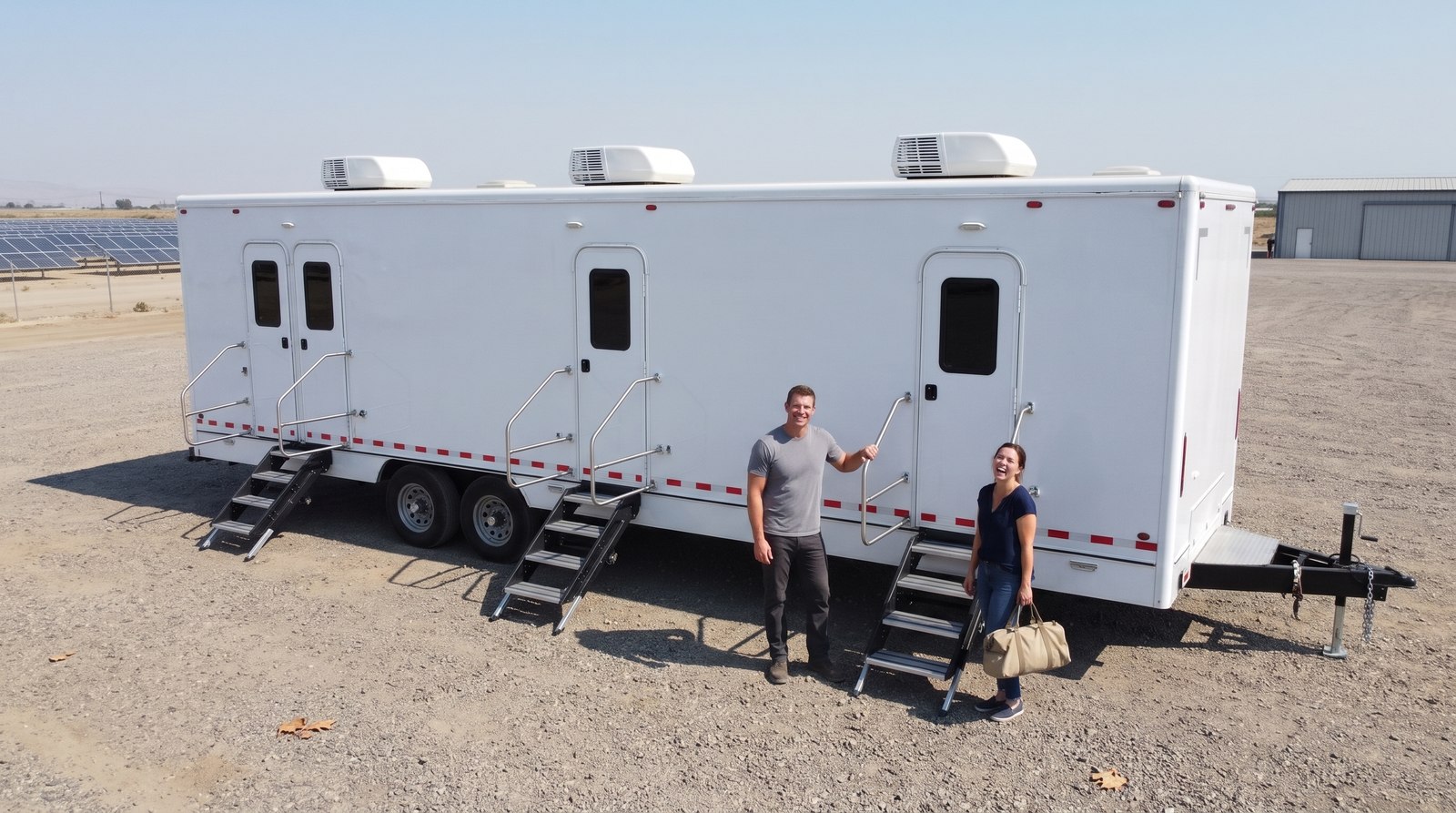
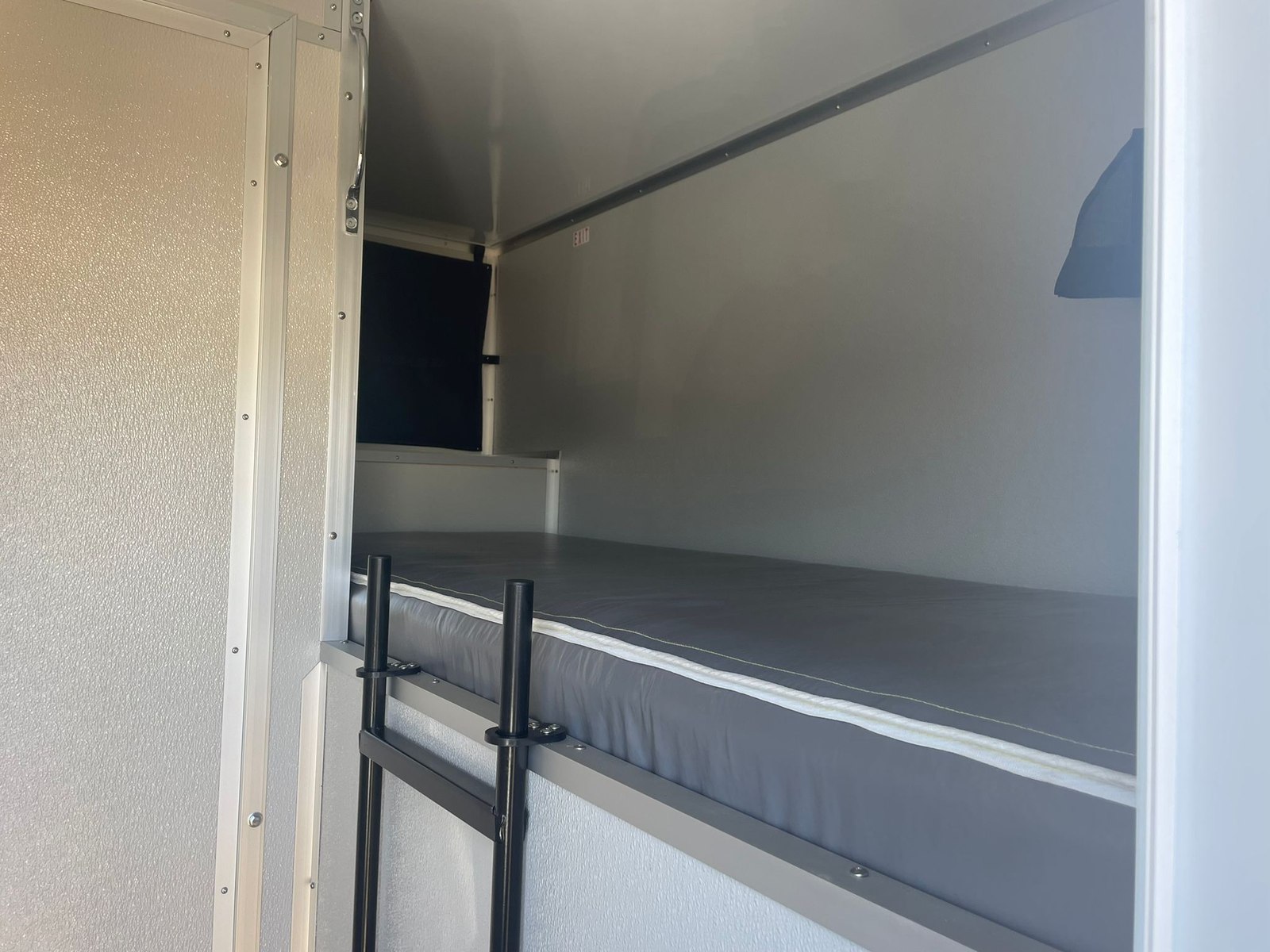
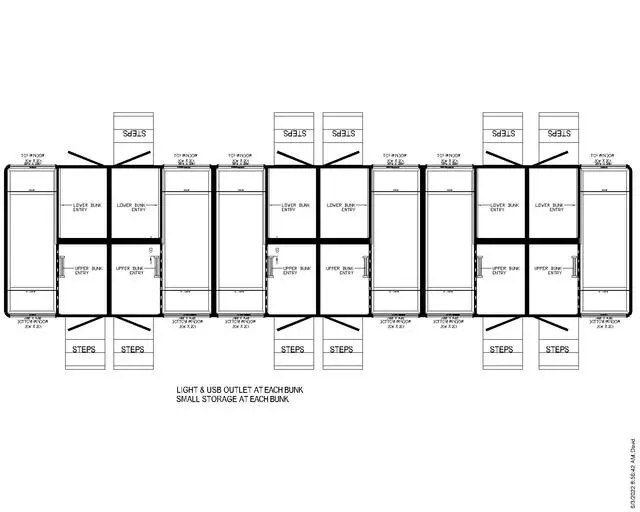
A bunkhouse trailer gives shutdown and solar crews twelve real bunks, each with a reading lamp, a charging port and a shelf, for a set run of work. They need beds close to the work, because a long drive back to a hotel eats the rest hours that make the next shift safe.
Electrical, mechanical and utility trades rotate through a large build like the Potrero Power Station site, and a bunkhouse in the staging yard keeps each crew within a short walk of the gate. Placing the trailer takes planning on a tight, hilly site, so we look at the access route and the ground before it arrives.
For solar and panel work on rooftops, crews are small, the schedule is tight and every bed in the trailer counts. One trailer holds twelve, so a mid-size team fits in a single unit, and a larger team can be split across two. If the work reaches the Peninsula, ask about our bunkhouse trailer rentals in San Ramon or the sleeper trailers we place south of the city.
We tell shutdown planners the same thing every time: send the headcount, the dates and a photo of the staging area. With those three items we can give you a firm quote and a placement plan. Call (888) 828-7765 or request a quote online.
Sleeper bunkhouse trailer rentals for pipeline and utility repair work
Utility work in San Francisco is a lot of small, urgent jobs on old pipe. A water main break in the Sunset District flooded streets in 2019, and reports at the time tied it to aging infrastructure. Repair teams for jobs like that work long shifts, and a bed on the block beats a drive across town.
The city also runs a separate high-pressure firefighting water system, which means water, sewer, gas and fiber crews often share the same trenches and the same streets. When several contractors overlap, lodging gets scarce fast, and a bunkhouse trailer gives each contractor a sleeping base that does not depend on what the hotels still have open.
Treasure Island is the biggest utility story in the city. The first stage of street and utility work there, roughly 300 million dollars of improvements including roadways, bike lanes and a ferry facility, is finished, and later stages, including the parks, continue. Getting a 34 ft trailer onto the island means a Bay Bridge crossing, so we plan the route and the turning space on the island before dispatch.
For work at the curb, drop us the block and the cross streets. A trailer on a public street is a street space question, covered in the permits section below, and we will help you collect the details your permit application needs.
Bunk trailer rentals for long-term workforce camps on San Francisco's waterfront builds
The city's southeast waterfront is where multi-year jobs live. Hunters Point Shipyard has finished about 35 percent of its first-phase housing, and nearly all the ground-level infrastructure in the Hilltop area of that phase is complete. Work like that keeps trades on the same yard for months at a stretch.
Treasure Island plans about 8,000 homes and 300 acres of parks, and a June 2026 report said more than 1,000 people had already moved into newly finished buildings. India Basin has more than 1,500 homes in the planning pipeline, and Mission Rock next to Oracle Park is another long build. Each of these needs workers who live nearby for weeks or months.
A workforce camp built from bunkhouse trailers lines up as a simple row. Three trailers sleep 36, four sleep 48, and each trailer stands on its own, so you can add or remove one as the headcount moves. Long rentals are a normal part of what we do, and a monthly arrangement keeps the paperwork light.
We have seen what slows a camp down on a big yard: unclear access for the next truck and no plan for where the second row goes. Send the yard dimensions with your request and we will sketch the layout. Call (888) 828-7765 or ask for a quote. If the job reaches Los Angeles, our Los Angeles bunkhouse sleeper trailer rentals page has the units, sizing and booking steps.
Bridge and hill planning
Every trailer needs a route that fits its length and a flat pad at the end of it. We review each approach before dispatch, since a long unit on a grade is a safety problem. If the job reaches Colorado Springs, our bunkhouse sleeper trailer for rent in Colorado Springs page has the units, sizing and booking steps.
Bunkhouse trailer rentals across San Francisco districts
- Dogpatch and Potrero Hill: This is the industrial waterfront turning into homes, labs and offices, including the Potrero Power Station redevelopment, and contractor yards here are the most common placement for a long-term trailer.
- Mission Bay: UCSF's campus and Chase Center's Thrive City anchor Mission Bay, and construction and event-support crews use trailers on contractor-held lots near the Third Street corridor.
- Bayview and Hunters Point: The shipyard redevelopment and India Basin keep large yards open for months, and workforce rows of three or four trailers are practical in lots this size.
- Treasure Island: Housing, parks and utility work continue on the island, reached over the Bay Bridge, and we plan the crossing and the turning space before a trailer goes out.
- SoMa, the Financial District and the Embarcadero: Dense streets and tight curbs make private lots and Port-permitted spaces the usual options, and production and out-of-town specialty trades are the common customers here.
- Richmond and Sunset Districts: Flat grids on the west side make it easier to find a level curb, and fog is a regular part of life. Repair teams use trailers near utility jobs on residential blocks.
Site permits and landlords for a bunkhouse trailer in San Francisco
Before anyone asks where a trailer can sit, ask whose land it is. San Francisco public land has four landlords: Recreation and Parks for city parks, the Presidio Trust for the Presidio, the National Park Service for coastal areas like Crissy Field, and the Port of San Francisco for piers and waterfront streets. Each has its own permit office, and a private lot has a property owner and, in many buildings, a condo board.
A trailer at the curb is a street space question. Public Works requires a permit to occupy a street or sidewalk under Public Works Code Section 724, and its Street Space Request form covers scopes such as scaffolding and debris boxes. Tow-away signs need at least five business days to activate, and the Port asks for at least 15 calendar days on its street parking permits. Start these requests early, and drop us the permit number when you have it.
Whether a sleeping trailer can sit on a particular parcel is a planning and building question, not something we decide for you. Ask the department for the lot you have in mind, and map out what they say so we can plan around it. For work south of the city, our bunkhouse trailer rentals across California cover the same process in other counties.
Common Ways to Lay Out the Site
A project manager staging 30 specialty trades near Mission Bay
When a team of 30 arrives for a six-month fit-out, we start with the head count and round up to three trailers, which gives 36 beds and a few spares for visitors. We ask where the yard gate is, how the trailers enter and where the third unit goes so nobody blocks the delivery lane.
A utility foreman covering repairs on a hillside block in the Richmond
When a crew of 10 needs rest between shifts on a block with steep side streets, we look for a flat approach and a curb long enough for 34 ft. If the street cannot hold it, we help the foreman find a private lot or a contractor yard nearby.
A production coordinator housing a camera and electric team on a waterfront shoot
When a production runs long hours near the Embarcadero, we confirm who holds the location permit and where the truck can turn. We ask for a quiet spot away from the set sight lines so the team can sleep while the shoot goes on.