
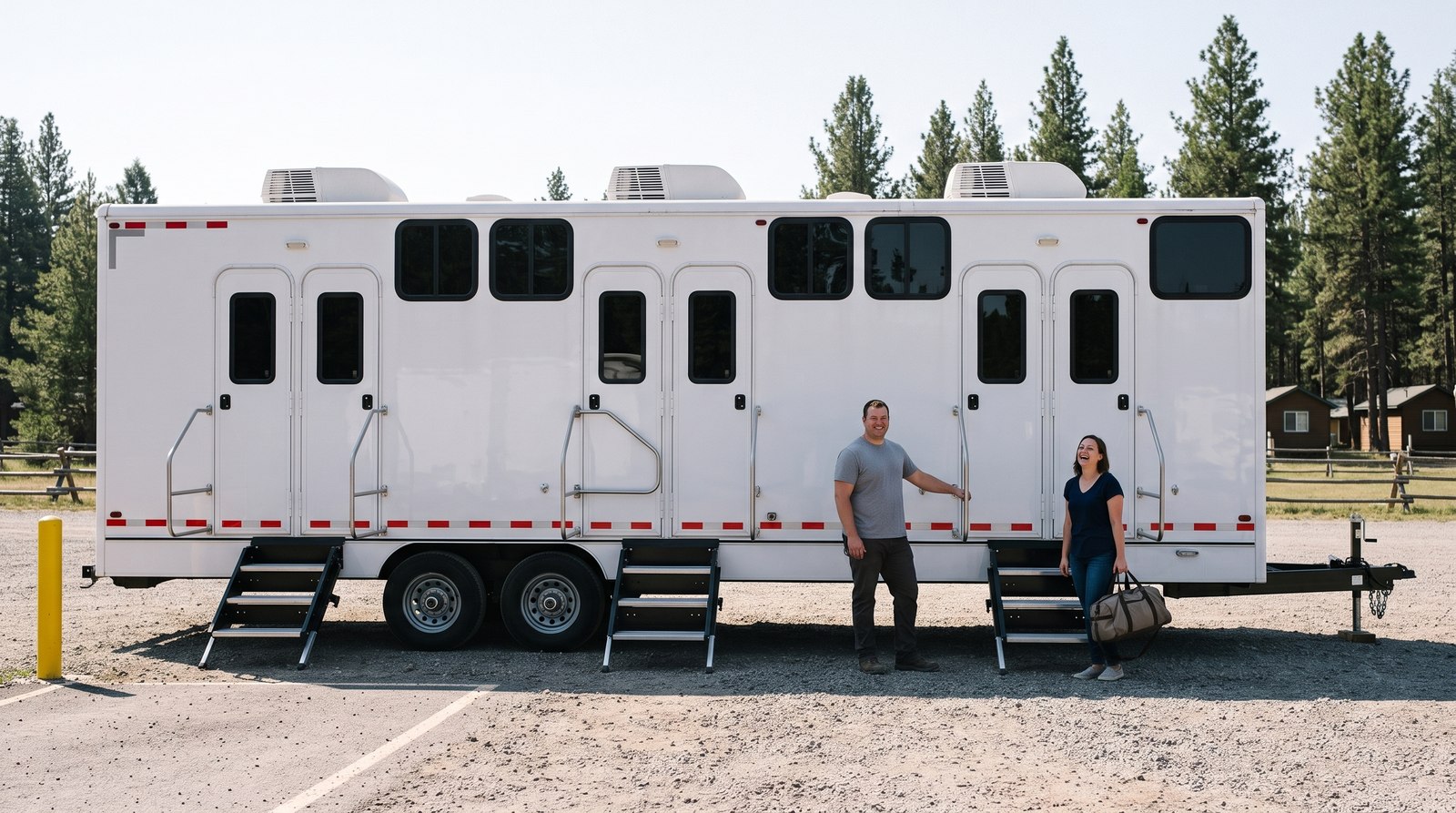
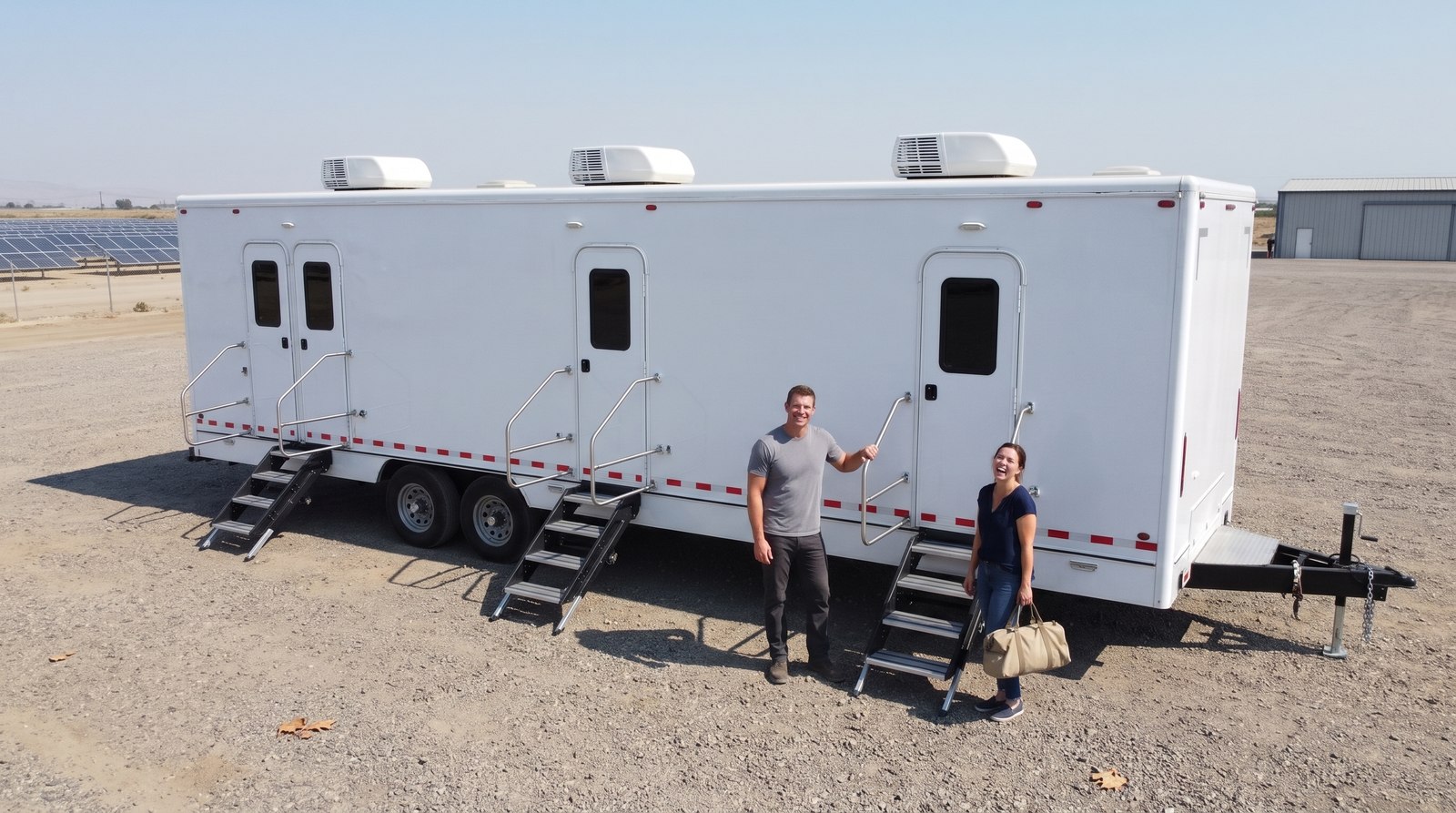
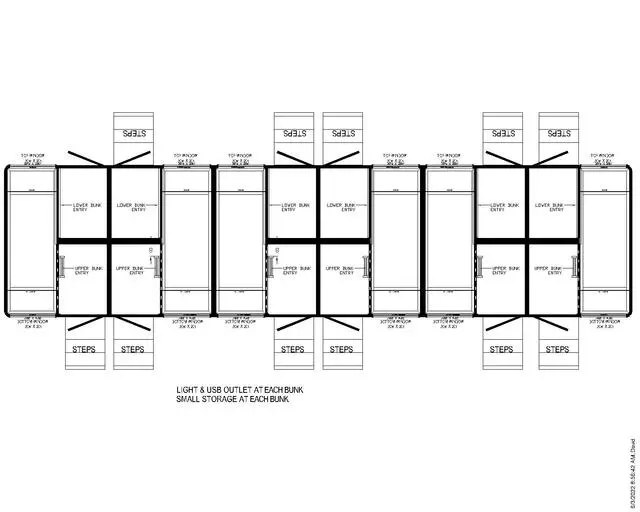












Bunkhouse trailer rentals for solar, utility and long-term jobs around Las Vegas
Sleeper bunkhouse trailer rentals for solar fields and plant outages
Southern Nevada has two big solar clusters. One sits in the Eldorado Valley south of Boulder City, about 25 miles from the Strip, where more than 550 MW of solar has been built and Boulder Solar III adds 128 MW with a 58 MW battery. The other follows I-15 and US 93 toward Moapa, where Dry Lake Solar, Chuckwalla and Gemini are in various stages.
Gemini Solar sits about 33 miles northeast of the city. It was approved at 690 MW of panels with 1,400 MWh of battery storage, and its construction workforce was estimated to average 500 to 700 people, peaking near 900. At that scale no nearby motel strip can absorb a crew. Even a 24-person electrical team has to pick between a long drive from town and a bed on site.
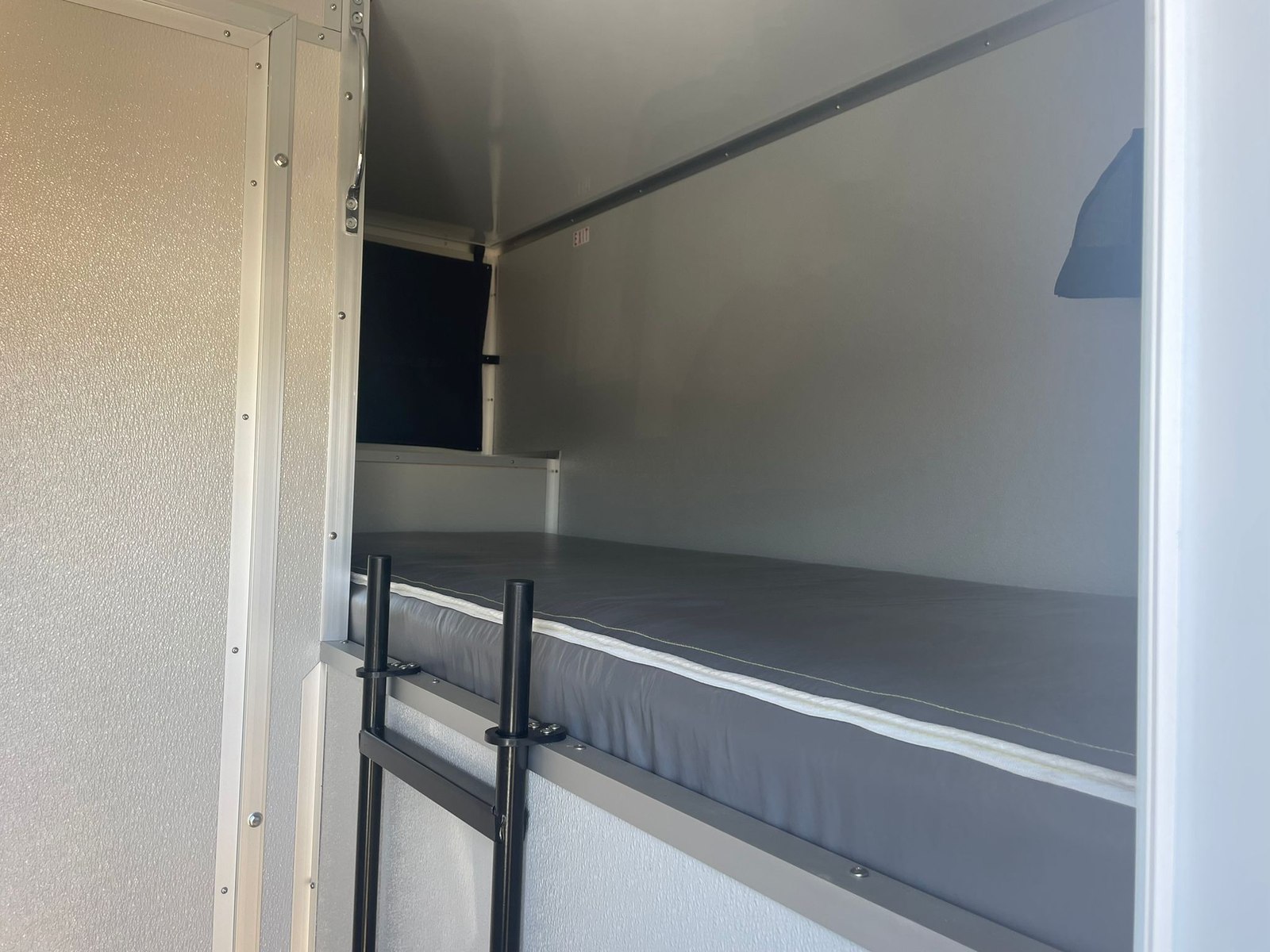
Gas plants add a second pattern. A planned outage that lasts a week or more puts welders, electricians and inspectors at one fence line for a short, hard push. Bunks on the gravel lot beside the plant let the night shift sleep through the day without a drive back to town.
Before every delivery we ask the same four questions: how many people, which shifts, where is the pad and what is the power source. For first-light solar starts, a team that sleeps steps from the work front is on the array at dawn instead of stuck in traffic on I-15.
Job site bunkhouse trailer rentals for water, gas and power lines
Southern Nevada has no oil patch, so utility work here means power, water, gas and fiber. Greenlink West is a 525 kV transmission line from the Harry Allen Substation in Clark County to the Fort Churchill Substation in Lyon County, under construction since May 2025. A February update to the Beatty town board described crews raising about three structures per day along the US 95 corridor.
Beatty sits roughly 115 miles from the Strip, and the towns between have few rooms. A line team working that stretch needs beds near the corridor or a daily drive measured in hours. A trailer on a staging pad near the right-of-way solves it without building a tent camp.
Water work is next in line. The Southern Nevada Water Authority's approved backup pipeline, the Horizon Lateral, runs about 40 miles under Sloan Canyon National Conservation Area and was signed into law on May 20, 2026. It is designed to carry up to 375 million gallons a day, and heavy work is expected to follow the authorization. Gas main and service line replacement crews also move through valley neighborhoods one block at a time.
Linear jobs move, and the beds should move with them. Plan the second pad before the first delivery, and map out where the work front is heading. On BLM corridors your project manager usually places trailers inside the approved work area, so send the pad location and we plan around it.
Bunk trailer rentals for long builds at Apex and beyond
Apex Industrial Park, north of North Las Vegas, covers about 18,000 acres. Roughly 28.5 million square feet of industrial space there is finished, under construction or planned. Developers include Prologis, Hopewell and Dermody, Switch has filed for a data center campus of about 175 acres, and Novva bought about 205 acres in 2025.
Be honest about who needs a bunk here, since many local trades live in the valley and drive in. The case is the specialty teams that fly or drive in from out of state for months, such as switchgear, controls and commissioning technicians, who want a base they can walk to from the gate.
A long job grows in steps. A camp may start with two trailers and add two more when the second shift joins. Rentals run from short to long term, so drop us the length of the build and the dispatcher keeps in touch month after month.
If your build has several phases, ask about bunkhouse trailer rentals near Las Vegas that scale up as the head count grows. We lay out the pads with you so restroom, shower and laundry trailers have room later.
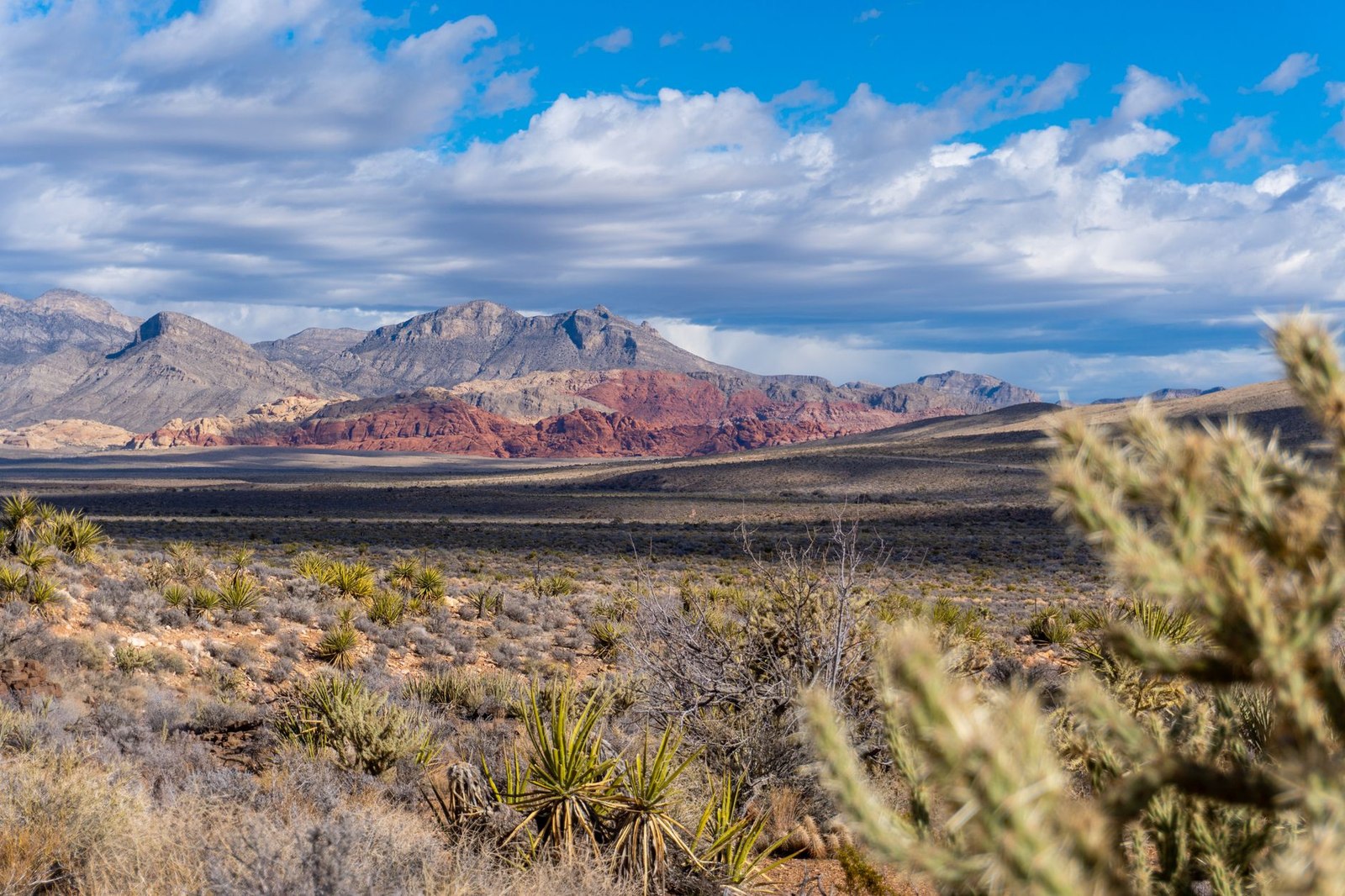
Desert pad planning
Dry washes flood fast in a monsoon storm, so we ask where the water runs before we choose a pad. That one question has saved more setups than any other.
Neighborhoods and towns where sleeper trailers go
- Summerlin and Centennial Hills: The northwest edge of the valley still has offices and homes going up. Specialty trades from out of state use sleeper trailers on larger staging lots.
- Enterprise and Mountain's Edge: Southwest of the Strip, this is one of the fastest-growing parts of the valley. Large lots leave room for a small camp of two or three trailers.
- Henderson and Green Valley: Henderson is the closest city to the Horizon Lateral route, so utility teams working the south valley use it as a staging base.
- North Las Vegas and Aliante: North Las Vegas is the gateway to Apex and the I-15 corridor, and industrial lots here host crews on warehouse and data center shells.
- Boulder City: Boulder City is the base for the Eldorado Valley solar fields to the south. Distances to the work are short, but lodging in town is limited.
- Paradise and the Airport corridor: The Strip and the airport sit in unincorporated Clark County. Staging yards here are small, so a 34 foot trailer needs a measured pad.
Camp permits and heat rules for sleeper trailers in Las Vegas
Nevada treats a place where an employer provides sleeping quarters as a possible construction or labor camp. Under NRS 444.130 the state health agency reviews plans and issues a permit before a camp operates, and camps with five or more employees must provide bunkhouses, tents or other suitable sleeping places. Whether one trailer on a utility site triggers that review depends on the employer, the head count and the facilities provided. Ask the state before you set up, and we will send any trailer specifications it requests.
Land decides the next call. The Strip and most of Paradise sit in unincorporated Clark County, while other sites fall under the city of Las Vegas, North Las Vegas, Henderson or Boulder City. Desert corridors are often BLM land with an approved plan of development, and Pahrump is in Nye County. Homeowner association rules matter only on residential lots.
Nevada's heat rule for outdoor work, R131-24AP, has been enforced since April 29, 2025 and applies to employers with more than 10 employees. On May 21, 2026 the state adopted a modified version of the federal heat emphasis program, so inspections can follow days when the National Weather Service issues a heat warning. A bunk to rest in between shifts is one practical piece of a heat plan. It does not replace a written plan.
What a Sleeper Trailer Site Can Look Like
Superintendent adding beds for a nine-day gas plant outage
When a planned outage brings 24 contractors to a north valley plant, we ask for the pad location, the shift split and the power source first. Two trailers can sit side by side with a walking lane between them, so the night shift sleeps in one and the day shift in the other. The pickup call is the last step, and the pad is clear when the outage ends.
Project manager on a transmission segment along US 95
When the work front moves up the corridor, we plan the next pad before the first trailer arrives. The project manager sends coordinates and gate hours, and we plan the haul around them. Beds stay close to the structures, and the team does not lose a morning to a long drive.
Production manager planning a desert shoot east of the valley
When a production needs 12 crew beds near a location far from town, we confirm the access road width and the power source first. The trailer sits out of frame, and the generator sits at the far end of the pad so sleepers stay undisturbed. Quiet bunks matter more here than on a construction site.