Skip to content
Delivered to all 50 states 24/7 dispatch: (888) 828-7765

Utility Line and Storm Restoration Crews

Long-Term Bunkhouse Trailer Rentals for Utility Line and Storm Crews

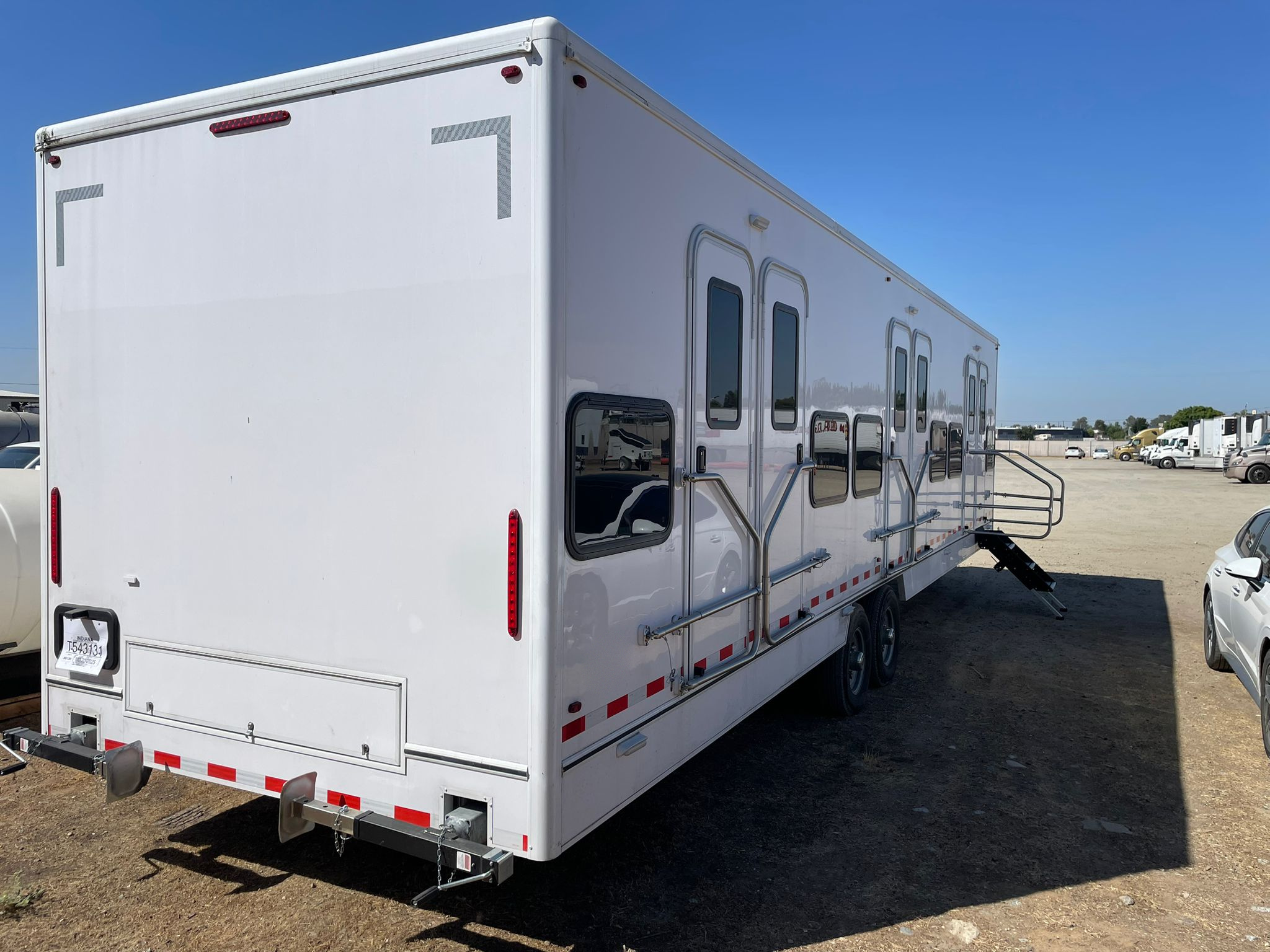
When a storm takes down power lines, your line crews need beds close to the work, and the nearby hotels usually fill up within the first few hours. We deliver the 12-Station Bunkhouse Sleeper Trailer to storm staging yards and remote line jobs in all 50 states. Each 34 ft trailer sleeps 12 on 6 upper and 6 lower bunks, with 3 AC units that also run heat. Beds arrive ready. Our driver levels the trailer and sets it up before your first crew comes off shift. Call (888) 828-7765 any hour, or request a quote with your staging address and your expected crew count.

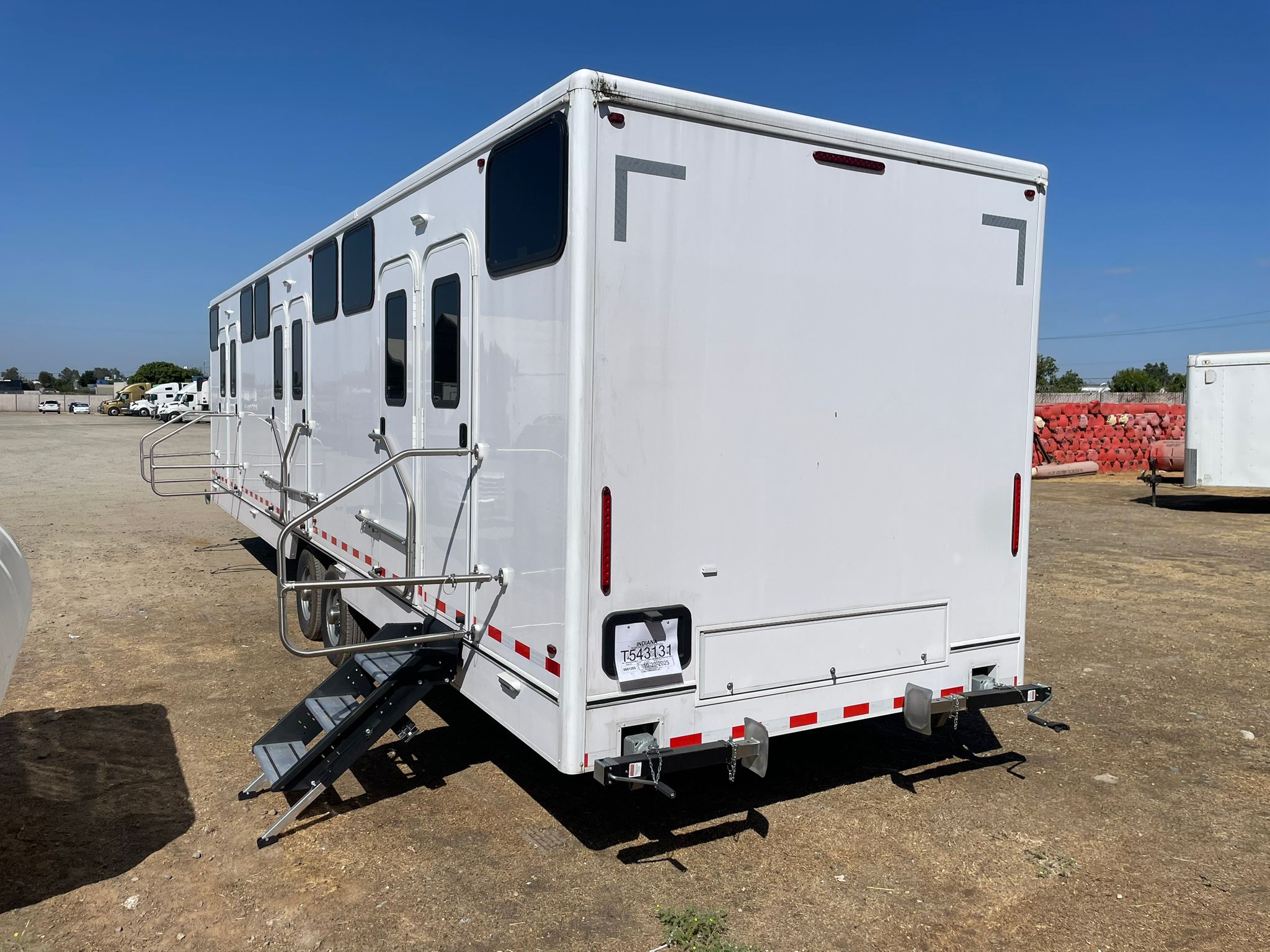
34 ft bunkhouse sleeper trailer with three bunk entry doors and built-in steps
  • Sleeps 12 6 upper and 6 lower bunks in a 34 ft trailer
  • 3 AC units with heat, run from one smart touch thermostat
  • All 50 states delivered and set up at your staging yard
  • 24/7 storm dispatch at (888) 828-7765
  • 12,000+Trailer deliveries across our network
  • 50Delivery to all 50 states
  • 24/7Dispatch answers day and night
  • 12Private bunks in every trailer

Built for construction crews, fire camps, pipeline spreads and utility contractors.

Storm crew housing

Crew sleeper trailers that keep storm crews close to the work

Big storms bring line crews in from hundreds of miles away, and the biggest responses pull workers from dozens of utilities at once. After Hurricane Helene, the restoration effort drew more than 7,300 people, including crews from 27 states. Every one of those workers needed a bed near the damage, while the local hotels were already full of families who had lost power at home. Beds go fast. We set crew sleeper trailers right at your staging yard, so a worker coming off a long shift walks to a bunk instead of driving an hour. Our network has completed over 12,000 successful trailer deliveries, and our dispatchers pick up the phone at 3 in the morning. Call (888) 828-7765 when the storm track firms up, or request a quote with your staging address and your expected crew count.

The 12-Station Bunkhouse Sleeper Trailer is a 34 ft unit with 6 upper and 6 lower bunks. For a storm crew or a line crew, that means 12 real beds parked a short walk from the bucket trucks.

What comes with every rental

  • Delivery, leveling and setup by our driver
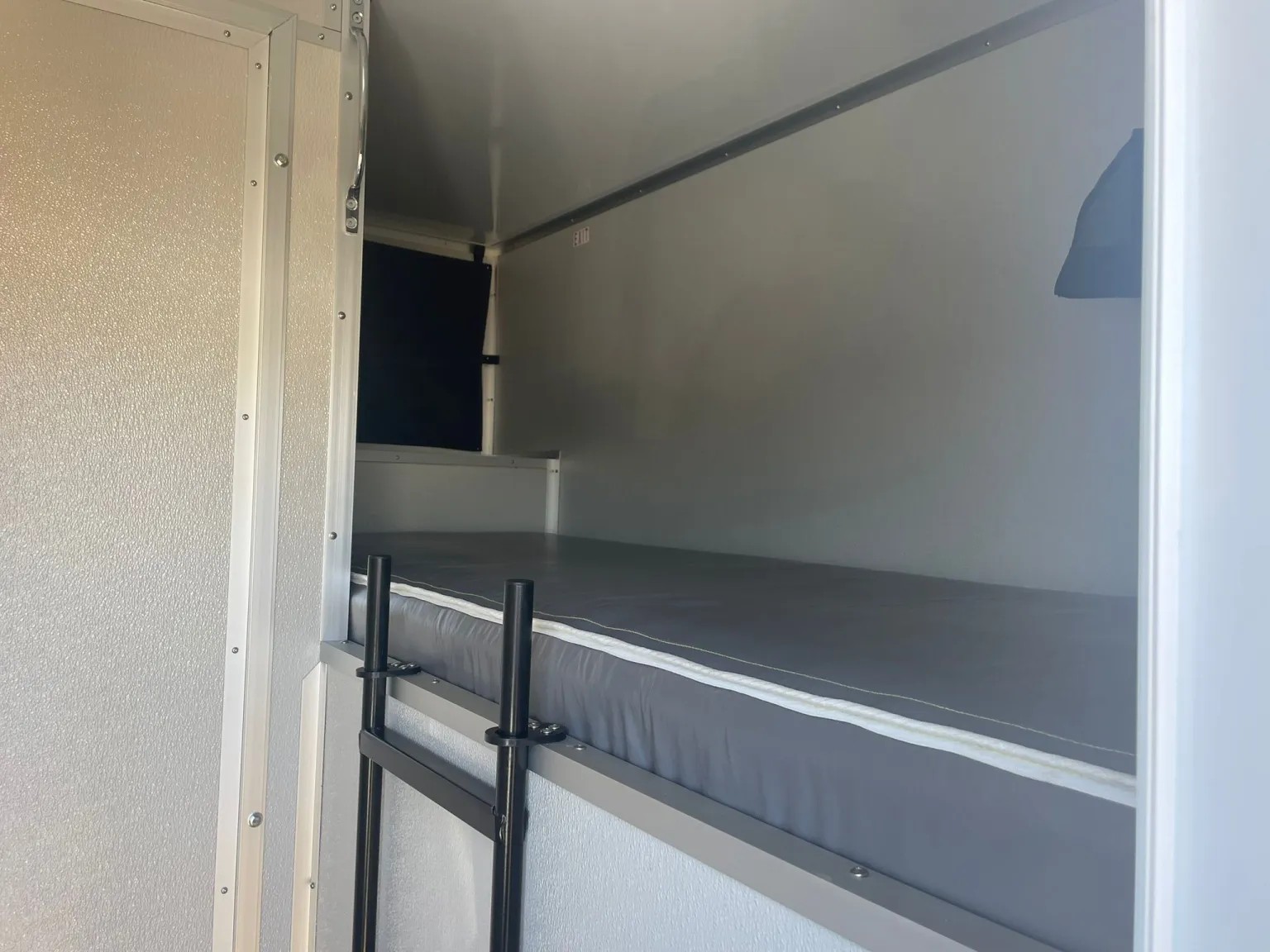
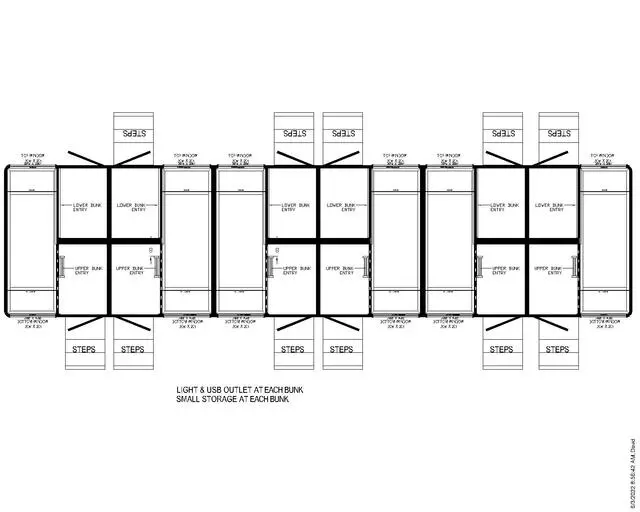
  • Twelve private bunks, each with a light, USB outlet and storage
  • Three AC units with heat and a smart thermostat
  • Built-in steps at every bunk bank
  • Pickup when the job wraps

One more thing

One 34 ft bunkhouse with twelve real beds, start to finish

Every rental is the same proven unit, so your crew knows exactly what they are walking into.

Picture a line crew walking in after a long night of setting new poles in the rain, with another early shift starting at sunrise. Each worker climbs into a bunk with an LED light and a USB outlet at arm's reach. Phones charge overnight. Every bunk also has a small storage compartment for a phone and keys, so personal items stay off the floor. Built-in steps at each bunk bank make the upper bunks easy to reach, even in heavy boots at 4 in the morning.

Storm work happens in all 12 months of the year, and each season brings its own challenges for sleep. A hurricane response in Louisiana can bring 90-degree nights in September, while a January ice storm in Oklahoma can hold the temperature below freezing for a full week. Three AC units with heat keep this climate-controlled sleeper trailer at one even temperature from end to end. There are no cold corners. A smart thermostat with digital touch control lets your crew lead pick a setting once and leave it alone. Night crews sleep through the hottest part of the afternoon in an air-conditioned bunk room.

The trailer rides on its own wheels behind our truck, so it reaches the same county fairgrounds and utility yards your bucket trucks already use. Our driver sets it level and walks your foreman through the controls before leaving. For the floor plan and every measurement, check the full sleeper trailer spec sheet before you lay out the yard. If your company also houses crews outside the utility world, our main page on bunkhouse sleeper trailer rentals covers every kind of crew we serve.

Spec plate

12-bunk sleeper
Bunks6 upper + 6 lower = 12 total
Sleeps12 people
Length34'
Per-BunkLED light, USB outlet, storage compartment
AccessBuilt-in steps at each bunk bank
AC Units3 (HVAC, smart thermostat)
ClimateAC & Heat, digital touch control

Need beds on site this week?

(888) 828-7765

A real dispatcher answers 24/7. Tell us where the crew is and when they start.

Before the truck comes

What renters tell us after the first week, step by step

"We had 30 mutual assistance workers coming in after a Gulf hurricane, and every hotel within an hour of the yard was already full of displaced families. Three trailers were set up and cooled at our staging yard by the second night. From then on, our crews walked from the trucks to their bunks, and the 5 o'clock briefings started on time again."

K. P.Storm logistics manager, electric utility

"Our transmission crew was building new line across open desert, more than an hour from the nearest hotel with open rooms. Two trailers sat at our material yard for the whole summer construction push. The air conditioning held steady through 110-degree afternoons. The guys finally slept."

J. W.Construction manager, line contractor

"An ice storm dropped lines across 2 counties, and our crew worked 16-hour days for almost 3 weeks straight. The heat was already running when they came in each night. Every bunk had its own light and USB outlet, so nobody fought over a plug at 4 in the morning. I would call them again for the next storm."

S. G.Line crew foreman
Delivering to all 50 states

Plain arithmetic

A bunkhouse trailer, wherever the crew is: what to expect

From a pipeline yard in West Texas to a fire camp in the Oregon Cascades, we route a trailer and a driver to where your crew is working, remote and off-grid sites included.

Plainly put

The ground our drivers already know, explained

Why it matters

The reasons one trailer design fits so many crews, in plain terms

  • Twelve private bunks

    Six upper and six lower, each its own space. No cots, no shared air mattresses.

  • Heat and air, three units

    Three AC units with heat and a smart thermostat keep the trailer comfortable in July and January.

  • Light and USB at every bunk

    Each bunk has an LED reading light, a USB outlet and a storage compartment for phones and gear.

  • Delivered and set up

    Our driver hauls it in, levels it and walks your lead through it. You do not need a truck or a hitch.

  • All 50 states

    We plan routes to remote yards, fire camps and storm zones anywhere in the country.

  • 24/7 dispatch

    Call at any hour and a person picks up. Crews change plans at night, and so do we.

What happens next

The path from quote to pickup, explained

  1. Call or send a quote request

    Tell us the site, the crew size and your start date. We answer 24/7.

  2. Plan the drop

    We confirm site access and power, then lock in a delivery window.

  3. Delivery and setup

    Our driver places the trailer, levels it and hands your lead the keys and a walkthrough.

  4. Pickup when you wrap

    Extend as long as you need. When the job ends, we haul it out.

Storm restoration crews

Mobile sleeper trailers for storm restoration and mutual assistance crews

When a major storm knocks out power, the local utility rarely has enough workers to restore it alone, so electric companies sign mutual assistance agreements that let them borrow crews from other utilities across the United States and Canada. After Hurricane Helene, Eversource in New England reported sending about 40 line crews and support staff south to help with restoration, a long drive for every one of those crews. Much of that coordination among investor-owned utilities goes through the Edison Electric Institute, a Washington trade group with more than 60 member companies.

A typical line crew is one bucket truck and 3 to 5 workers, so 40 crews can mean 150 people or more from one utility, all arriving in the same few counties within days. Hotels in those towns are already full of families who lost power, along with insurance adjusters and other emergency responders. Rooms vanish. The beds usually run out during the first week, long before the repair work is finished.

Storm crews usually work 14 to 16 hours a day for weeks at a time. One Michigan crew foreman reported his team working nearly 19 hours straight in 91-degree heat during a restoration push. Sleep gets squeezed. Every mile between the bunk and the staging yard counts, and a crew sleeper trailer at the yard gives back the hour a hotel commute would take.

Staging yards are often county fairgrounds or large paved lots that the utility's storm team selected months ahead. Some utilities now divide one huge yard into several smaller staging hubs, because large yards get crowded and noisy at every shift change. Our mobile trailers fit that approach well, since 2 or 3 can sit at each smaller hub. Send us each yard's address, and we will spread the beds where your crews actually report.

  • Storm staging yards
  • County fairground lots
  • Utility service centers
  • Airport staging areas
  • Mutual assistance crews
  • Distribution line crews
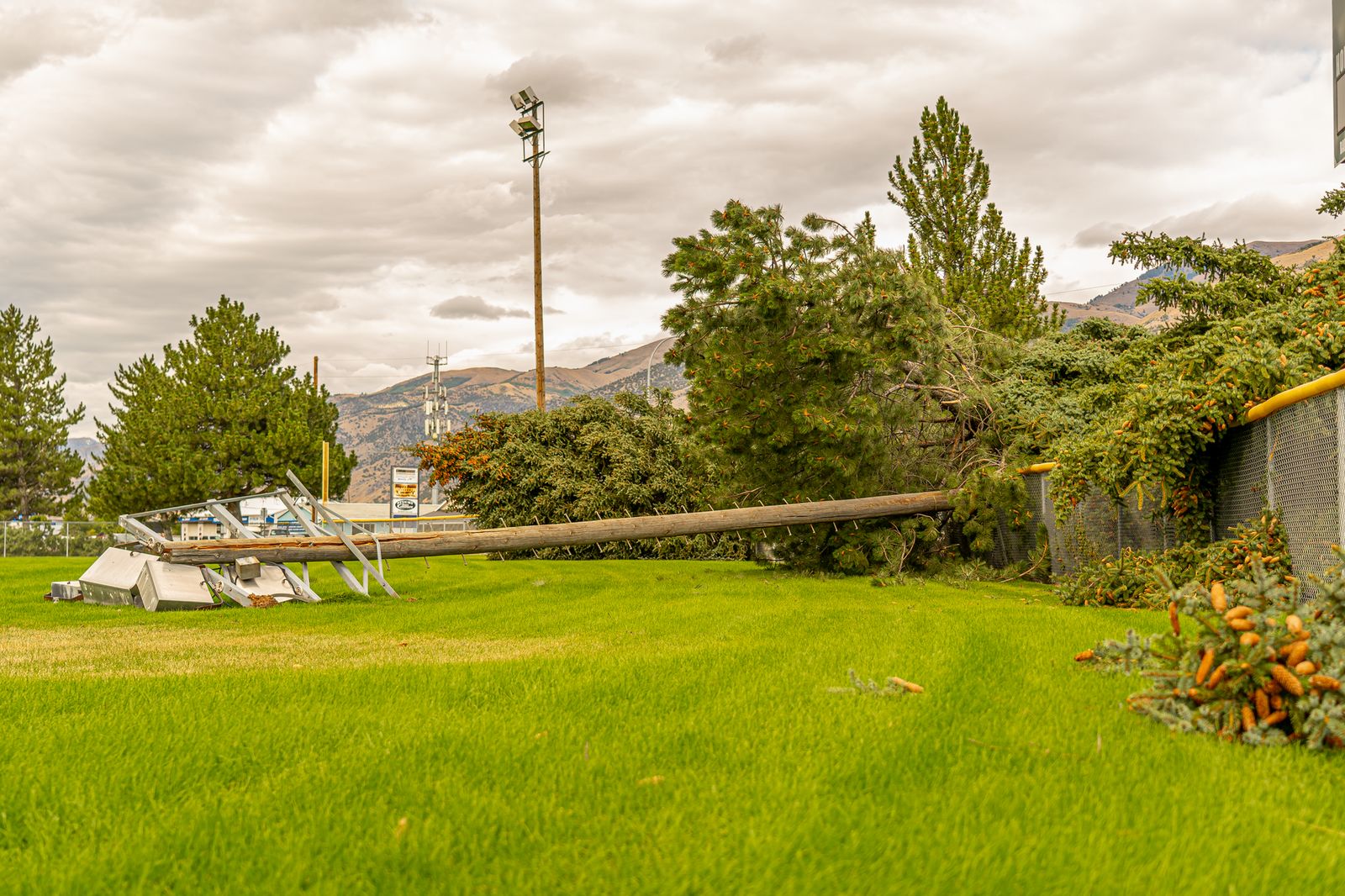
Storm damage with a fallen utility pole and power lines

Transmission line builds

Temporary bunk trailers for transmission line construction crews

New high-voltage lines cross hundreds of miles of open country, far from any town with enough available rooms. The SunZia line runs about 550 miles from central New Mexico to Pinal County in Arizona, and crews broke ground in September 2023. TransWest Express is planned for 728 miles, from near Rawlins in Wyoming to a substation near Boulder City. Towns are scarce along the route, and hotels are scarcer still.

These projects last for years, so the housing plan looks more like a long construction project than an emergency storm call. Foundation crews go first and pour the concrete base for each tower. Tower and wire crews follow several weeks behind them, often 20 or 30 miles farther down the route, so we usually place a temporary bunk trailer at each material yard instead of building one large camp. TransWest Express, for example, crosses Colorado and Utah south of the Uinta Mountains, where towns sit far apart.

Summer on these desert routes is hard on sleep, especially for crews who climb steel towers in full sun all day. Desert afternoons in southern Arizona often climb past 105 degrees, and many construction crews start work before sunrise to avoid the worst of the heat. An air-conditioned bunk lets that early crew sleep through the hot afternoon. In the high country along the Wyoming end of a route, the same trailer switches to heat on cold spring nights.

Many new transmission lines exist to carry electricity from wind and solar projects to the cities that use it. SunZia, for example, was planned to carry wind power from New Mexico into Arizona. The crews building those energy projects face the same long drives, and our page for solar and wind farm construction crews explains how we house them. Send us your route map and your material yard locations, and our dispatchers will plan the trailers yard by yard along the entire route.

  • Transmission line routes
  • Material yards
  • Tower assembly sites
  • Wire pulling sites
  • Substation tie-ins
  • Access road pads
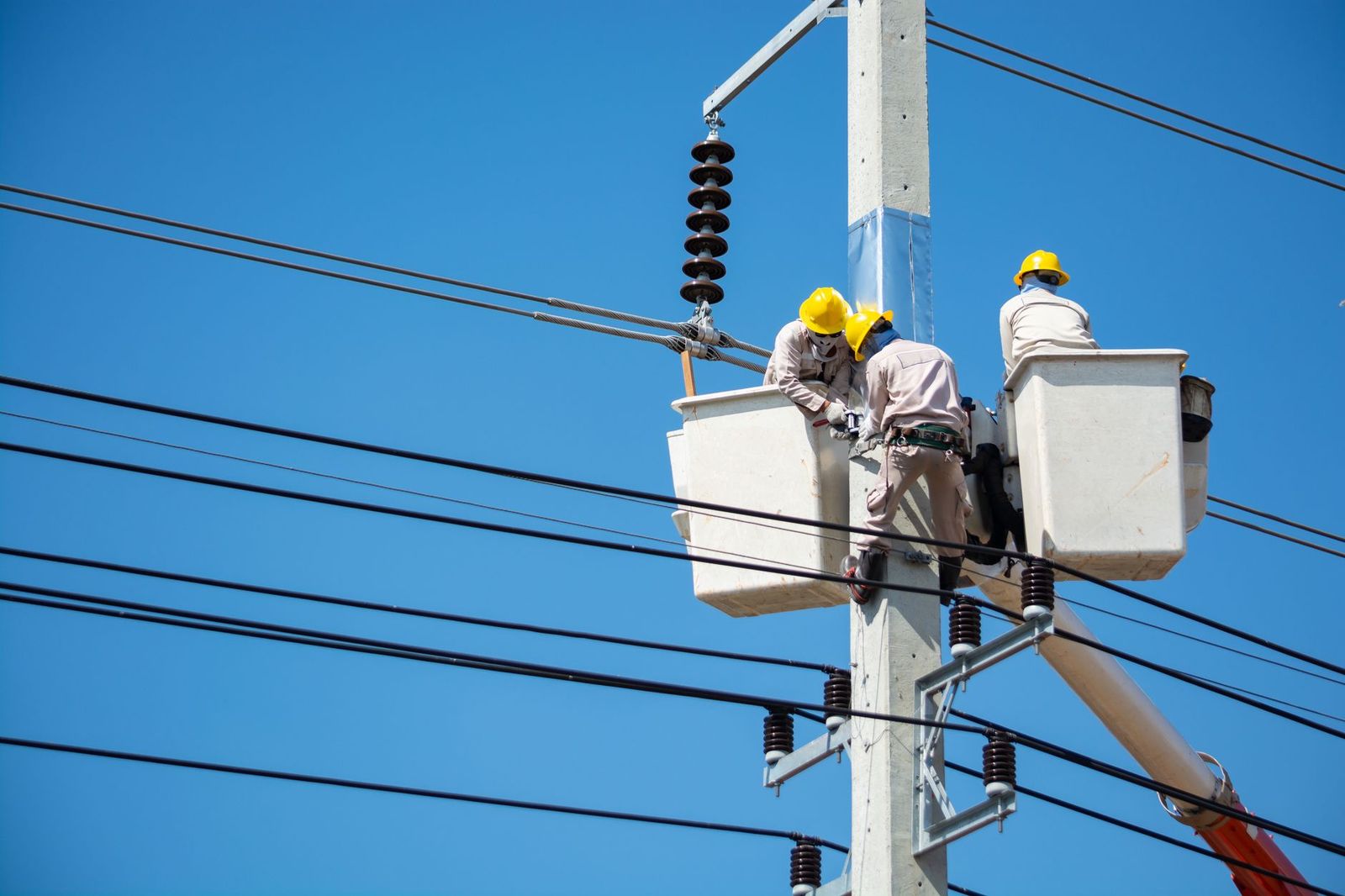
Utility linemen repairing power lines from a bucket truck

Right-of-way clearing crews

Crew quarters trailers for vegetation management and line clearance crews

Trees are one of the biggest threats to any power line. The 2003 Northeast blackout started when overgrown trees touched high-voltage lines in Ohio, and it cut power to about 55 million people across the United States and Canada. Utilities took notice. Today most utilities hire outside contractors to keep a clear path along every mile of line they own.

Clearing work moves on a rolling cycle across a utility's entire service area, sometimes returning to the same corridor every few years. A tree crew might spend a month on one mountain corridor, then relocate 80 miles to the next one. Many of those corridors sit at the end of dirt roads with no electricity and no water. A crew quarters trailer earns its keep there, because the nearest hotel may be 90 minutes away.

In the West, clearing also protects against wildfire, since a branch touching a line in dry country can start a fire. Crews in California and Oregon often clear lines through the hot summer months, when fire danger runs highest. A climate-controlled bunk keeps them rested for dangerous work around power saws and energized wire, and rested climbers make fewer mistakes 60 feet up a tree.

Clearing contractors often run crews on rotating schedules, with a set number of days on followed by days off at home. Two crews can share the same 12 bunks across that rotation, as long as each worker keeps an assigned bed while on site. Mining crews work the same kind of long rotation, and our mining camp sleeper trailers follow the same planning. Tell us your rotation, and we will size the order around the crew that sleeps on site each night.

  • Transmission corridors
  • Distribution line routes
  • Mountain rights-of-way
  • Wildfire risk zones
  • Tree trimming crews
  • Brush clearing crews
Pipeline welding crew joining pipe outdoors

Substation and grid upgrade crews

Heated sleeper trailers for substation builds and grid upgrade crews

Substation projects stay in one location for months at a time, not days, while crews set new transformers and wire replacement equipment inside a fenced yard. The site often sits on the edge of a small town with limited lodging. One project can fill every room in the local hotel for a full season. A heated sleeper trailer inside the fence keeps the crew a short walk from the gate all winter.

Grid reliability drives much of this construction work, and NERC sets the mandatory standards behind it. The North American Electric Reliability Corporation enforces them through 6 regional entities, from WECC in the West to Texas RE in Texas. When a utility falls short of those standards, upgrades follow, and upgrades mean crews spending months at substations and switchyards far from home.

The same need appears at public power utilities, where the American Public Power Association represents about 2,000 community-owned systems. Many of them are small city utilities that employ only a few line workers, so upgrade work often brings in contract crews. Those crews need beds for the entire length of the job, sometimes 6 months or more.

Fixed sites make planning easier, since line power usually arrives early and the 3 AC units can run on yard power instead of a generator. We position the portable trailer exactly where your site plan shows, clear of crane swing and delivery truck turns. When the project wraps up, one phone call to our dispatch line schedules the pickup.

  • Substation builds
  • Switchyards
  • Service center upgrades
  • Transformer changeouts
  • Public power upgrades
  • Line rebuild projects
Industrial workforce crew at a jobsite

How to Plan Crew Housing for This Work

Planning housing for utility Line and Storm Restoration Crews comes down to four questions: the headcount sleeping on site, the expected length of the assignment, the electrical capacity available at the pad, and delivery access for a truck and trailer. The sections below work through each question in order.

How we deliver a crew housing trailer to a storm staging yard

Hurricane calls usually come in 1 to 4 days before landfall, once the forecast track becomes reliable. Ice storms and derechos give far less warning, sometimes less than 24 hours. We ask your storm team to share staging addresses early, even before the order is final. Addresses can change. Finding available trailers two days after landfall is much harder than moving a delivery that is already scheduled.

Road rules can change during a declared emergency, because the FMCSA often issues a regional declaration once a governor or FEMA declares one. That declaration relaxes certain hours of service rules for trucks providing direct assistance to the relief effort. That general rule covers many kinds of relief hauling beyond utility work. Our dispatchers check the current declaration for each route before a truck leaves the lot.

Staging yards stay busy around the clock, with bucket trucks and material trailers moving at every hour of the day and night. We park sleeper trailers at the quiet edge of the yard, well away from the fuel point and the main truck lane. Your yard lead picks the spot, and our driver sets each trailer level on firm ground so the doors close properly and all 12 bunks stay steady.

The trailer is designed for sleeping only, with no bathroom or shower inside. Plan restroom and shower trailers a short, well-lit walk from the bunks, sized to the same head count. Power comes from yard service or a generator large enough to run 3 AC units at once on a hot afternoon. When the last crews release, call (888) 828-7765 with the date, and we will schedule the pickup. Pickup is quick.

  • Staging yard address, or a map pin for remote line sites
  • A photo of the gate and the approach road
  • A flat, firm spot away from the fuel point and truck lanes
  • Yard power, or a generator sized for 3 AC units
  • Where the restroom and shower trailers will sit
  • A yard contact with a cell number for delivery day
  • Your estimated release date
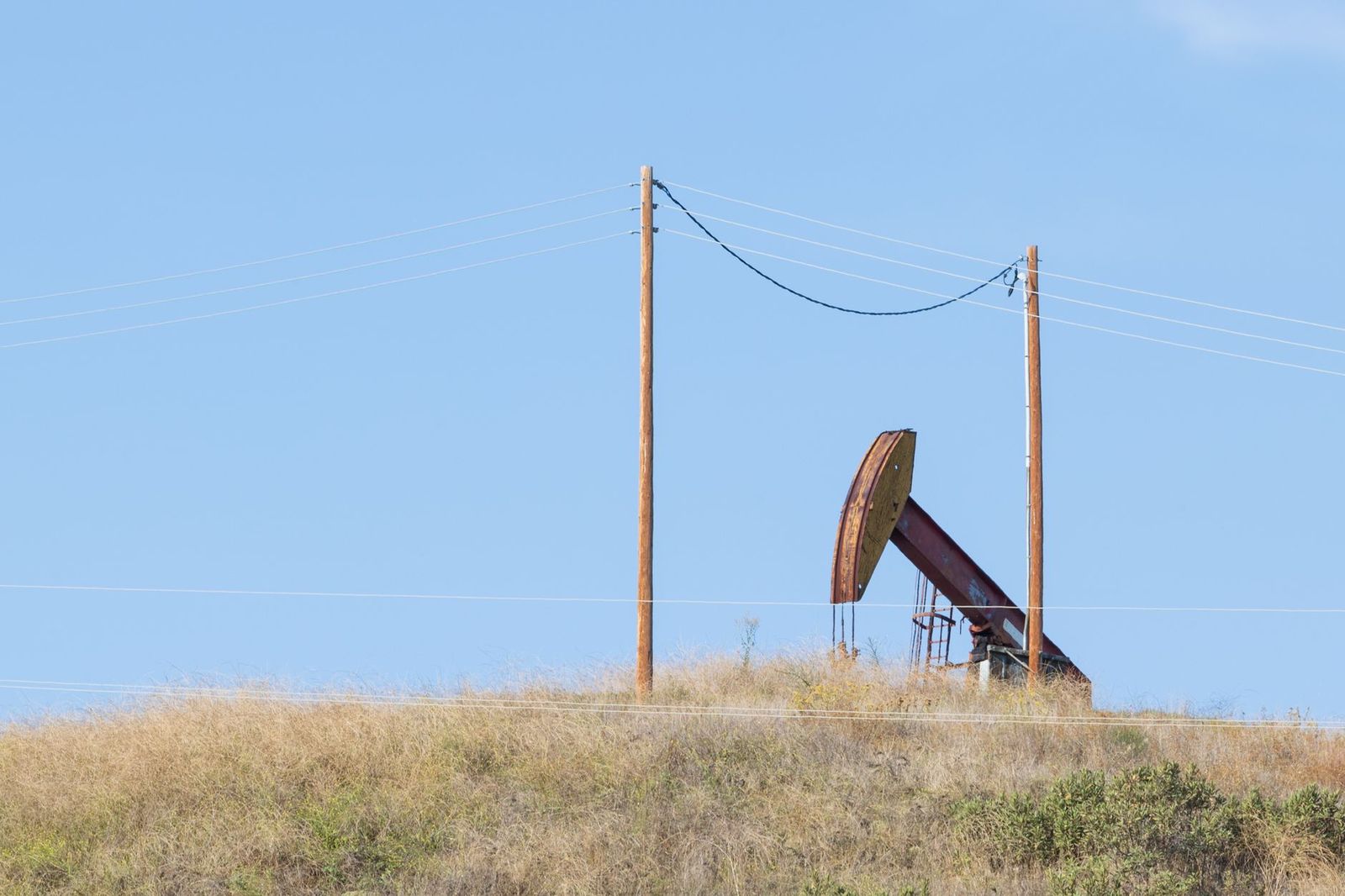
Oilfield pump jacks in a field

How many sleeper trailers a storm or line crew needs

ScenarioCrew sizeTrailers
Tree clearing crew8 to 12 people1 trailer
Substation crewUp to 12 people1 trailer
Transmission crew20 people2 trailers
Mutual assistance contingent24 people2 trailers
Storm staging yard36 people3 trailers
Large storm yard60 people5 trailers
40 line crews plus support150 to 200 people13 to 17 trailers

The math starts with 12 bunks per trailer, so divide the number of workers sleeping on site by 12 and round up to the next whole trailer. A 20-person transmission crew needs 2 trailers, and the 4 spare bunks fill quickly with a visiting mechanic or a safety coordinator. A 36-person storm contingent needs 3 trailers, while a 60-person yard needs 5 trailers with no spare bunks at all. Round up, always.

Shift length explains why beds close to the work matter so much. A crew working a 14- to 16-hour storm shift has only 8 to 10 hours left for everything else, including meals and the drive. Put that crew in a hotel 45 minutes away, and 90 minutes of those precious hours disappear into traffic every day. Housing at the yard turns those 90 minutes back into sleep.

Some storm teams hot-bunk, where a day crew and a night crew share the same 12 bunks across two 12-hour shifts, so a 12-bunk trailer covers 24 workers. It works as a temporary stopgap during the first days of a fast-growing response, while additional trailers are still on the highway. For a long push, we recommend a dedicated bunk for every worker, so each person keeps personal storage and a consistent bed.

Line work safety rules that shape a crew housing plan

Safety on a line job belongs to the utility and the contractor directing the work. Crew housing sits inside that safety program, so we follow your site plan on every delivery. Plans change. When the yard layout shifts in the middle of a storm response, we relocate the trailers to match it. Your safety lead keeps the final word on placement.

OSHA 29 CFR 1926 Subpart V covers electric power transmission and distribution work. It holds 19 numbered standards, from personal protective equipment to work on exposed energized parts and grounding for employee protection. OSHA also names utility operations among the outdoor jobs in its guidance on worker fatigue and heat exposure. That guidance stresses scheduled rest breaks and plenty of water for crews working long days in the heat.

Federal hours of service rules treat utility work differently too, since drivers of utility service vehicles get a 24-hour restart instead of the standard 34-hour restart. During adverse driving conditions, the rules allow up to 2 extra hours behind the wheel. Those same drivers often begin the day in the dark, which is one more reason to keep beds near the trucks.

Many utilities and contractors write their own work and rest guidelines on top of that federal baseline. Your storm plan may cap shift length or require a set number of rest hours between shifts. Beds at the yard make those limits easier to keep, because rest hours stop leaking into a 45-minute commute. A 16-hour shift plus a 90-minute round trip leaves less than 7 hours for sleep, before anyone eats a meal. Tell us your rest policy, and we will place the trailers to support it.

  • OSHA 29 CFR 1926 Subpart V: Sets safety rules for electric power transmission and distribution work, including protective equipment and work near energized parts.
  • FMCSA hours of service, 49 CFR Part 395: Limits driving hours and gives utility service vehicle drivers a 24-hour restart.
  • FMCSA regional emergency declarations: Can relax some trucking rules for vehicles giving direct help in a declared emergency.
  • NERC reliability standards: Mandatory grid reliability rules enforced through six regional entities, including WECC and Texas RE.
  • Utility and contractor work and rest policies: Internal limits on shift length and rest time that your own storm plan sets.
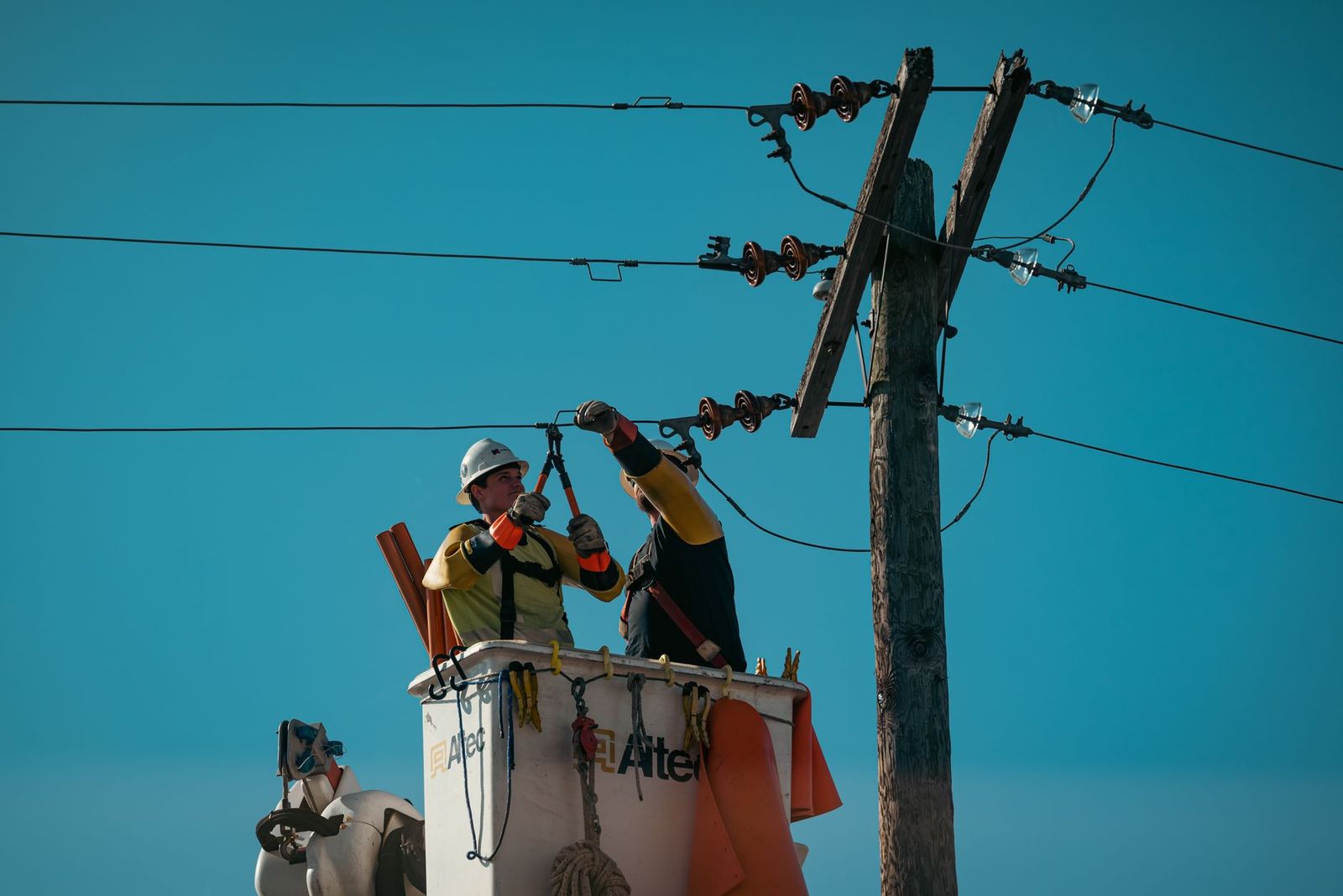
Utility linemen working a distribution pole

Hotel rooms versus portable sleeper trailers for storm crews

Most traveling line crews sleep in hotels paid through per diem or direct billing. GSA sets per diem rates by the location of the work, not the hotel, unless lodging is not available at the work site. GSA updates those rates every August for the new federal fiscal year. In a storm zone, that exception quickly becomes the normal case. Commutes grow. Rooms near the damage fill within hours, and crews end up 45 minutes or more away from the staging yard.

Disaster survivors need those same rooms, and FEMA's Transitional Sheltering Assistance program places families whose homes cannot be lived in at local hotels. FEMA checks eligibility again every 14 days, so those families can stay for weeks. Crews and survivors end up competing for the same small set of beds, and the crews usually lose the drive time.

Large third-party camps are the other option, and they work well during big oilfield booms like the Bakken. Even so, a camp can sit far from your staging yard, and your crew shares it with workers from other companies. The camp also sets its own rules on visitors and quiet hours, which your foreman does not control. Your yard, your rules. Plenty of other trades face the same tradeoff, and you can compare their setups on our page of crew housing for other industries.

  • 31+ hrs on the road per worker over a 21-day storm push, at 45 minutes each way
  • 630 hotel room nights for 60 workers, 2 to a room, over 21 nights
  • 5 trailers sleep the same 60 workers at your own staging yard, 1 bunk each
  • 14 days between FEMA eligibility checks for families living in local hotels
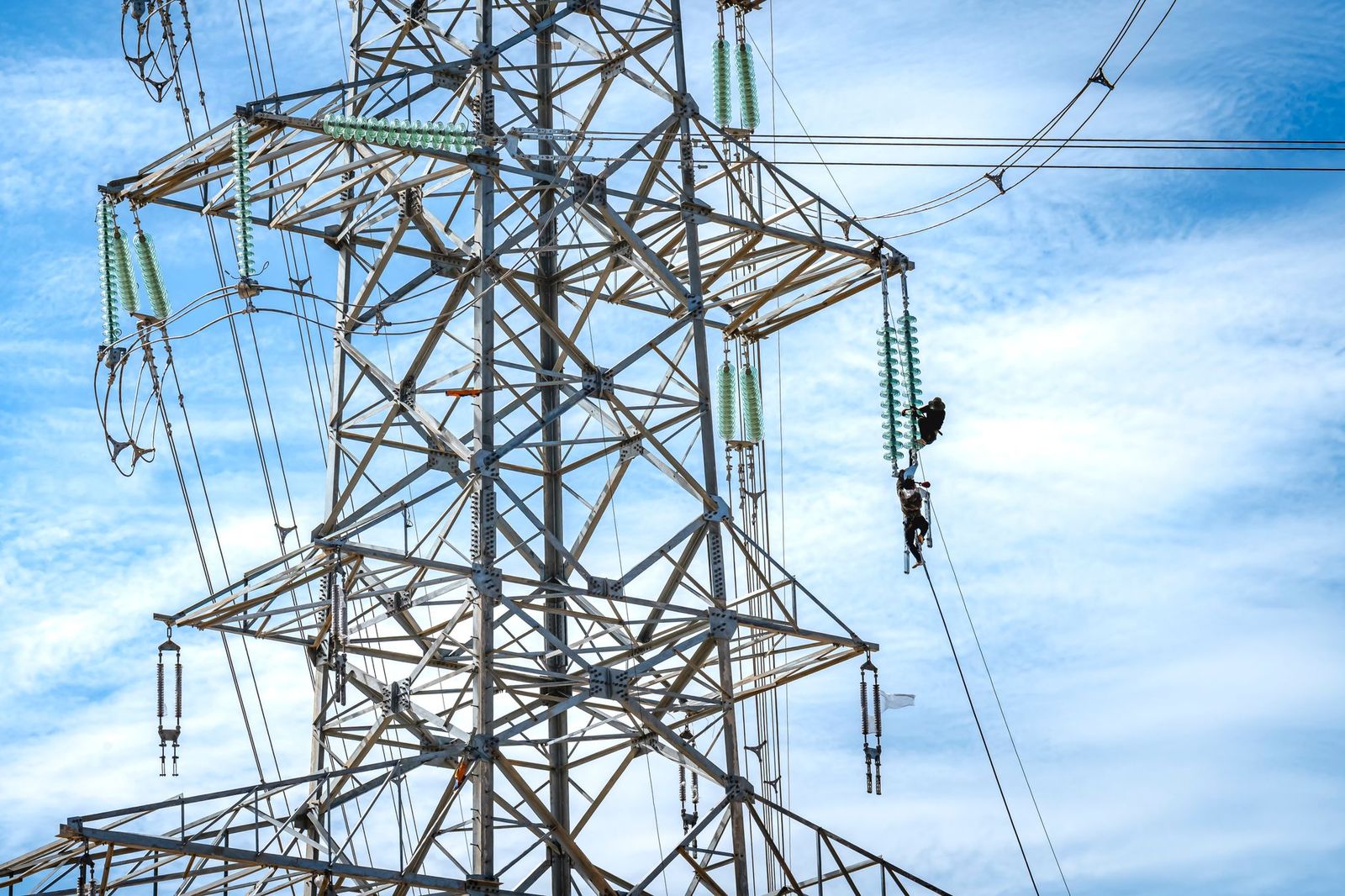
Linemen climbing a high-voltage transmission tower on a power line build

Three job types, three typical trailer plans, the short version

Typical setup: Gulf Coast hurricane staging yard, 36-person crew contingent, September

A typical job like this starts with a call from a utility storm logistics manager about 2 days before a hurricane makes landfall on the Gulf Coast. The staging yard is often a county fairground, and every hotel within 40 minutes is already booked. Three trailers go to the back edge of the fairground and are cooled before the first crews roll in. The crews can work 16-hour days for 18 straight days at that fairground without a commute. When the yard releases, all 3 trailers can be picked up in one morning.

Typical setup: transmission line build in the desert Southwest, 24-person crew, July

On a transmission build like this, a line contractor is pulling wire on a new line in southern Arizona during the hottest part of summer. The closest open hotel rooms are often more than an hour from the material yard. Two air-conditioned trailers sit at the yard, clear of the wire reels and the crane. The crew starts at 4 in the morning and sleeps through the 110-degree afternoons while the heat stays outside. When the work moves 30 miles down the line, the trailers move with it.

Typical setup: derecho cleanup in the Midwest, 20-person crew, June

On a storm job like this, a straight-line windstorm snaps poles across several Iowa counties. A contract line crew then gets the call to help. The local service center often has room for trucks but no beds. Two trailers fit on a gravel lot behind the building, with a generator sized for all 6 AC units. The crew can rebuild lines for 12 straight days on that setup and then head home. The same setup carries over to the next storm call.
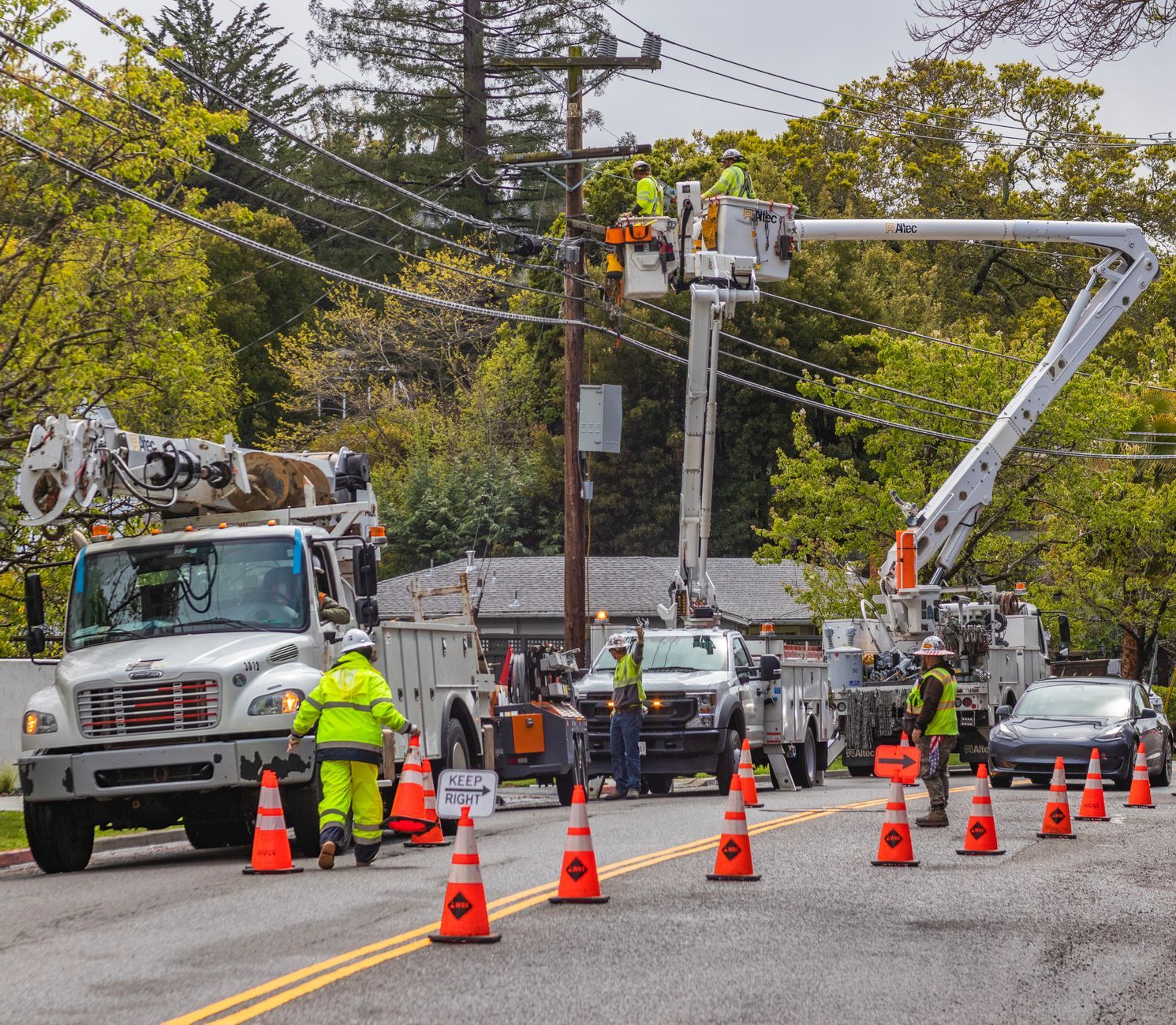
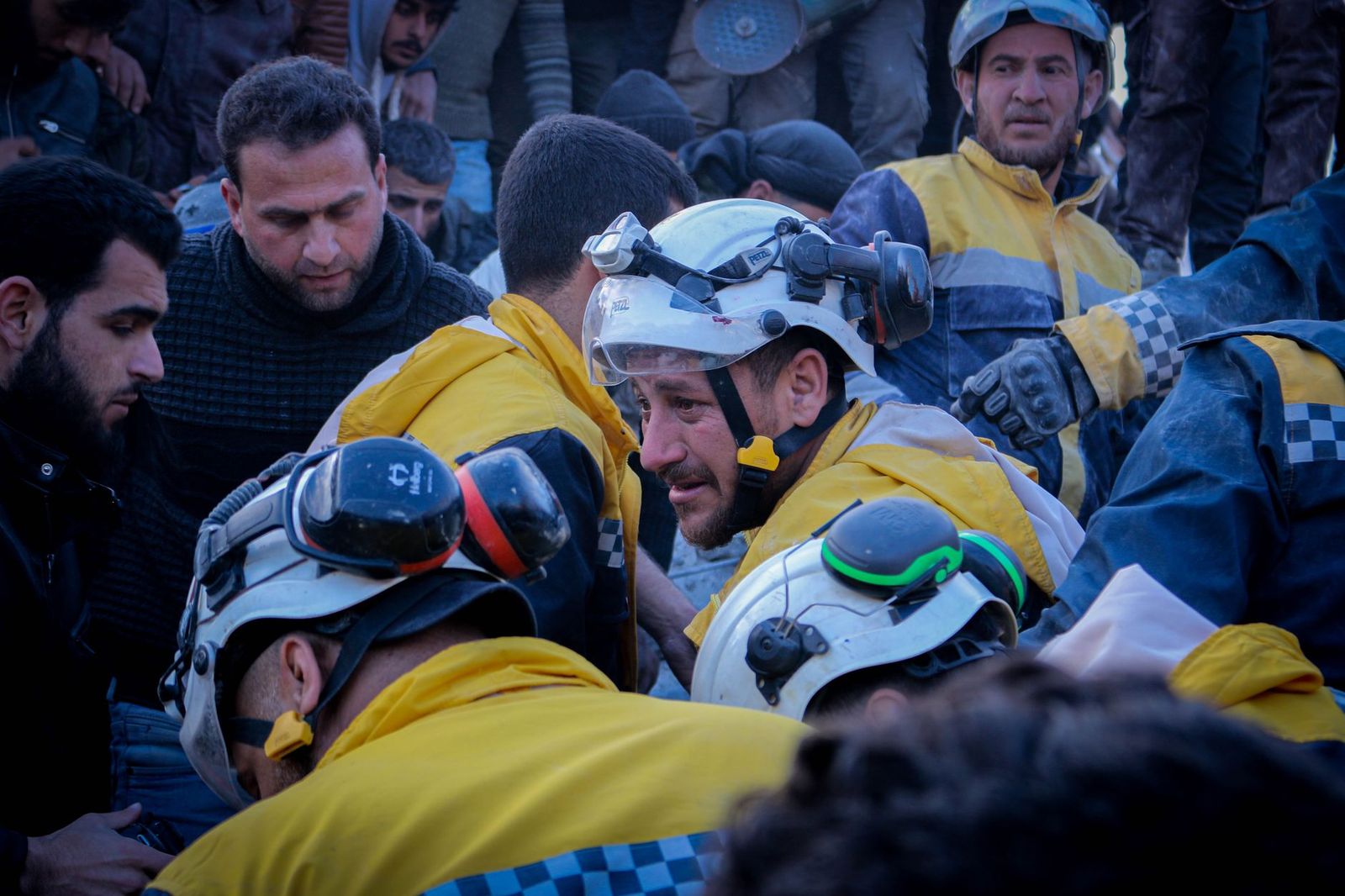
Storm restoration utility crew working a residential street

Who handles it

Here is how bunkhouse trailer rental questions works

Disaster relief workers on assignment

How fast can you deliver a sleeper trailer to our staging yard after a hurricane or ice storm hits?

Timing depends on the distance and on road conditions after the storm. The smart move is to call while the storm is still in the forecast, since the track usually firms up days before landfall. We can hold a staging address and adjust it as the track shifts. Our 24/7 line at (888) 828-7765 gives you a real delivery window on the first call.

How many line workers can sleep in one bunkhouse trailer at a storm staging yard?

Each 34 ft trailer sleeps 12, with 6 upper and 6 lower bunks. That covers 2 or 3 bucket-truck crews with room to spare. Every bunk has its own LED light and USB outlet, plus a small storage compartment. For bigger teams, add a trailer for every 12 people who sleep on site the same night.

Can you deliver a crew trailer to a remote right-of-way or transmission corridor with no street address?

Yes. Most right-of-way and transmission sites have no address, so we work from a map pin and photos of the approach road. Tell us about locked gates and low wires on the way in. Our dispatchers check the route before the truck leaves, and the driver calls your site contact on the way.

Do the trailers need shore power, or can they run on a generator?

Either works. Yard power at a service center or substation is the easiest hookup. On a remote site, plan a generator large enough to run 3 AC units at the same time on a hot afternoon. Tell us your power source when you book, and we will confirm the hookup before delivery day.

How do crews handle restrooms and showers with a sleeper trailer at a storm staging yard?

The sleeper trailer has bunks only, with no bathroom or shower inside. Most storm yards pair it with separate restroom and shower trailers set a short walk away. Size those to the same head count as your bunks, and keep the path between them well lit and clear of truck traffic at night.

What is the difference between a bunkhouse trailer and a large man camp for utility storm crews?

A man camp is a large compound run by a third party, often with hundreds of beds shared by workers from many companies. Our trailers sit on your own yard and hold only your crews, 12 bunks at a time, under rules your foreman sets. For a storm yard that splits into smaller hubs, trailers are also easier to spread out than one big camp.

Can storm crews hot-bunk in these trailers, with a day shift and a night shift sharing the same bunks?

They can. With a day shift and a night shift, 12 bunks can serve 24 workers, with one crew sleeping while the other works. It is a fair stopgap in the first days of a response. For stays longer than a week or so, most crew leads prefer a dedicated bunk for each worker, so everyone keeps personal storage and a clean bed.

How do the sleeper trailers stay cool during hurricane season and warm during winter ice storms?

Three AC units with heat serve the whole trailer, and a smart thermostat with digital touch control sets the temperature. Your crew lead picks one setting and leaves it. The same trailer that cools a Gulf Coast yard in August can heat a crew through a January ice storm, with no equipment swapped between seasons.

Is there a minimum rental period for a sleeper trailer during an emergency storm response?

Storm jobs rarely have a fixed end date, so we book around your estimate of the release date. Tell us the expected length when you call, even if it is a rough guess. When the job runs long, one call to our dispatchers extends the rental by days or weeks. When crews release early, we schedule the pickup as soon as the yard is clear.

Can you add more trailers in the middle of a response if our crew count keeps growing?

Yes. Crew counts often climb for several days after landfall as more mutual assistance crews arrive. Call as soon as your storm team approves more crews, not when they pull into the yard. We can add trailers at the same yard or at a new staging hub. A few spare bunks early on buy time while the next delivery is on the road.

Can trailers cross state lines on short notice during a hurricane or ice storm?

Yes. We deliver to all 50 states, and storm work often means crossing several state lines in one run. Our dispatchers plan each route around road closures and the current emergency declarations. Weather still sets the real pace on the highway, so an early call helps more than anything else.

What site preparation do you need at the staging yard before the delivery truck arrives?

Very little. We need a flat, firm spot with room for our truck to back in and pull out. Gravel or pavement works well, since a soaked field after a hurricane can trap a truck for hours. Mark the spot and send us a photo of the approach, along with a contact who will be on site that day.

How is a sleeper trailer different from putting crews in hotels?

A hotel room depends on what the local market has left after a storm, and the nearest open rooms can be an hour away. A trailer sits at your yard, so the commute becomes a short walk. You also know where every worker sleeps, which helps with the head count at the morning briefing. Over a long push, that saved time turns into real sleep.

Can vegetation management or transmission crews use these for long projects?

Yes. Long projects suit these trailers well, from season-long clearing contracts to multi-year transmission builds. A tree clearing crew or a transmission builder can keep trailers for a full season, moving them as the work moves down the line. Tell us your route and your move dates, and we will plan each relocation around your crew's days off.

Do you deliver sleeper trailers to Texas and the West, or only along the East Coast?

We deliver to all 50 states, including Texas and the West, where a winter storm like the February 2021 freeze can hit as hard as any Florida hurricane. In the West, transmission builds and wildfire clearing keep line crews on the road for months at a time. One call to (888) 828-7765 covers any location, day or night.

Plan around it

Notes for crew bosses and planners, step by step

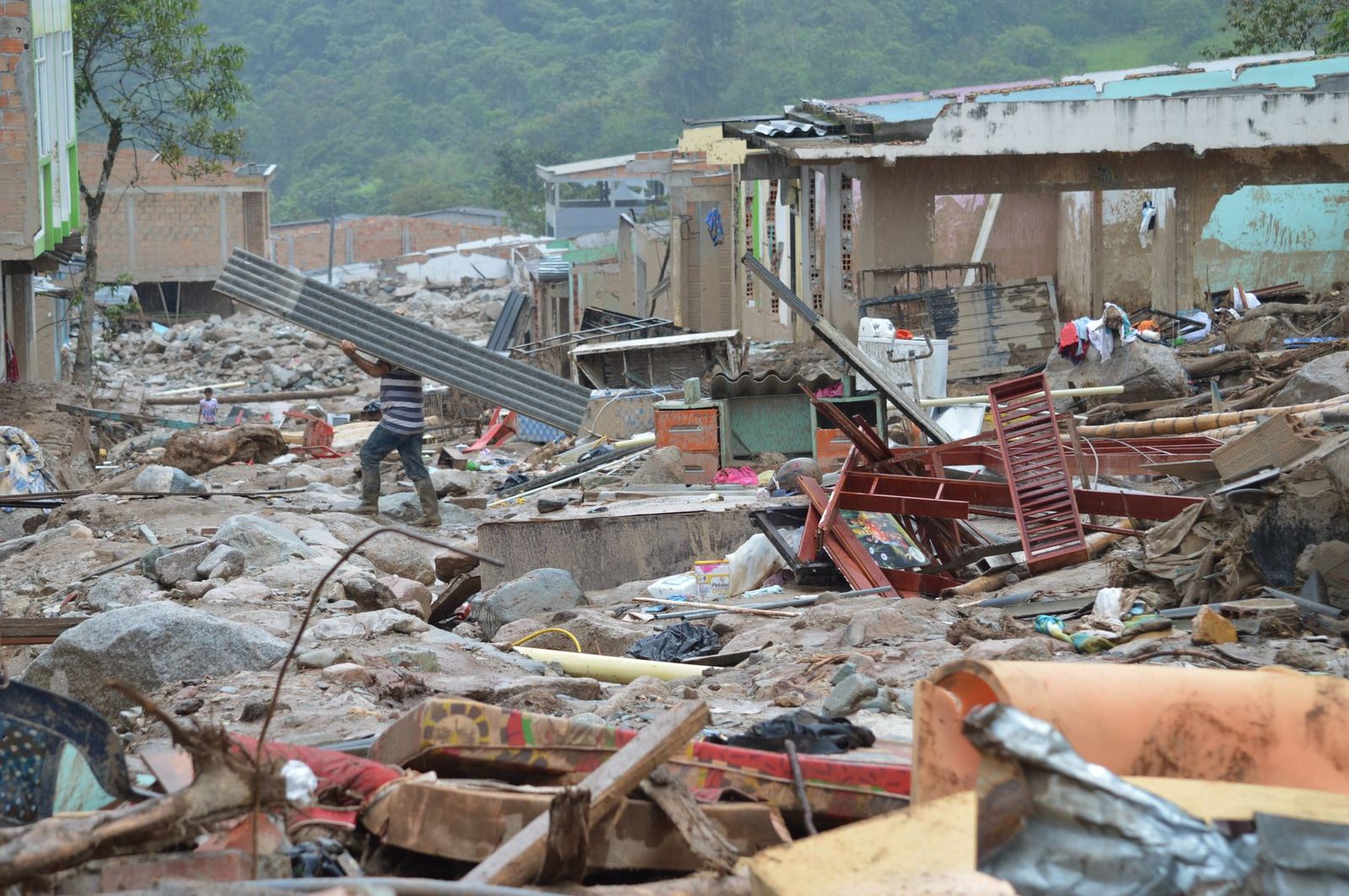
  • Disaster response worker clearing debris

    Building crew housing into your storm plan before hurricane season

    The Atlantic hurricane season runs from June 1 to November 30, with the busiest stretch from late August through September. An average season brings 14 named storms and 7 hurricanes, and about 3 of those hurricanes reach Category 3 strength or higher. The 2020 season set a record with 30 named storms. That calendar gives storm logistics teams a clear window to plan housing before anyone is on the road. Use it well.

    Read the full note

    Start with the staging sites you already have on paper, since most utilities keep a list of fairgrounds and service centers they can open on short notice. For each one, write down the gate width and the ground surface, then note whether permanent yard power is available on site. Those answers tell us how many trailers fit and whether a generator needs to come along.

    Next, pick a sleeping spot on each site map, ideally at the quiet edge of the yard away from the fuel point and the main truck lane. It should also leave room for restroom and shower trailers within a short walk. Mark it on the map now, while nobody is rushing and the yard is empty. Calm planning pays.

    Then settle your head count rules, starting with whether your crews get a dedicated bunk or share bunks across day and night shifts. Decide how many spare bunks you want for mechanics and safety staff. With those rules set, turning a crew count into a trailer count takes about a minute when the call comes.

    Name one person on your storm team to own housing, and let that person hold the staging addresses and confirm power at each yard. A single point of contact keeps our dispatchers from getting three different addresses for the same fairground at 2 in the morning.

    Finally, call us in May or early June with your plan, even without a storm on the map. We can walk through your sites with you and flag any tight gates or soft ground ahead of time. When a storm does form, your first call to (888) 828-7765 becomes a short confirmation instead of a long planning session. That saved hour matters most in the last few days before landfall. May beats September.

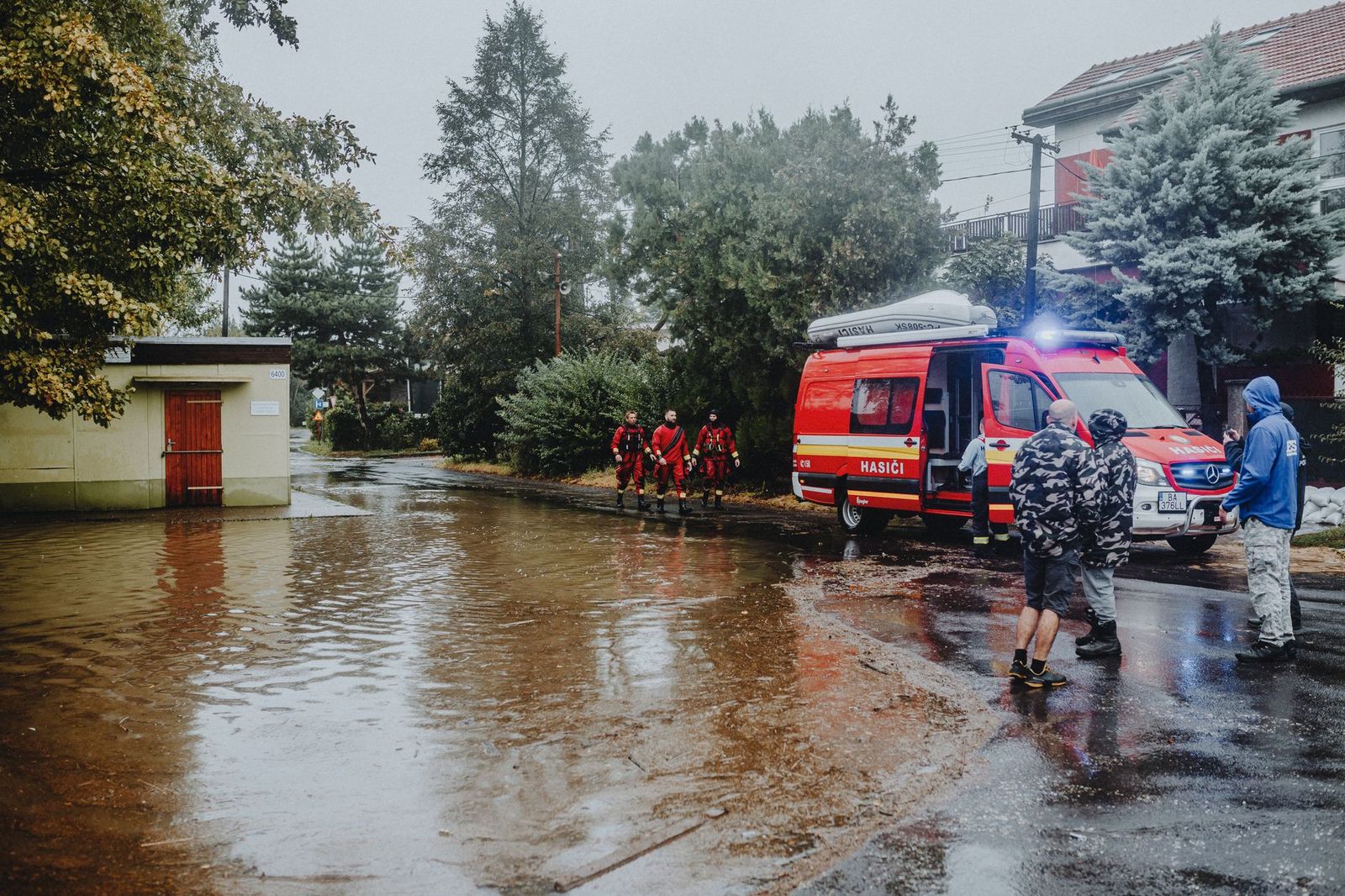
  • FEMA-style disaster relief rescue crew in the field

    Housing line crews through ice storms and winter grid emergencies

    Winter storms can be harder on line crews than hurricanes. Ice is brutal. The National Weather Service calls a storm an ice storm when it leaves at least a quarter inch of ice on exposed surfaces. That much ice can add about 500 pounds of weight to a single span of line. Poles snap and lines come down across whole counties, and restoration can take anywhere from several days to a month.

    Read the full note

    Most ice storms in the United States hit the Northeast, but they reach much farther south than many people expect. A February 1994 ice storm reached as far as Mississippi and affected nine states. Utilities in the mid-South often have fewer winter crews on staff, so they lean heavily on outside help when ice arrives. Those outside crews need warm beds on the very first night, often in towns where the hotels have lost power too.

    Texas learned this the hard way in February 2021. The winter storm crisis ran from February 10 to February 27, and outages peaked on February 15 and 16. About 4 million customers lost power at the worst point, and at least 246 people died. ERCOT runs about 90 percent of the Texas grid. That grid is mostly isolated from its neighbors, so the state cannot easily import power during a crisis.

    Heat is the first thing to plan in winter work, and we set the thermostat on the 3 AC units with heat before the crew walks in. On a generator, plan enough fuel for heat to run through the night, because a generator that runs dry at 3 in the morning wakes 12 cold workers. Check the fuel level at every shift change, without exception.

    Ice also changes how crews move around the yard, since the paths between the sleeper trailers and restroom trailers can glaze over after dark. Put down sand or salt on those paths, and light them well. Park trailers on gravel or pavement when you can, since a frozen field turns to mud in the first thaw and can trap a truck.

    Winter storms also give less warning than hurricanes, and an ice storm forecast can change quickly in the last 24 hours. Call early. We would rather move a delivery to a new staging yard than start the drive after the ice has already closed the roads.

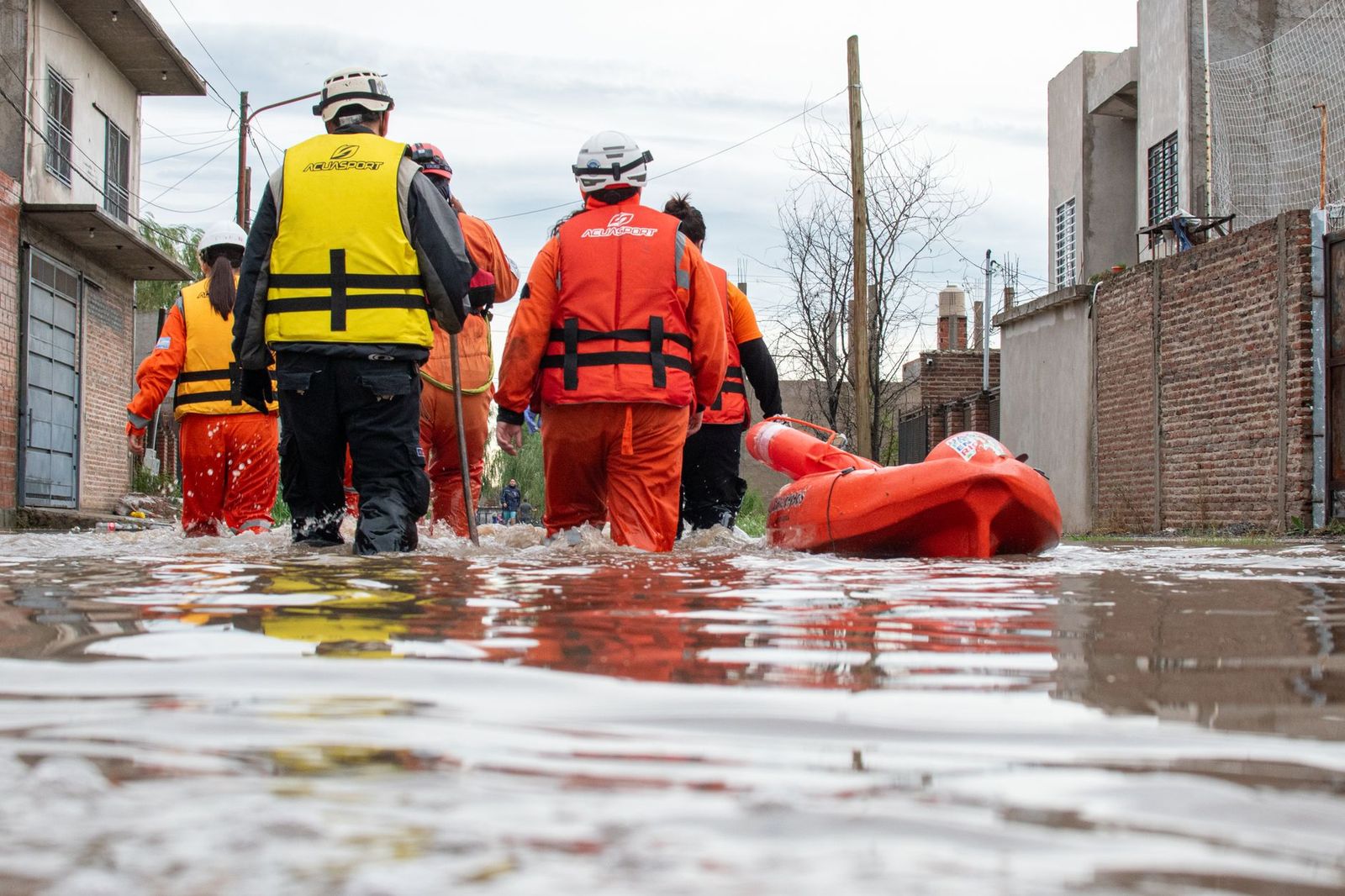
  • Flood disaster response crew on a flooded street

    What fatigue research tells storm teams about where crews sleep

    Fatigue is a well-documented problem in utility work, especially during long storm responses. The data agrees. One industry survey found that 41 percent of utility employers report safety incidents linked to fatigue. In the same survey, 45 percent of workers said they regularly feel tired on the job. The same source notes that planned rest periods often slip during disaster response, when the pressure to restore power is highest.

    Read the full note

    Federal safety research shows how the risk climbs with longer and later shifts. OSHA reports that evening shifts carry about 18 percent higher accident rates than day shifts, and night shifts carry about 30 percent higher injury rates. Working 12-hour days is tied to a 37 percent higher risk of injury. Storm shifts often run longer than 12 hours, so crews start each day already on the wrong side of those numbers.

    The drive back to a distant hotel adds its own risk. Studies of medical residents, the most closely studied long-shift workers, found a 16.2 percent rise in car crash risk for each extra long shift worked. A line worker driving 45 minutes to a hotel after a 16-hour shift faces the same kind of risk. A bunk at the yard takes that drive off the road entirely. Fewer miles, fewer crashes.

    Where crews sleep also shapes how well they sleep, because a shared hotel room near a busy highway rarely stays dark and quiet during the day. A sleeper trailer at the quiet edge of the yard gives night crews a much better shot at 7 or 8 hours of real rest. Assign bunks by shift, so a day crew never climbs over sleeping night workers.

    OSHA publishes guidance on worker fatigue that storm planners can use to shape their rest policies. You can read it on the OSHA worker fatigue page and build it into your storm plan before the season starts. Rest rules only work when the bed is close enough to use. Put the beds where the crews already are, and those rest hours turn into sleep.

    Source: OSHA worker fatigue hazards

Get a quote

Tell Us Where Your Crew Needs Beds

Send the basics and a dispatcher will call you back with availability and a delivery window. In a hurry? Call now.

  1. We confirm the site, dates and crew size.
  2. We lock in a delivery window and power plan.
  3. The trailer arrives, gets leveled and is ready for the first night.
(888) 828-7765

Request a quote

Takes about a minute. Fields marked * are required.

We only use your details to answer this request.