

How to Plan Crew Housing for This Work
Planning housing for mining Camps and Mine Sites comes down to four questions: the headcount sleeping on site, the expected length of the assignment, the electrical capacity available at the pad, and delivery access for a truck and trailer. The sections below work through each question in order.
How we deliver and set up a bunk trailer at a mine site
We schedule arrival for daylight hours when the mine office is staffed, and we aim to set every trailer the day before the crew shows up. Most mine gates want the driver's name and truck plate ahead of time, along with a firm delivery window that fits the blasting schedule. Your safety department may require a site orientation or an escort from the guard station to the pad. We build that time into the delivery plan instead of discovering it at the guard station, so there are no surprises at the gate.
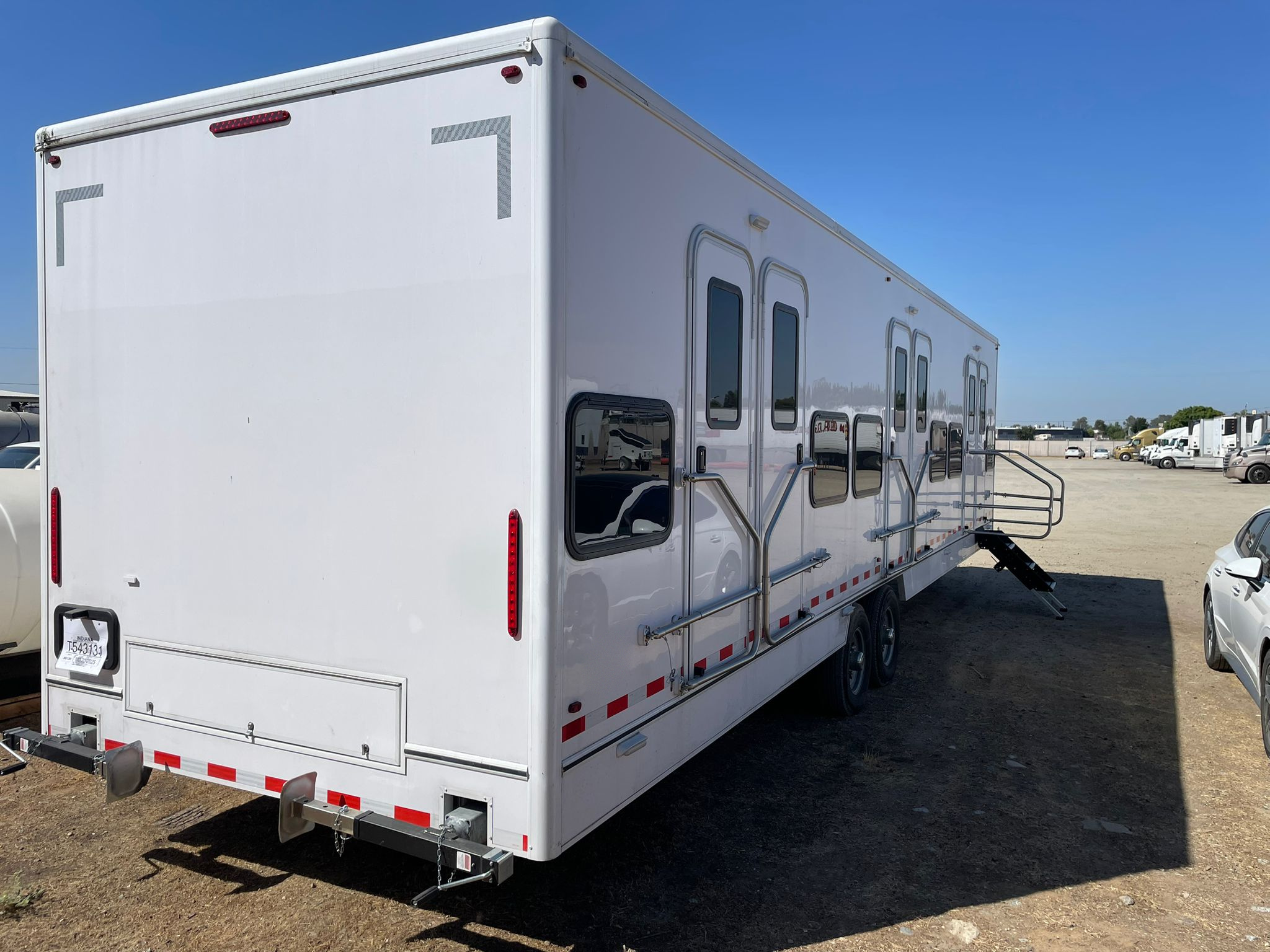
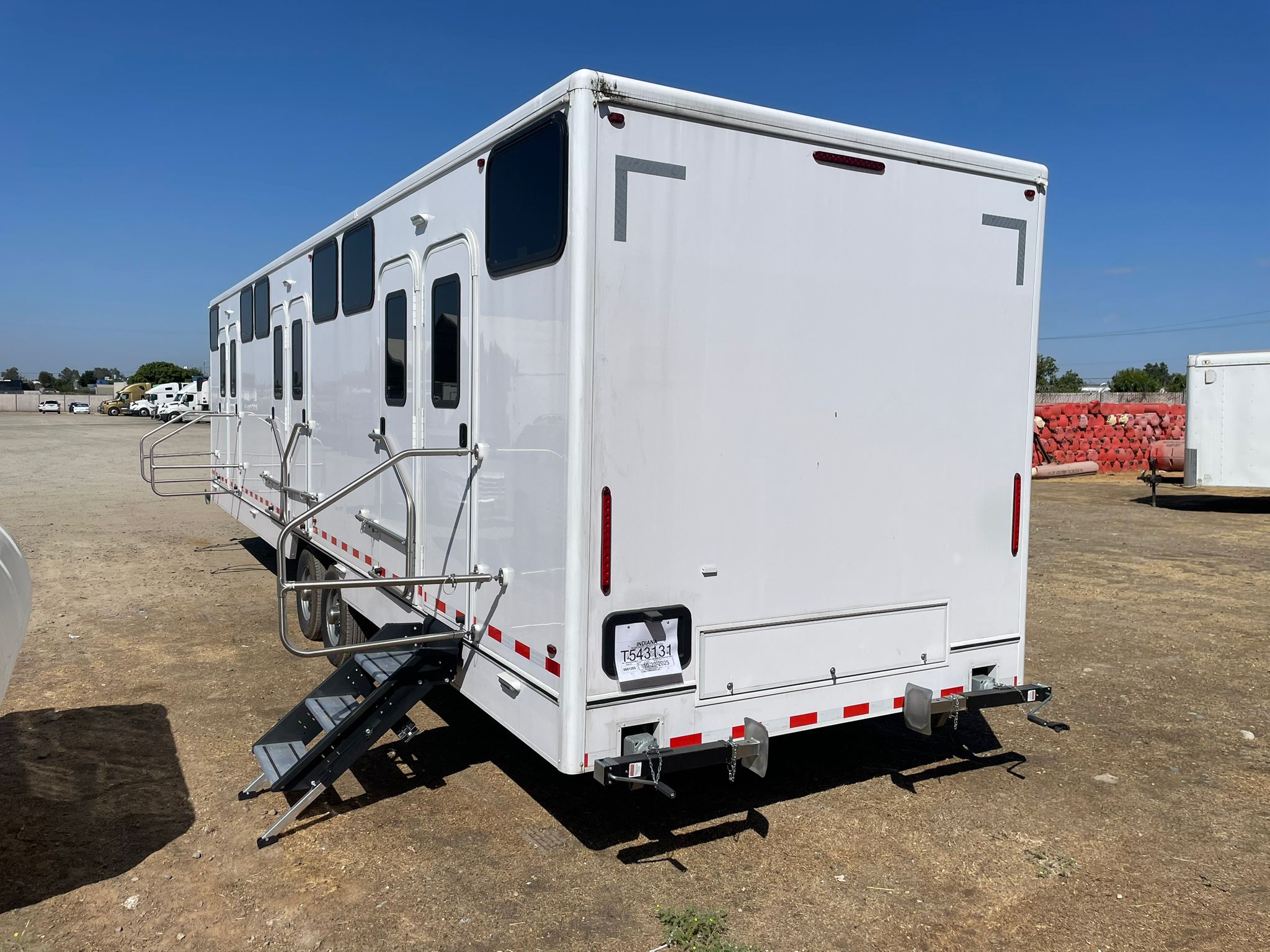
Placement starts with dust and noise, so we keep bunks well back from the haul roads and ask where the blast warning signals carry. Your safety lead has the final word on location, because blast zones and traffic plans belong to the mine. The goal is a level, well-drained pad near the crew bus, with extra room beyond the 34 ft trailer for the delivery truck to maneuver.
A common problem at mine sites in Nevada and Arizona is a pad that looked level in a phone photo. Mine ground is often loose fill or a graded slope, and a trailer that settles after the first rain can bind a door. We carry blocking and set the trailer level on arrival, and if the crew reports movement later, we come back and check it again. Power is the other common problem, because a generator sized for the office trailer usually cannot also carry 3 AC units at 3 in the afternoon.
Mine plans change, and a crew sleeper trailer should change with them. We move trailers between locations on the same property when a pit expands or a laydown yard is needed for something else. We pick up on the date you choose, even if a price drop or a permit delay moves it up by several months. On BLM and Forest Service land, we leave the pad the way we found it.
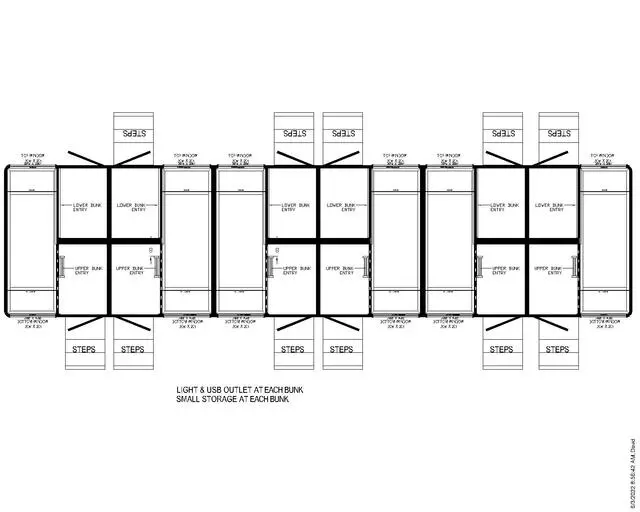
- A level or gently graded spot longer than the 34 ft trailer, with room for the truck to back in
- Gate details ahead of delivery: driver name and truck plate requirements
- Power: a grid hookup or a generator sized for 3 AC units with heat
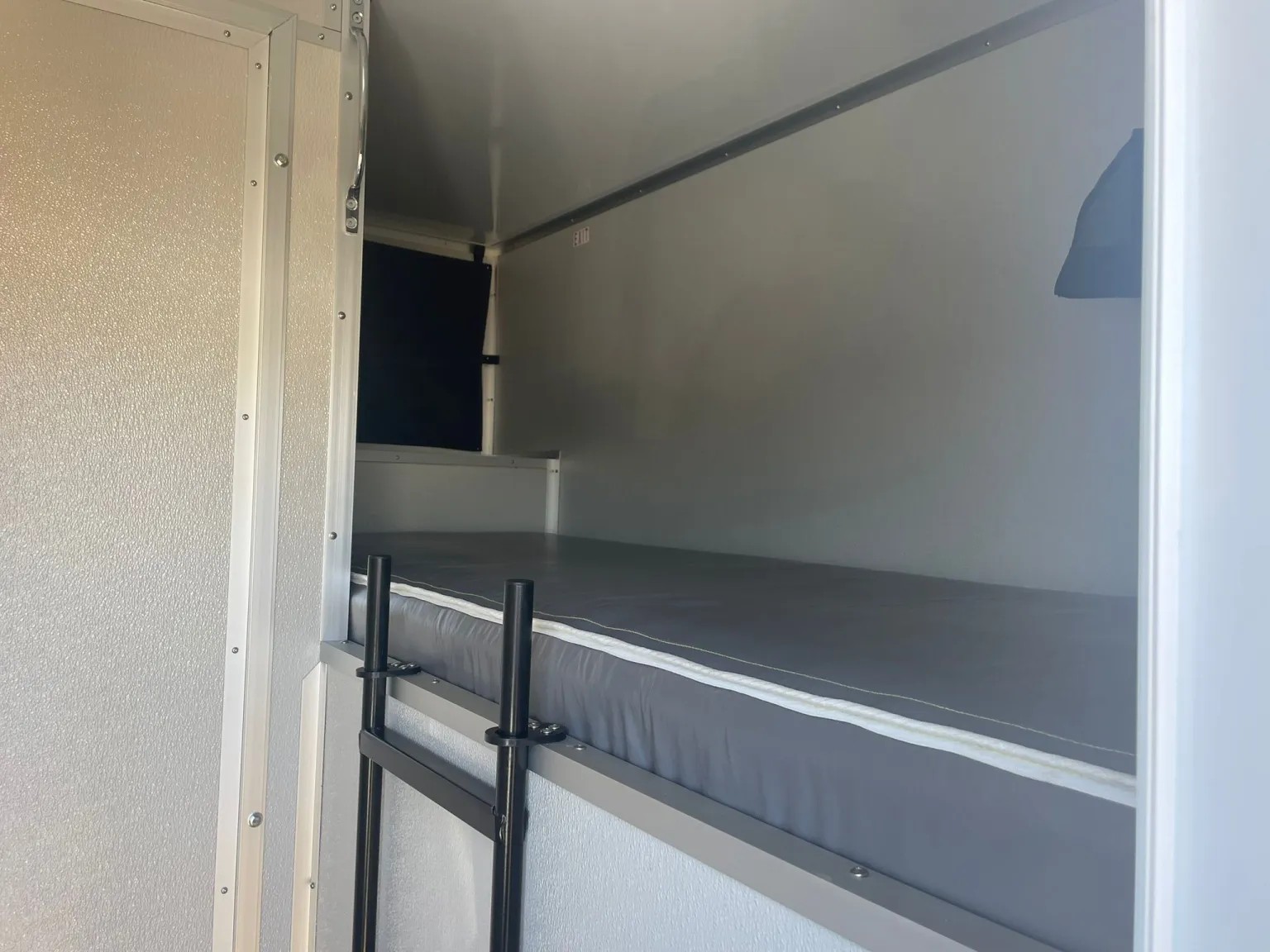
- Restroom and shower trailers nearby, since the sleeper trailer holds bunks only
- A site contact with a working phone number for delivery day
- Your escort and site orientation requirements
- A pickup date or a planned move, even a rough one
How many sleeper trailers a mining crew needs
| Scenario | Crew size | Trailers |
|---|---|---|
| Exploration drill crew | 8 to 12 people | 1 trailer |
| Mine expansion crew, one bunk each | 24 people | 2 trailers |
| Mine construction crew, one bunk each | 36 people | 3 trailers |
| Mill shutdown crew | 48 people | 4 trailers |
| Crew of 50, round up | 50 people | 5 trailers, 10 spare bunks |
| Construction peak | 60 people | 5 trailers |
| Two 12-hour shifts sharing bunks | 24 people | 1 trailer, if your company allows shared bunks |
Simple math first. Divide the crew by 12 and round up to the next whole trailer, so a 24-person crew fills 2 trailers exactly and a 60-person crew fills 5. A 50-person crew also needs 5 trailers, which leaves 10 spare bunks for visiting engineers or a late addition to the roster.
Some sites run two 12-hour shifts and let a day worker and a night worker share one bunk, a practice the US Navy calls hot racking. On paper, that can cut the trailer count in half for the same crew. We size for dedicated bunks by default, though, because shared bunks cost sleep and most crews strongly prefer their own space. If your company allows sharing, we will run the numbers both ways and let your safety lead decide.
Rotation matters too. Many remote mines in the West run 14 days on and 7 days off, so part of the roster is always at home. Count the people who will sleep on site during the busiest night of the rotation, not the full roster. Then add 2 or 3 spare bunks, since a vendor technician or a relief supervisor often ends up staying overnight at a remote mine.
Mine safety rules that shape where a sleeper trailer goes
Every mine in the United States falls under MSHA, the Mine Safety and Health Administration. It was created in 1977 under the Federal Mine Safety and Health Act, as an agency inside the US Department of Labor. Its authority covers all mining and mineral processing, and mining deaths fell from 272 in 1977 to 45 in 2014 under that law. Your site safety program, including where temporary housing can sit, flows directly from that federal framework.
MSHA's detailed regulations live in Title 30 of the Code of Federal Regulations, including a rule to report an accident within 15 minutes. Rules that strict are why we follow your site safety plan closely on delivery day, with your safety lead choosing the location and setting the escort rules. When the mine plan changes, we relocate the trailer to match the new layout, with no shortcuts on the safety plan.
Housing rules for crews living on or near a mine vary by state, by county and by the terms of the mine's own permits. Some counties can treat a group of sleeper trailers as a temporary camp that needs its own sign-off, while others leave it to the mine's site plan. Your safety team and your permitting staff decide which rules apply to your camp. We send the spec sheet with the bunk layout and the power needs, so they have what they need for that review.
OSHA's heat guidance centers on water and rest breaks, plus shade or cooling for outdoor workers. It also recommends shorter shifts and extra breaks for new workers who are still adjusting to the heat. At an Arizona copper mine in July, an air-conditioned place to sleep between shifts is one of the most direct forms of cooling a crew can get. Cool sleep helps a crew recover before the next shift.
- MSHA, Mine Safety and Health Administration: Federal safety oversight for every US mine and mineral processing site, with detailed rules in 30 CFR.
- Federal Mine Safety and Health Act of 1977: The law that created MSHA and set required mine inspections.
- MSHA accident notification, 30 CFR Part 50: Requires mines to report certain serious accidents to MSHA within 15 minutes of learning about them.
- FMCSA hours of service, 49 CFR Part 395: Sets daily driving and duty limits for the trucks that haul trailers to remote pads.
- GSA per diem rates: Sets federal lodging and meal rates by work location, with new rates each October 1.
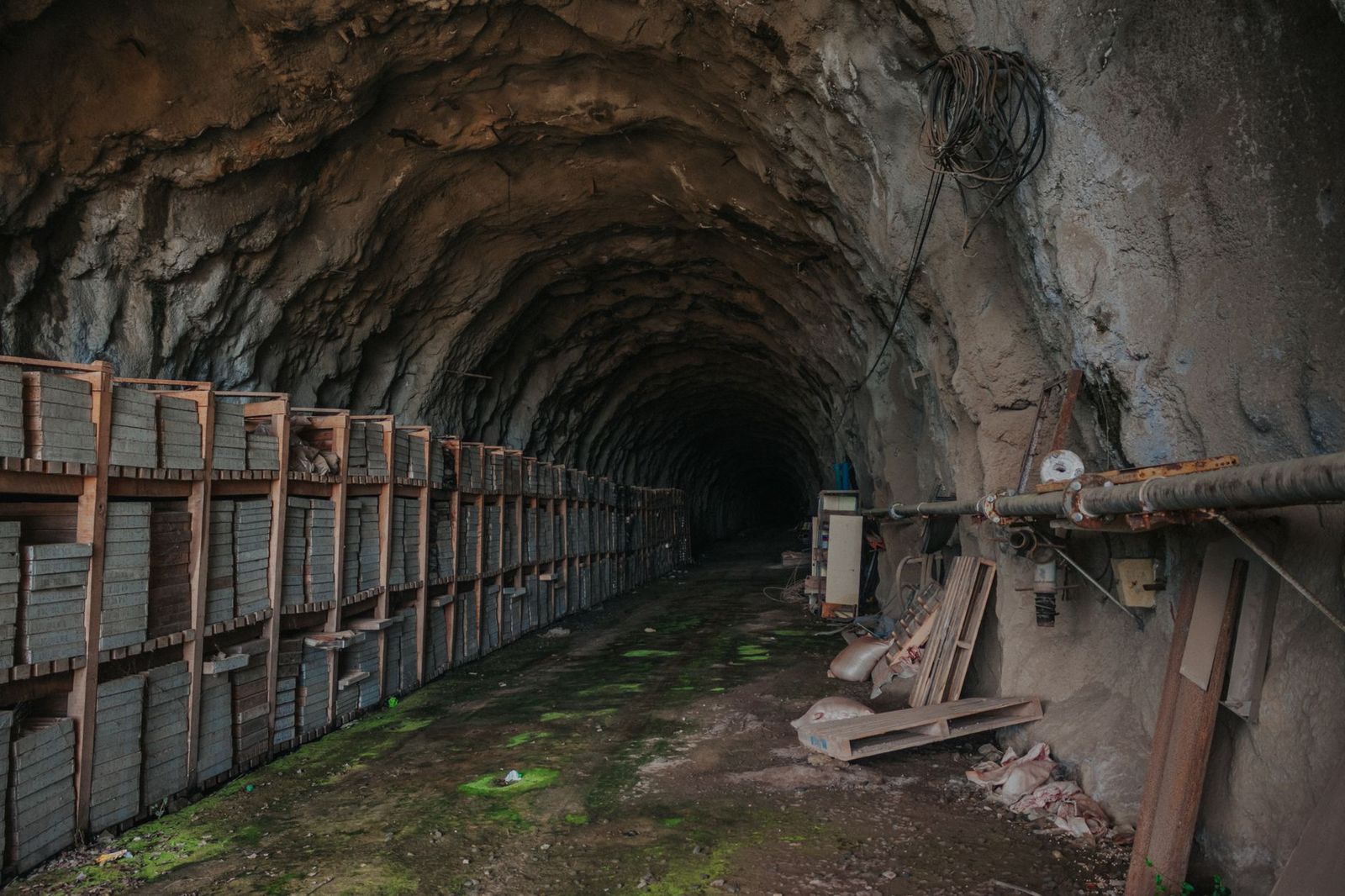
What hotels and long commutes cost a mining crew
Today most mine contractors house crews in the nearest highway town and bus or drive them in. From Elko or Winnemucca, that can mean 45 to 90 minutes each way to the pit. Add the drive to a 12-hour shift, and the workday stretches to 14 or 15 hours before anyone eats dinner. Nights are worse. The drive home falls between midnight and 6 in the morning, exactly when drowsy driving crashes peak.
The research on long shifts is blunt, and twelve-hour shifts carry about 28 percent more incidents than 8-hour shifts. Fatigue adds up. Staying awake for 19 hours impairs a person about as much as a 0.05 percent blood alcohol level. NHTSA counts more than 100,000 drowsy driving crashes a year, with 6,550 deaths, and a bed on the mine property removes that drive from the day entirely.
Hotel rooms are the other cost, because when a project starts hiring, the rooms in town fill before the contractors even arrive. Eureka grew to 9,000 residents during an 1878 silver boom and has 414 today, which shows how quickly mining towns rise and fall. Renting sleeper trailers lets your housing rise and fall with the project instead of with the local room supply.
- 840 hotel room nights for 24 people, 2 to a room, over a 70-night project
- 2 trailers sleep the same 24 people on the mine property, one bunk each
- 3 hrs of daily driving on a 90-minute commute each way
- 21 hrs of commuting across 7 straight shifts at that pace
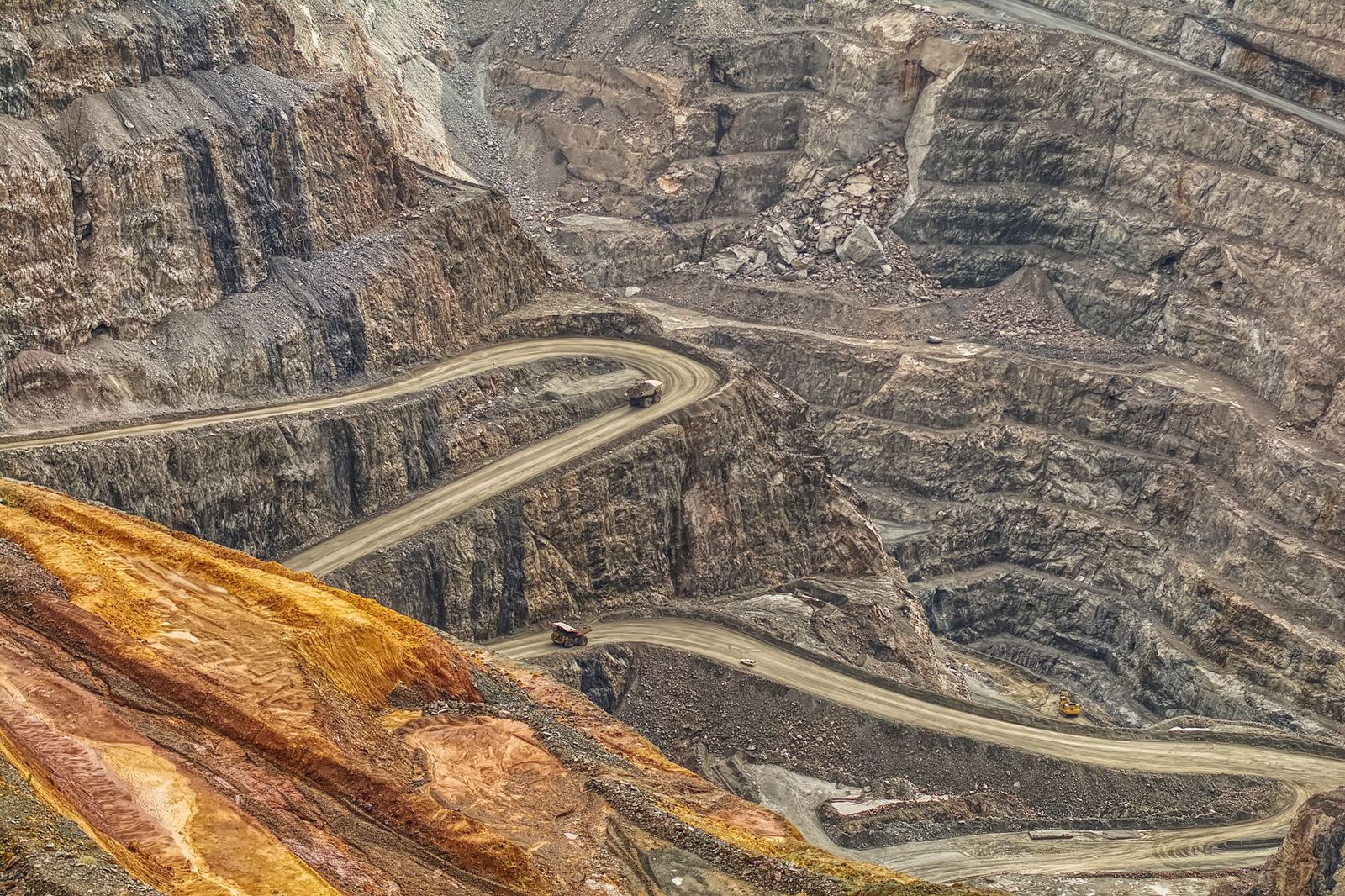
Here is how three sites and how a setup usually runs works
Typical setup: gold mine expansion, 36-person contractor crew, late summer
A typical job like this starts with a call from an expansion contractor at a northern Nevada open-pit mine after 2 weeks of crews driving 75 minutes each way from town. Three sleeper trailers go to a laydown yard inside the mine gate and are set the day before the next rotation. The site safety lead walks the location with the delivery driver and can move the spot 200 feet farther from the haul road if truck traffic calls for it. Late starts drop off within the first rotation, and the trailers can stay through the end of the job.
Typical setup: exploration drill camp, 10-person crew, June through October
On an exploration program like this, a drilling contractor needs beds at a pad 2 hours past the last paved road in central Idaho. The Forest Service road gets reviewed with the drill manager before booking, and the drop is planned at a wide spot near the pad. The trailer runs on the camp generator, and the heat carries the crew through frosty mornings in late September. When the program moves to a second target, the trailer moves with it, so nobody loses a minute commuting.
Typical setup: copper mill shutdown, 48 contractors, 3 weeks in July
On a shutdown like this, a contractor at an Arizona copper mill has 48 people arriving for a 3-week outage and no open rooms within an hour. Four air-conditioned sleeper trailers go in the week before, with day shift and night shift split between them. Afternoon temperatures can run well past 100 degrees, yet the night crew still gets a full day of sleep. The contractor pairs the sleepers with restroom and shower trailers from its site services vendor, so every worker has a bed, a restroom and a shower on site.