


How to Plan Crew Housing for This Work
Planning housing for pipeline Construction Crews comes down to four questions: the headcount sleeping on site, the expected length of the assignment, the electrical capacity available at the pad, and delivery access for a truck and trailer. The sections below work through each question in order.
How we set a crew housing trailer on a pipeline job
We schedule every delivery so the 34 ft trailer is level and running before the crew arrives, whether they roll in at noon or well after dark. On a new spread, that usually means setting the trailers during the same week the contractor yard opens. Clearing crews are often the first people on location, and they need somewhere to sleep from their very first night. The pipe can wait. Tired crews shouldn't.
Traffic decides placement. A busy pipe yard sees heavy trucks all day, with side booms and pipe trailers turning in tight spaces around the stacks. We position sleeper trailers at the edge of the yard or on a separate pad, well away from the haul road. Your safety lead chooses the spot, and our driver places the trailer exactly where the site plan says.
Spring road restrictions catch many northern projects off guard. Frost laws in Michigan and Minnesota reduce legal axle weights by up to 35 percent during the spring thaw, and Wisconsin enforces its own seasonal limits. Some roads also restrict heavy trucks to 35 miles per hour during that period. We check those dates before booking any March or April delivery. A posted road can add an entire day.
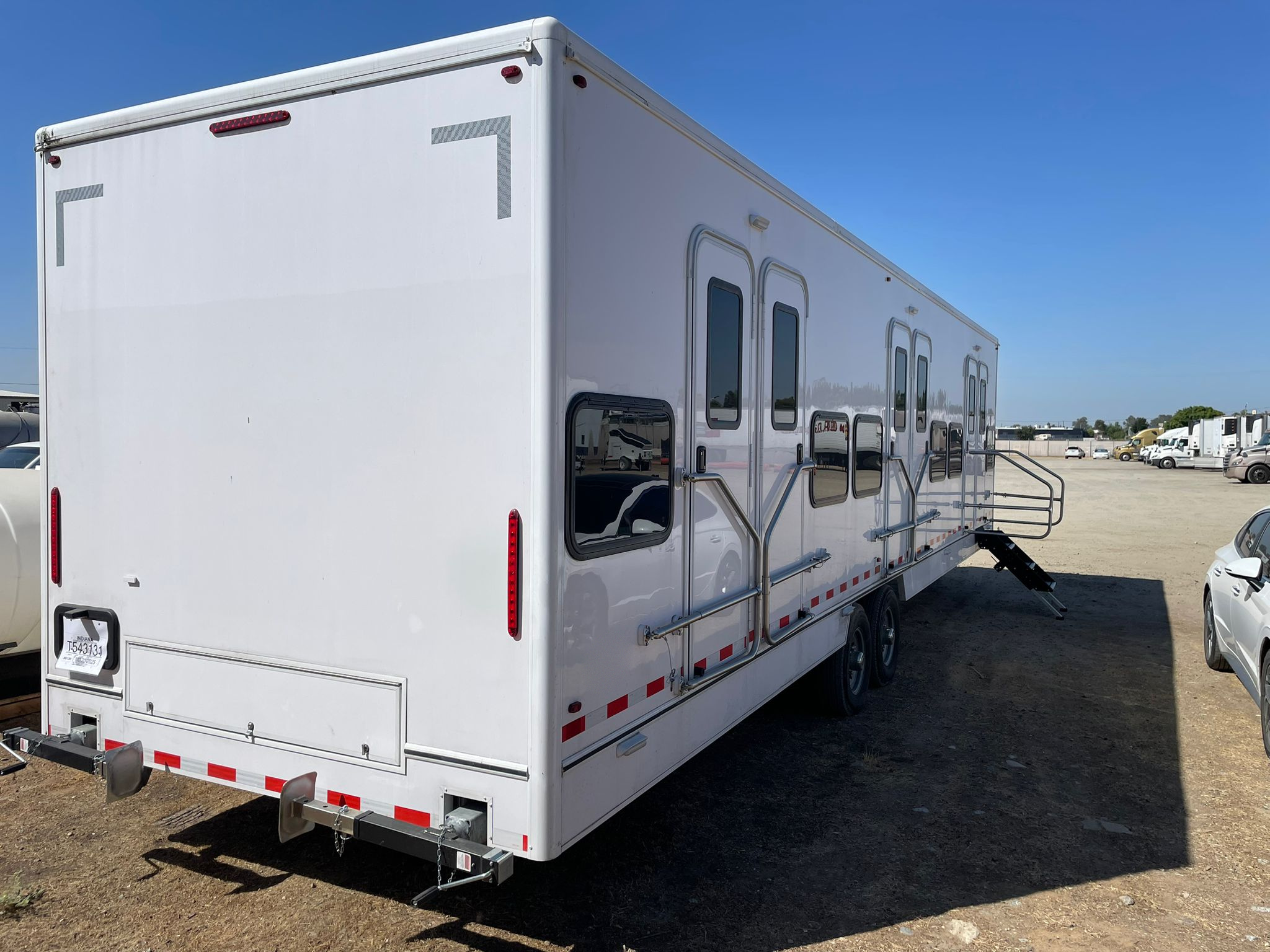
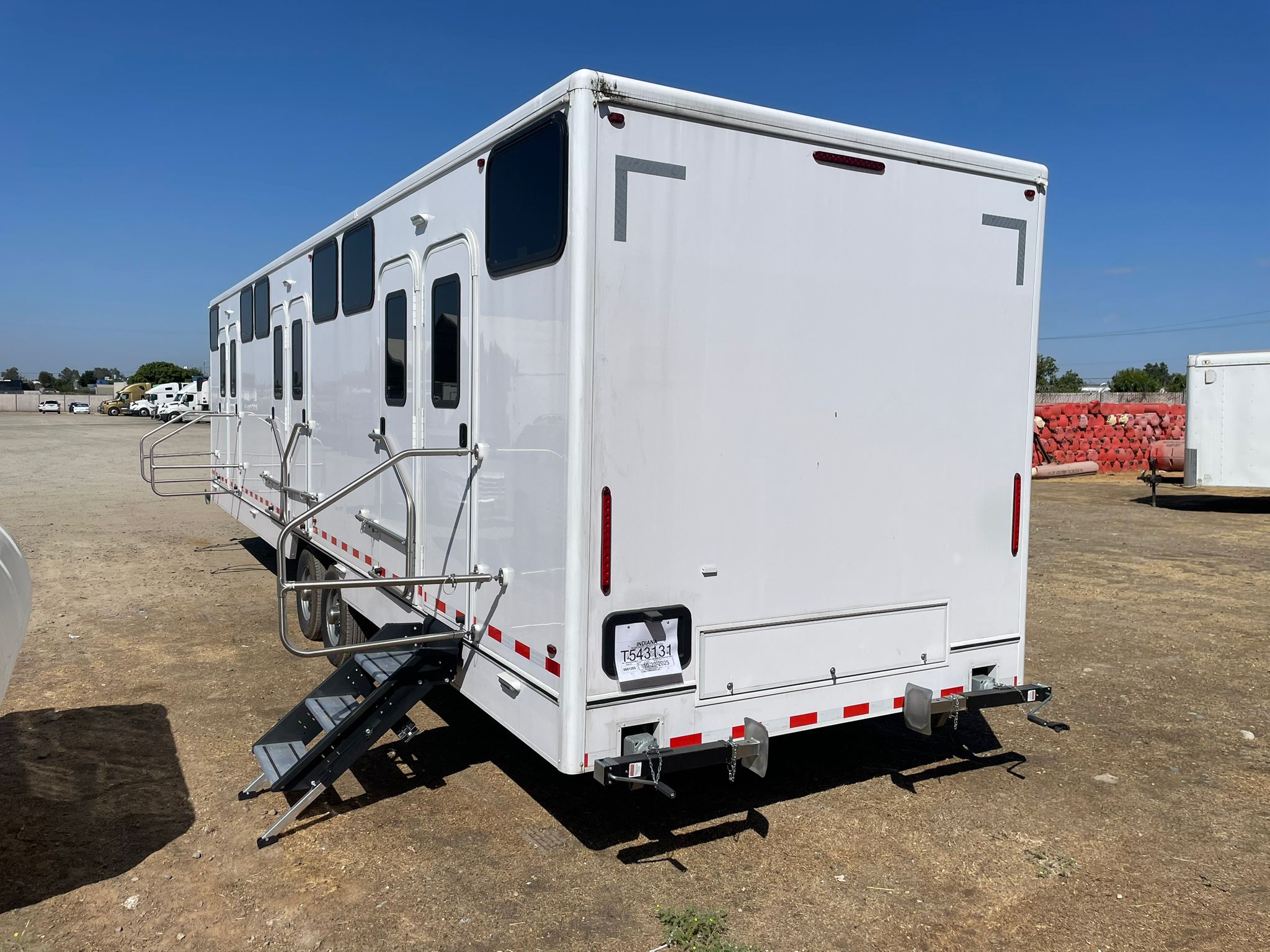
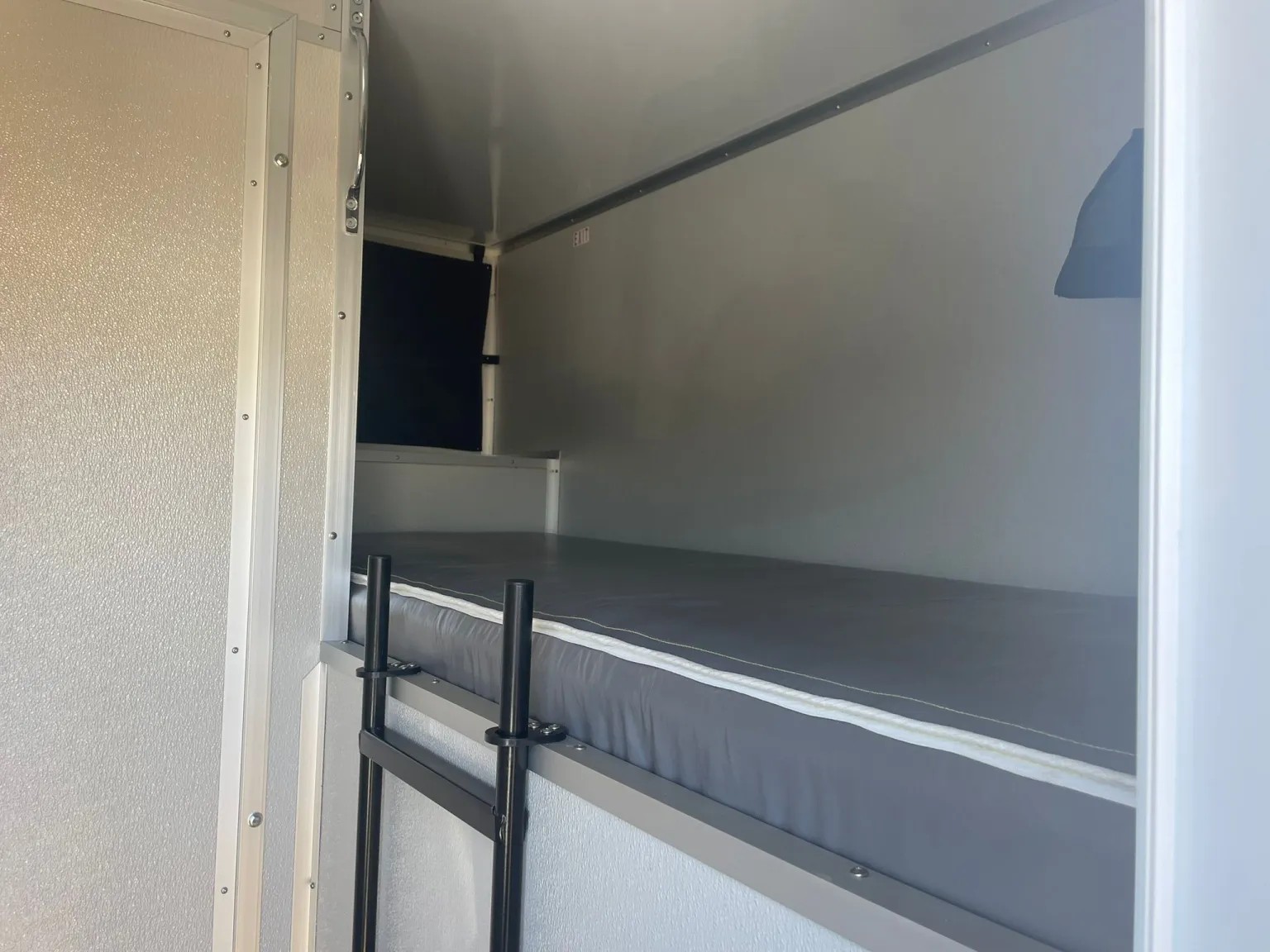
The trailer is designed for sleeping only, so it has no bathroom or shower inside. Plan separate restroom and shower trailers within a short, well-lit walk of the bunks. Power comes next, either line power or a generator sized for 3 AC units running together on a hot afternoon. When the segment wraps up, call (888) 828-7765 with your release date, and we'll pick up the trailers or relocate them to the next pad.
- A map pin for the yard or pad, plus a photo of the approach road
- Gate width and any low wires on the way in
- A flat, firm spot clear of the pipe haul road
- Line power, or a generator sized for 3 AC units
- Where the restroom and shower trailers will sit
- A site contact with a cell number for delivery day
- The next pad location, if the spread will move
How many bunk trailers your pipeline crew needs
| Scenario | Crew size | Trailers |
|---|---|---|
| HDD crossing crew | 8 to 12 | 1 trailer |
| Testing crew | Up to 12 | 1 trailer |
| Grading crew | 20 people | 2 trailers |
| Welding crew | 24 people | 2 trailers |
| 14-and-14 rotation | 24 on site | 2 trailers |
| Mainline spread | 36 people | 3 trailers |
| Large spread | 60 people | 5 trailers |
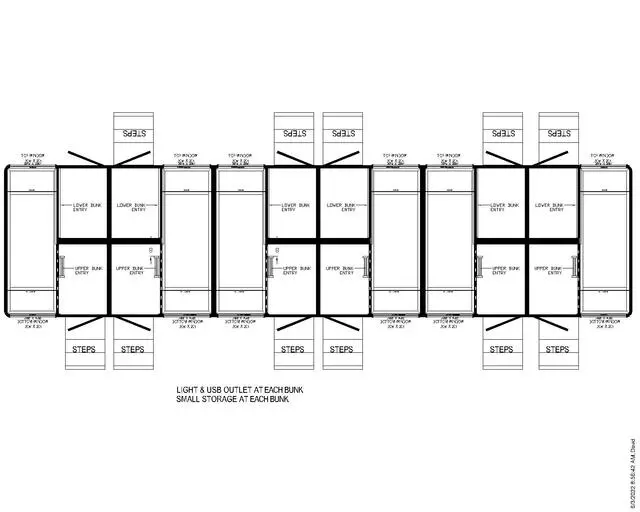
The calculation starts with the bunk count. Each trailer sleeps 12, so divide the number of people sleeping on location by 12 and round up to the next whole trailer. A 20-person grading crew needs 2 trailers, and the 4 extra bunks fill quickly with a mechanic or a visiting inspector who stays several nights. A 60-person spread requires 5 trailers. Round up, always.
Rotation changes the roster, not the bunk count. On a 14-on, 14-off schedule, 48 workers might share the project, but only 24 are ever on location at the same time. Two trailers cover them, and each crew keeps its own assigned bunks throughout its hitch. Some crews hot-bunk across day and night shifts, where 12 bunks serve 24 people. We don't recommend that arrangement for a full hitch, because nobody gets personal storage or a fresh bed.
For perspective, the Coastal GasLink project in British Columbia ran 14 camps along its route, with 500 to 800 workers at each camp. That scale belongs to the large camp companies. Our crew sleeper trailers fit the smaller pieces, like a crossing crew or a 20- to 60-person spread on a regional line in Texas or Louisiana. Plan for the next 30 days instead of only the first week, and add a trailer before the headcount jumps.
Pipeline safety rules that shape where a crew trailer goes
The safety rules on a pipeline project belong to the contractor directing the work and to the pipeline company's safety program. Crew housing sits inside that program, so we follow your site safety plan on every delivery we make. Layouts change during construction. When they do, we relocate the trailers to match the updated plan.
PHMSA, the federal pipeline safety agency inside the U.S. Department of Transportation, oversees about 3.4 million miles of pipeline. Those lines carry roughly 65 percent of the energy used in the United States. Its Office of Pipeline Safety works through 8 regional offices and a training center in Oklahoma City. That's the regulatory backbone. The same pressure keeps every construction schedule tight, which is exactly why a housing delay hurts.
Along the ditch itself, OSHA's trenching standard calls for protective systems such as shoring or trench boxes. OSHA states that trench collapses pose the greatest risk to workers' lives on this kind of jobsite. Federal hours of service rules from FMCSA also give drivers in construction and oilfield work a 24-hour restart instead of the usual 34 hours. Those same drivers haul your pipe and heavy equipment, often before sunrise.
Rules for employer-provided crew lodging vary by state and by program, so your safety lead decides which ones apply to your project. On interstate natural gas lines, FERC also controls the starting line under Section 7 of the Natural Gas Act, and its certificate sets the construction calendar.
- PHMSA Office of Pipeline Safety: Inspects and enforces federal safety rules on about 3.4 million miles of U.S. pipeline.
- OSHA trenching and excavation, 29 CFR 1926 Subpart P: Calls for protective systems like shoring or trench boxes to keep ditch crews safe.
- FMCSA hours of service, 49 CFR Part 395: Limits truck driving hours and gives construction and oilfield drivers a 24-hour restart.
- FERC certificate for interstate gas pipelines: Reviews and approves new interstate gas lines after an environmental review.
- State and local crew lodging rules: Vary by state and by program, so your safety lead confirms which ones apply to your job.
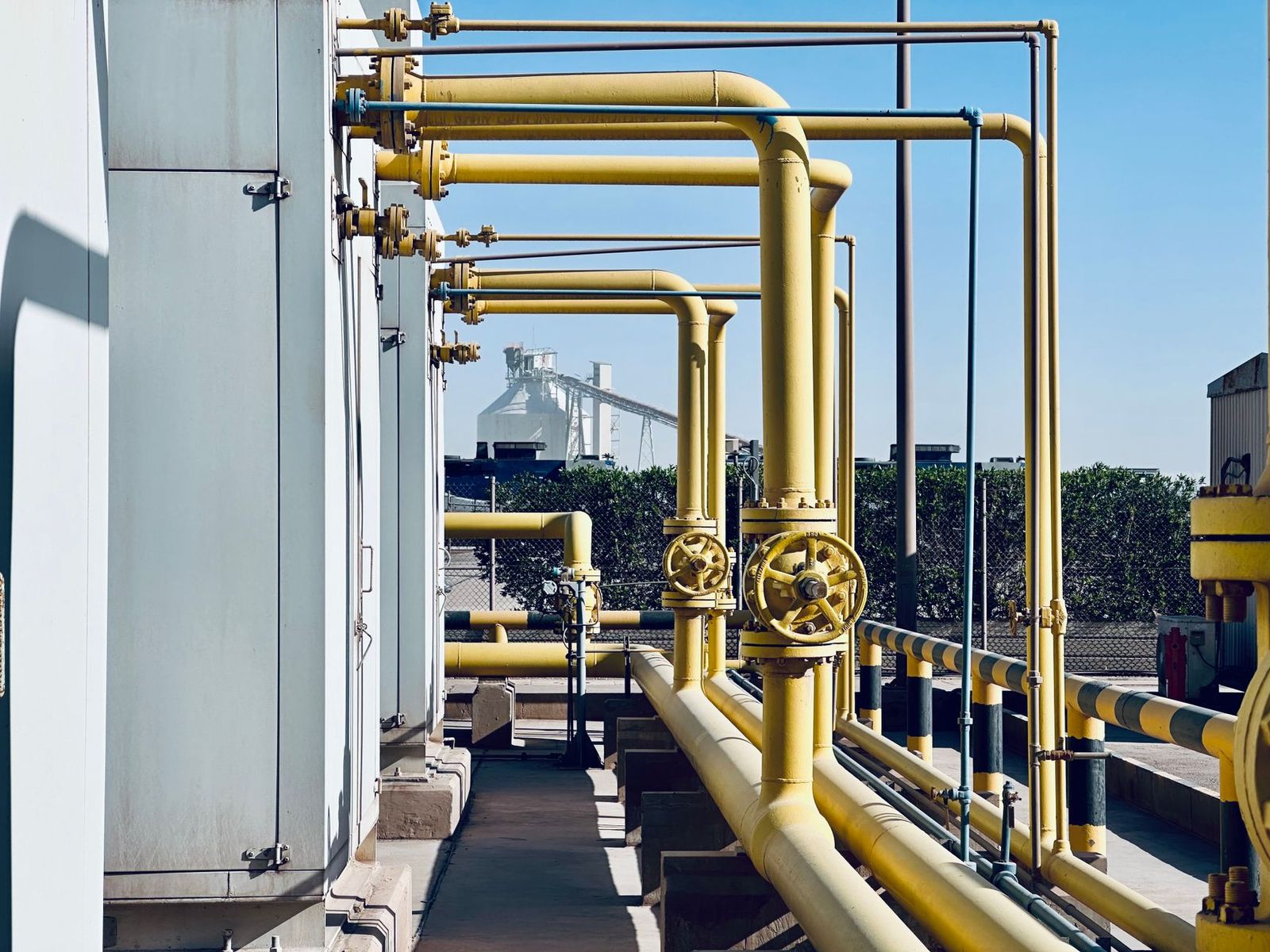
Motel rooms versus portable bunk trailers for pipeline crews
Most pipeline crews today sleep in motel rooms paid through per diem, or in a large camp run by a third party. Both arrangements work until the route passes a small town that runs out of available rooms during the first week. Availability disappears quickly. Federal per diem lodging allowances from GSA often trail actual hotel rates. Local lodging taxes widen that difference every night.
Large camps solve the bed count on the biggest projects, like the Bakken build-out around Williston, and some hold hundreds of workers at each location. Even so, a camp can sit across the county from your segment, and your crew shares it with every other contractor's employees. Many camps also set their own policies on visitors and alcohol, which your superintendent doesn't control.
Commuting is the hidden expense. A crew staying 50 minutes from the pipe yard spends close to two hours a day in pickup trucks, on top of a 10- or 12-hour shift. Over a 14-day hitch, that adds up to more than 23 hours behind the wheel for every worker. Construction and utility crews face the same tradeoff, and you can compare their setups on our page of crew housing trailers for other industries.
- 23+ hrs behind the wheel per worker over a 14-day hitch, 50 minutes each way
- 840 motel room nights for 24 people, 2 to a room, over a 70-night segment
- 2 trailers sleep the same 24 people on your own pad, 1 bunk each
- 5 min walk from bunk to pipe yard instead of a 50-minute drive
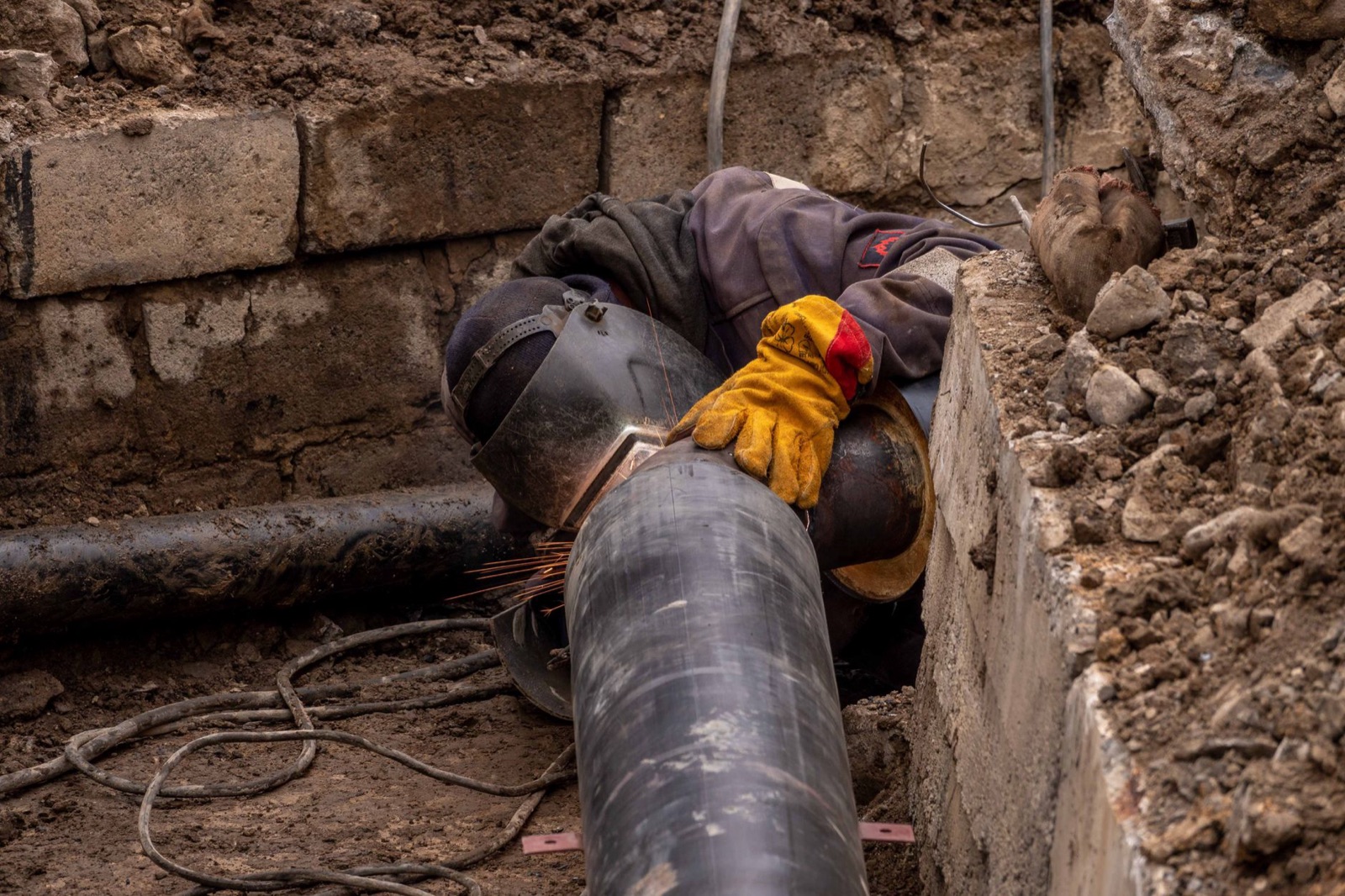
Here is how three typical setups, worked out plainly works
Typical setup: gas gathering line in West Texas, 36-person crew, July
A typical job like this starts with a call from a spread superintendent about a new gas gathering line south of Midland in the middle of July. The welders are driving close to an hour each way, because the nearest motels are already full of drilling crews. Three trailers go to the edge of the contractor yard, well clear of the pipe haul road. The night crew sleeps through 100-degree afternoons in air-conditioned bunks. When the ditch moves 12 miles east, the trailers get towed to a new pad on a Saturday. The crew comes back from days off to the same bunks.
Typical setup: river crossing bore, 10-person drilling crew, October
On a bore like this, a directional drilling contractor needs beds on both sides of a river crossing in Iowa for a two-week drilling job. The entry side might have a gravel farm road, while the exit side sits at the end of a muddy field track. Both approaches get reviewed from photos, and the first trailer goes on the entry side next to the drilling rig. The pipe crew on the exit side can receive its own trailer three days later. Both trailers come out the week after the pipe is through.
Typical setup: pressure testing crew on the northern plains, 11 people, January
On a testing job like this, a pipeline contractor has a crew working through a North Dakota winter on a finished section of line near Stanley. Mornings stay well below zero, and the closest available rooms can be 45 minutes away on icy county roads. A heated crew quarters trailer goes on a gravel pad next to the test site, with the thermostat set before the crew arrives. The crew can work 12-hour shifts for three weeks without a single commute. The trailer then moves to the next test section once the pressure test passes.